This one's an anthology that I really loved putting together. IT'S AMAZING, PEOPLE! Even if I have to say so myself *ahem*
Anyways, join the launch fun! Cover reveal's in about 2 weeks and the launch is in November at GTLF! Again! We have rough dates of between 23 - 26 November, which are the festival dates, but don't know the exact day/time yet.
But ebooks launch 23 November anyway.
HERE'S THE SIGN-UP FORM. COME SHARE SHARE THIS BOOOOOOOK.
This was a somewhat frustrating read. I went in hoping to really like it because I generally like folktales. I like reading old origin/creation myths, finding out what makes a culture gel together, what kinds of stories they tell each other, and how these make up who they are as a nation.
Most of the stories were fascinating, but they were a really hard, dry, and boring read. I mean, these are pretty much fantastic and fantastical stories, but struggling through unending sentences just made me want to give up. I feel like... pulling together a bunch of old translations into one book and giving them really fancy illustrations wasn't enough to keep my attention.
Maybe I lost out a little on the reading experience because this was an ebook ARC and the formatting really sucked (footnotes that only appeared several pages later instead of as a pop-up; illustrations that were somehow split into multiple images; Kindle only shows black & white images instead of colour; fancy drop caps don't show up; random line breaks, page numbers, headers and footers appearing haphazardly in the text) but... that really shouldn't change the experience of the stories themselves?
I just felt like the stories needed someone to edit them for a better flow, and probably to slightly more modern English, instead of just using centuries-old versions. I don't think these need a "retelling" in the way everyone is retelling folktales and making them into whole novels, but they do need a bit of a rewrite for readability's sake.
Or maybe I'm somewhat at the end of my interest in the folktale style of storytelling.
Note: I received a digital ARC of this book from the Chronicle Books via Edelweiss. Opinions expressed in this review are completely my own.
Nusantara: A Sea of Tales is a wonderful collection of fairy tales, folklore, and fables from the core geographic area of the Malay Archipelago or what used to be called Nusantara. A large majority of the stories come from Malaysia, both East and West (since Heidi Shamsuddin is Malaysian), and Indonesia (because both countries share quite a lot of the same folklore), which I guess automatically includes Singapore (because they were historically always linked before they became their own country).
There are a smattering of stories from other Southeast Asian countries - the Philippines, Vietnam, Thailand - and, oddly, one story each from Guam and Madagascar. Heidi justifies the latter two as being included because they share the Austronesian language. Frankly, I felt they were just a little too far away to share much cultural similarity and probably could have been kept for a later collection.
Some of the more familiar tales (to me) are several Sang Kancil stories, variations of the Bawang Putih, Bawang Merah tale, Si Tanggang, The Swordfish Attack of Singapore and The Curse of Mahsuri. Some of the other tales are vaguely familiar - whether because I have heard of/read them before in other collections or they are similar to European tales, I cannot quite tell. But quite a few were new to me, especially those from Borneo and from other countries. I was delighted to discover Pak Pandir stories for the first time. How did I not know these exist?
Heidi includes notes at the end of each tale or, sometimes, at the end of a group of similar tales. This provided a lot of background knowledge about where the story comes from (and where similar stories are told across the region), explanations of untranslated words and names (where they hold specific meanings that add nuance to the story), as well as some hidden meanings behind cultural practices that are not quite apparent face value.
Nusantara: A Sea of Tales is a timely book that collects tales from oral storytellers and older print sources that are increasingly hard to find before they are lost to us altogether.
I don't recall how I stumbled upon this, because honestly, the marketing around it is... non-existent?? But I somehow found Daryl Kho's website! And realised there was a preorder sale! So I ordered it!
Mist Bound tells of Alexis' quest to cure her Grandpa after he was hit by a Fog of Forgetting spell. She just has to travel across the magical world of Mist with her scary Grandma and the annoying kenit who cast the spell to find the 8 ingredients to make Memory Glue. As Alexis journeys across Mist, she discovers a wonderful (and scary) thing - all the wild tales Grandpa has been telling her are true!
As an MG book, lame jokes abound - which was a little meh for me, but I'm not the main target audience. The concept itself isn't terribly new (my Coexist is written in a similar vein), but what I love about it is the delving into of Asian folklore. Not only do we have the kenit, Paeri, and duyung, there are also the Nangmais from Thailand, Baku from Japan, and pixiu from China (and a lot more lah!). While this is primarily Alexis' journey (and ours) of meeting these strange and wonderful creatures, Kho also weaves in short snippets of actual folklore and regional myths.
There are also all these cute little illustrations!! by SillyJellie!!
Whilst this is an exciting journey to a magical land, there's also a sad note to it - book Alexis' Grandpa is hit by a spell that makes him forget, but real-life Alexis, Kho's daughter, will never be able to know her grandfather before dementia struck.
Mist Bound: How to Glue Back Grandpa offers a determined story of faith, hope, and love, glued together by family.
Salka is a striga who has spent all her life suppressing her second heart, which, if given any power, would turn her into an evil monster. It's their way of life, and the only way to keep their community safe. But when Salka is sent away, it comes down to a matter of survival: continue starving the monster and die or finally tap into her striga nature and live.
The Second Bell is a story of choices - not just the choices Salka has to make, but how the choices of others in their community have direct and lingering impact on her life. As Salka is forced into increasingly limited and difficult choices, she needs to decide if she will continue living within the boundaries of the community that has sheltered her so far, or if she should strike out and make a new way for herself.
This brings us to the question of nature versus nurture. In the striga village, the conventional wisdom is to starve the second heart, the source of both power and evil; yet the most experienced at - and legalistic about - starving their second heart turn out to be those whose choices cause the most harm to others. Are all strigas evil just because they have a second heart? Or is it what they do with the power that they are born with that makes them dark? What if Salka's experience is something totally different? And what if there was a way to tap on to that power and still remain good?
What is the balance between personal responsibility for your actions and the sinful nature of a person?
The story starts off well - Chapter 1 draws you into the history of Heyne Town, Salka's birth, and the stigma around strigas, then jumps 19 years into the future in Chapter 2 to see Salka all grown up. However, Chapters 3 - 6 hits you with a choppy series of POVs that read like a series of short stories that are somewhat related to the plot but not quite. Houston seems to hit her stride around Chapter 7 - whilst we still get multiple points of view, they start to flow together in a cohesive narrative to its heart-wrenching end.
Overall, The Second Bell is an enchanting and thoughtful read.
Note: I received a digital ARC of this book from Angry Robot via NetGalley. Opinions expressed in this review are completely my own.
Creatures of Near Kingdoms is a beautifully illustrated bestiary of Malaysian flora and fauna. Each one-page description is accompanied by a full-page illustration or lino print.
It's whimsical. And fantastic. And witty.
And occasionally confusing if you're trying too hard to figure out The Point.
It's best read in short bursts. Take it as a collection of microfiction, if you will.
I'm lagging behind in my reviews because... idk. I'm playing catchup with work stuff that I can't delay because I'm clearing up my schedule. So the book reviews are the first to go.
Anyways, thought I might as well post this to make up for yesterday's missed post, even if it's not in the current review schedule (which is messed up).
If you're interested in how folk and fairy tales differ--or are the same!--around the world this is a good place to start.
The 55 tales are arranged around various superhuman powers, including shape-shifting, control of the elements, superstrength and mind-reading. Besides the tales themselves, Csenge provides some background to the stories and where they come from, as well as variants on the stories or similar stories from around the world. Being a storyteller, Csenge also includes the age the stories are appropriate for, plus adds in snippets of her experience telling these stories.
At points, the notes imply that Csenge has rewritten some of the stories, including merging several variants into a single story, or editing it down into a shorter version. I'd guess that she has also translated some of these from the original languages into English. As such, quite a few of the collected stories centre around Europe, with a focus on Hungary, but there's also a wide enough selection of stories from parts of Asia... including one from Malaysia!
Brunt Boggart: A Tapestry of Tales is a collection of brand new folk tales. From the (imaginary) village of Brunt Boggart to the (equally imaginary) town of Arleccra, Greygoose brings you down the Peddlar Man’s track, one that twists and turns, slithers and jumps through space and time. It’s an ambitious undertaking.
And it starts off well. I fall into this quaint English village with whispered superstitions, chanted verses, and secret songs. I am enchanted by the Wolfboy who gives up the woods to become Greychild, all the while harbouring in his heart a secret quest to find his lost mother. There’s so much to discover about Brunt Boggart, about Ravenhair and her grandmother’s black ribbon; Crossdogs who is the best fighter, the Wolf Slayer, but also has the kindest heart; the Peddlar Man who trades ribbons and dolls and shiny things. It’s almost real, encased in a kind of shimmery surreality. There’s a lilt to the words, a purposeful rustic garbling that’s almost authentic, but not quite. At times, I can almost hear the rhythm and the beat, can almost be absorbed into the lyricism of the story. But then some wildly outlandish thing happens and I am dragged out again, wondering, what’s going on here?
It’s a tapestry, alright. There’s no one story, but many, thrown together haphazardly with many loose ends that just disappear. There seems to be a larger narrative arc that follows Greychild and smaller arcs following Crossdog and Ravenhair, but it’s all jumbled up and jumps around way too much for me to get a proper grip on. There’s also the impossibility of it all. Whilst folk and fairy tales have their fair measure of magic and bizarre happenings, there’s usually something that pulls them together and gives the story a cohesiveness that makes it believable, magical even. In Brunt Boggart, it just stays bizarre and confusing; I’m often left wondering if the events in the story were meant to be real, or a dream, or a fever dream, or a… what?
All told, this book is meant for reading aloud, to let its repetitions and rhythms bring you to another world… where you don’t have to think about plot and what the heck is actually going on.
I received a complimentary copy of this book from Pushkin Children's Books via Edelweiss. Opinions expressed in this review are completely my own.
The stories in Tales of Japan: Traditional Stories of Monsters and Magic were sourced from two 20th-century texts: Kwaidan by Lafcadio Hearn and Japanese Fairy Tales by Yei Theodora Ozaki (both in public domain), with each story accompanied by beautiful illustrations by Kotaro Chiba. Just the cover itself is fantastic!
It's no secret that I love fairytales and folktales, especially those of Asian/East Asian origin. These fit right in with the stuff I'm looking for--my only gripe is that the translator(s) sometimes sound a little too apologetic about their use of Japanese terms which aren't directly translatable. Honestly, I don't mind. That's the charm of reading stories from other cultures, isn't it? There's also the occasional stiltedness of language, but overall, these traditional Japanese stories are highly enjoyable, written in that timeless fairy tale style.
Journeys The Dream of Akinosuke: I'm not sure if there's an English fairy tale equivalent for this. When Akinosuke takes a break under a tree he is caught up in an elaborate dream where he is swept off at the behest of the Tokoyo no Kokuo (the ruler of an unknown country; or the King of Fairyland). Is it all a dream or is it a true fairy encounter? The Jelly Fish and the Monkey: An origin story of the jellyfish, in the vein of Rudyard Kipling's Just So Stories. Also a fascinating first look at the mythology surrounding Ryn Jin, the Dragon King of the Sea. Momotaro, or the Story of the Son of a Peach: In this Thumbelina/Tom Thumb-esque story, a childless couple cut open a giant peach to find a little child. Years later, Momotaro leaves his adopted parents to save a northeastern Japanese island from a band of devils. This gains some Bremen Town Musicians undertones with various animals joining him to help him in his quest. The Happy Hunter and the Skillful Fisher: A lost fishing hook sends Hohodemi, the Happy Hunter, to Ryn Jin's realm. Ultimately a good brother vs bad brother story, where the older brother uses the excuse of the lost fishing hook to send Hohodemi away so he can usurp the throne. It's never explained why the younger brother is the Mikoto though and not the older? Also likely an origin story of why Hohodemi is said to control the tides. The Bamboo-Cutter and the Moon-Child: This reminds me of Chinese tales of women (and bunnies) on the moon. No bunnies here, though. Also an amusing look at males who are so enamoured of a woman's beauty they say they would do anything to marry her... but then lie and cheat their way with the minimum of effort.
Ghosts and Monsters The Story of Mimi-Nashi-Hoichi: This takes a dark turn, where a blind lute-priest is seen entertaining spirits. Yuki-Onna: This story feels vaguely familiar--I probably came across it while writing When Winds Blow Cold--but it also follows the vein of traditional Chinese myths with mysterious (usually not so benign) female spirits/creatures who choose to stay with/marry a human man. The enchantment breaks and the spirit leaves when the man breaks their vow of secrecy. Diplomacy: How do you make sure a vengeful ghost doesn't haunt you? Apparently by distracting them. Mujina: Creepy faceless people story. I... dunno. A Dead Secret: Still on the theme of ghosts, this dead woman won't leave until her secret is destroyed. Rokuro-Kubi: Samurai-priests and headless goblins! It should be slightly macabre, but it's also quite hilarious.
Justice The Tongue-Cut Sparrow: This follows the classic good hapless man, evil shrew wife. A good man gets rewarded by fairies, the evil wife tries to get more but meets her just rewards. I suppose there are similar themes no matter where you come from. The Farmer and the Badger: An Aesop-like story, where the wicked badger tricks the farmer but then his neighbour the kind rabbit helps the farmer take revenge. The Story of the Old Man Who Made Withered Trees to Flower: Childless couple takes care of beloved dog Shiro, who is magical and brings them good fortune! The evil neighbour who hates dogs tries to get Shiro to also bless him, but whatever he does turns to bad instead. The Mirror of Matsuyama: Evil stepmother story. I said last week that evil stepmothers don't seem as prevalent outside Eurocentric stories, but here's one from Japan. Actually, the beginning as quite Beauty and the Beast; I was expecting the girl to be exchanged for something, but no. LOL.
I received a complimentary copy of this book from Chronicle Books via Edelweiss. Opinions expressed in this review are completely my own.
A curse binds the City of Winter and the Dragon's prophecy holds the key to breaking it. But will a poor fisherman from the South have the means to fulfil the prophecy? Or will the foreignness of the North itself repel him and his efforts?
Whilst the collection itself, which includes a new standalone story, is at 50% off, you can get the original four short stories in this series free:
If you're looking for Western fairy tales featuring elves, dragons, and fairies, Coexist is the novella for you!
Fifteen-year-old Jane stumbles upon a portal to a fantastical and dangerous world--and discovers things about her family and heritage that she has never known before! Along the way, she makes friend with a friendly adlet, almost gets tricked by a kelpie and has to run from the Fairy Queen herself.
Many years later after Coexist, a young woman named Sara who lives half the globe away stumbles upon a different fairy world--the Malaysian Alam Dongeng.
There’s a war to protect Alam Dongeng, helmed by the Orang Bunian and Garuda. But are the ranks of Hantu really Sara and Helmi's enemies? They may very well be fighting the wrong battle.
Dongeng brings together the dark folklore and fairy creatures of Southeast Asia and the Western fairy tale lore already explored in Coexist.
This has been a while in the making... I think I got the acceptance for my short story sometime in 2017! At any rate, if you fancy fairy tale rewrites and folklore from Asia, here's where you can get them. Mine features the mythical Gedembai, legends of Laksamana Cheng Ho, and damsels not in distress.
Here's the blurb:
The Principal Girl: Feminist Tales from Asia features stories of bold, bright, and heroic women and girls drawn from Malaysia and Singapore, and the Asian diaspora that underlies the rich and diverse cultural heritage of the two countries. All eighteen stories in this anthology emphasise female empowerment, and privilege the strength and wisdom of young girls and women, over conventionally idealised traits such as beauty, obedience, conformity, and passivity, so frequently depicted in traditional male-centric folk tales.
Of these, eight tales are based on, or inspired by Asian folklore and well-known female cultural icons, while ten are original stories with contemporary settings, drawn from sources as diverse as the Mahabharata and Sejarah Melayu, to Iban and Kadazan folklore.
Apart from reimagined tales of legendary female figures like Hang Li Po, Princess of Mount Ledang, Draupadi, Queen Vishpala, Khawlah bt Azwar, Mahsuri, and Cik Siti Wan Kemboja, and mythical creatures like the Phoenix and Gedembai, readers will also meet the crime-fighting teenager Surya, the scholar and philanthropist Lilly Po, and the beauty queen Eve, who learns the true meaning of embodying the spirit of Huminodun, among many others just as dauntless.
Aimed at young adult readers, this volume showcases the writings of both new and established authors from Malaysia and Singapore, and hopes to inspire its young audience with empowering narratives of various ‘principal girls’ of past and present, all courageous, resourceful, and intelligent in their own ways. These are tales readers will want to revisit, again and again.
Not So Stories has been one of my most anticipated reads ever since Zedeck Siew announced that he was part of the lineup. I was about to bite the bullet and buy the book when I managed to score a review copy, so YAY!
Not So Stories was compiled as a response to Rudyard Kipling's Just So Stories, which Nikesh Shukla describes in his foreword as "steeped in colonial nostalgia." I don't recall if I've specifically read Just So Stories (which I've recently found on Project Gutenberg) but if it's in the same vein as other Kipling books I've read, I get what he means. Not So Stories tries to recreate a new collection of animal tales from multicultural, multiethnic lenses, "confronting readers with the real harm colonialism did and taking the Just So Stories back." I cannot meaningfully compare the two right now but I will say that this book both succeeds and fails in its intent.
It succeeds because this wonderful collection of short stories does offer a multitude of unique voices, some of which I can personally identify with as a Southeast Asian, and some of which I can recognise and understand as stories from other cultures, none of which revert to the standard white male Christian point of view that I grew up with as an Anglophilic Chinese-Malaysian. Yet, where it fails is in its target audience--although the anthology is purported to be for children, one story has sexual elements unsuitable for younger readers and at least two others have themes that would probably only appeal to adults. Maybe if it had been targetted for "adults who grew up reading the original as children," it would have succeeded on all counts.
Now on to the stories!
Cassandra Khaw opens this anthology with the brilliant How the Spider Got Her Legs. It has a lovely folklorish feel, beautifully lyrical, but is also very, very brutal--not in physical sense, but how it rips away the veils from your eyes to reveal the evils of colonialism. At first, I wondered at "All of them pale, with hair like someone had spun the noon light into threads, eyes like ruptured sea glass", but Spider soon gets the [White] Man to admit that he took the land from "the Man who once lived here" and that his venom makes his victims "slowly wither of self-loathing." It's subtle, easily missed; yet as you read, you come to realise that this is what has been done to us in Malaysia (where Khaw comes from): we learnt to deify the White Man and loath ourselves, until we grew up and realised the lie--they are no better than we are. (5 stars!)
Queen (Joseph E. Cole) brings us into Africa (I presume?) with an inversion of roles: men here are described as beasts, whereas the anthropomorphic animals are the people. There is anger and pain, sorrow and desperation, a fight for life and freedom. There is also the quiet othering of what is usually a central narrative ("when they worship their cruel man-god who makes them eat his flesh and drink his blood, like savages") and harsh accusation against humanity ("... kill one another for paper and pieces of metal and for any number of pointless reasons. You rape the earth, molest the Earth, taking what you desire without thought or consequence"). Yet there is also reconciliation, the Queen who speaks to the princess who would be queen of her tribe. (5 stars!)
Wayne Santos's Best Beloved is one that I resonated with quite a lot, being set in nearby Singapore, but is also the first of the stories that step out of the children's domain into a rather more mature arena. In fact, Best Beloved also seems rather out of style with the other stories in the book. It's very much more contemporary in feel, with a horror/urban fantasy vibe, besides moving away from animal stories into the paranormal, featuring Chinese ghosts, angry spirits and pontianak. (5 stars!)
The next story hops over the causeway to Malaysia. The Man Who Played With the Crab (Adiwijaya Iskandar) has a Stranger trespassing Beting Beras Basah in a bid to find the great crab that wrecked his ship. There's a deliberate garbling of names--Adiwijaya emphasises the lack of effort made by white men to pronounce names from other cultures--and blatant disregard for lives and beliefs that aren't central to whiteness. There is also a sense of heavy resignation ("my kind shall be written away as myths") amidst a tinge of hope ("But your time shall pass too.") There is an amusing hint of an origin story for British perception of Malays and Malay culture in Malaysia--and because I got distracted, here's a link on the mysterious Tasik Pauh Janggi in Beting Beras Basah (in Malay, sorry). (5 stars!)
In Samsara, Georgina Kamsika explores what it means to be bicultural. Should Nina learn to embrace her mother's Indian roots, or should she fight to retain the white-passing privileges inherited from her English father? Must she choose one or the other? Can she not be both? I don't personally have experience in being biracial, but I do relate to her never-quite-fitting in, in my case because I am a "banana"--white on the inside, yellow on the outside. This one, like Best Beloved, dips into the spirit world, instead of the animal one. (Four-ish stars?)
And we finally get to Zedeck Siew's Serpent, Crocodile, Tiger! Other reviews complain that this is three (or more) stories in one. In a way it is--I see the thread that goes through the whole thing, but it's hard to digest. Siew weaves a convoluted story that begins with the river-mother, who makes the crocodiles, the youngest of which becomes a Tiger. This shifts into Were-Tigers and Were-Crocodiles, playing hard and fast with myth and religion, magic and faith, acknowledging the temptation to disregard culture, upbringing and heritage for the feeling of belonging and acceptance, before finally ending up back where he started with the river and the Tiger, and maybe a retribution (but maybe not). The ending feels satisfying, in its own way, but also as if I've missed something. This one isn't explicit, but part of the setting (a girl stays the night, they hang out at the club) might need some navigation with younger readers. (I'm confused. And conflicted. Four stars?)
How the Tree of Wishes Gained its Carapace of Plastic by Jeannette Ng was like a peek into a culture I'm supposed to be of, but I've never really identified with. I spent much of the time wondering whether the Tree of Wishes was located in Hong Kong, or if this was some other harbour, a village that worships dragons of the sea, "the price paid to buy peace" that becomes part of an "empire so vast that the sun never set upon their queen's soil". Ng returns to the beautiful style that Khaw uses effectively at the beginning of this anthology, tangling history with modernism and progress. I really want to know who Old Man Uncle is. (4 stars.)
After all that good stuff, Stewart Hotston's How the Ants Got Their Queen felt just a little too labourious to get through. It's mainly a powerplay between the ants and the pangolins anyway, with a lot of eaten ants. (I probably didn't get much out of this story as you can tell. Two... three stars, maybe?)
Tauriq Moosa returns us to fantastical animal tales in How the Snake Lost its Spine. I was amused by "the White Devils from distant lands" (Northern Mountains) who believed themselves "first and chosen, those who most resembled the Creators though no one knew what the Creators actually looked like" whilst the "Others, Those Below, Those Far Away" were believed "to be a mistake". There's no hiding that this part at least is allegory, plain and simple, except maybe to the White Devils themselves. (Four stars.)
The Cat Who Walked by Herself (Achala Upendran) is a myth of the origins of the homestead, relating how Man got himself Woman, Dog, Horse and Cow through his might and magic. This one veers out of cultural identity into a more feminist lens, focusing on the power play between Man and Woman. It's a little gory, with many severed limbs, so probably okay for older children. Also, more Woman than Cat, though it's Cat who instigates Woman mostly. (Ah, I'd say four stars.)
Zina Hutton's Strays Like Us meanders into Egyptian territory with Bastet drifting through Miami refusing to be forgotten. This one has hints of American Gods (with a nice reference to Neil Gaiman too!) so it doesn't quite blend in with the rest of the stories either. (Three stars.)
How the Simurgh Won Her Tail (Ali Nouraei) reminds me faintly of Haroun and Luka by Salman Rushdie. Against the backdrop of a children's hospital, Amir tells the story of the Simurgh, who sets off on a quest to make herself a tail. The story is charmingly told, juxtaposing the Simurgh's distress at seeing the state of the world with the comfort gained by the children in the Paediatric Oncology Ward. If there is equanimity to be achieved, it is from the words, "This too shall pass." (Five stars!)
Raymond Gates's There is Such Thing as a Whizzy-Gang is another story that doesn't quite fit. It seems to be about a mythical creature from Australia and reads like a Enid Blyton-type pixie/fairy story but it's never quite clear if this Whizzy-Gang actually exists. Oh well, I guess that's the mystery of the story? (Three stars.)
Back to the animals, How the Camel Got Her Paid Time Off (Paul Krueger) seems to be mainly harping about overwork, bad HR practices and recognising religious celebrations of minority cultures. It gives off a kind of hard-boiled detective vibe, without the detective, and features a lot of smoking, pizza and beer. This story will really only appeal to adults so I'm not sure what it's doing in here. (Three stars.)
Overall, I'd say that each individual story in Not So Stories is great on its own (except the ants. What was with the ants?) but the problem is that not all of them fit together quite well in the same book. Where I was expecting a fantastic collection of animal tales for children (or at least tales related to animals), some stories veered off into the paranormal and the mythical, and some into very adult mindsets/settings.
Note: I received a digital copy of this book via NetGalley. I was given the book with no expectation of a positive review and the review is my own.
Addendum:
I was going to post this for Music Monday, but didn't. Still. A song for today.
Kasih-Mu, karya-Mu, nyata dalamku | Your love, Your works, are evident in my life
Kau pegang hidupku dalam tangan-Mu | You hold my life in Your hands
Darah-Mu, salib-Mu, tebus hidupku | Your blood, Your cross, redeems my life
Nama-Mu berkuasa sanggup bangkitkan | Your Name is powerful enough to raise
Harapanku di dalam-Mu | My hope is in You Hanya Kau Yesus kuatku \ Only You, Jesus, are my strength Kupercaya kuaman dalam-Mu | I believeI have peace in You
Tak pernah gagal rencana-Mu | Your plans have never failed
T’rangi jalanku kuasa-Mu sempurna | Light my way with Your perfect power
Pengharapanku takkan hilang | I will not lose hope
S’bab masa depanku Kau sediakan | Because You have prepared my future
Tak pernah gagal rencana-Mu | Your plans have never failed
T’rangi hidupku kuasa-Mu sempurna | Light (Illuminate?) my life with Your perfect power
Pengharapanku takkan hilang | I will not lose hope
S’bab masa depanku dalam-Mu | Because my future is in You
Words & Music: Andre Hermanto, Andriyanto, Billy Simpson, Joshua Tremonti, Kevaz Lucky, Nina Sari Ishak, Ricky Sutanto, Tirza Agatha, Winny Jessica, Yumir Vishreda
Crappy translation by me.
Every country has its own folklore, stories from ancient past handed down from generation to generation. As with all oral traditions, similar stories with a single origin are spread over a wide district, changing along with the ever-evolving culture and circumstances of the storytellers themselves. Most of the time, the differences are only in the details. The thirty translated stories in Pearls on a Branch are a window into the lives of Arabic women, selected from a larger repository of Arabic tales recorded and transcribed by Najla Jraissaty Khoury. As with all fairy tales and folklore, the stories range from the almost mundane to the extremely fantastical, including animals that speak and classic forms of poor men winning the hands of rich princesses (and vice versa).
These tales capture the poetic forms of its original language, with most of them beginning and ending in verse. Yet, as Khoury herself notes, the essence of such oral stories are captured in “the nuances in the choice of words, the comments and body language of the storyteller. It was a revelation: certain stories told by women were for women only.” It is a shame that such nuances cannot be captured in print, and that some references are inevitably lost when such stories are translated into English and read by one without the appropriate local and cultural cues.
Despite this, it is almost surprising (though it shouldn’t be) that some of the tales are uncannily similar to familiar Western tales. Two striking examples are O Palace Beautiful! O Fancy Friend, which is in essence Snow White (or Pomegranate-on-a-platter) with Ali Baba and the forty thieves as the seven dwarves; and Thuraya with the Long, Long Hair, which follows the form of Rapunzel.
Quite a few of the stories feature clashes between man and woman, the most interesting of which is how Husun Kamil outwits and outmatches Lulu Bighsunu, the snotty young prince in the title story, Pearls on a Branch.
So read on: It was or it was not, in the oldness of time…
Note: I received a digital review copy of this book via Edelweiss. I was given the book with no expectation of a positive review and the review is my own.
If you've already been following Liu's career as a short story writer from 2004 - 2014, you don't actually need to buy this book. The Paper Menagerie and Other Stories is a collection of Liu's science fiction and fantasy shorts, as follows:
- The Bookmaking Habits of Select Species (Lightspeed, 2012)
- State Change (Polyphony 4, 2004)
- The Perfect Match (Lightspeed, 2012)
- Good Hunting (Strange Horizons, 2012)
- The Literomancer (Fantasy & Science Fiction, 2010)
- Simulacrum (Lightspeed, 2011)
- The Regular (Upgraded, 2014)
- The Paper Menagerie (Fantasy & Science Fiction, 2011)
- An Advanced Readers' Picture Book of Comparative Cognition
- The Waves (Asimov's Science Fiction, 2012)
- Mono No Aware (The Future is Japanese, 2012)
- All The Flavors (GigaNotoSaurus, 2012)
- A Brief History of the Trans-Pacific Tunnel (Fantasy & Science Fiction, 2012)
- The Litigation Master and the Monkey King (Lightspeed, 2013)
- The Man Who Ended History: A Documentary (Panverse 3, 2011)
(There only seems to be one new/unpublished story.)
---
I find that I don't enjoy Liu's straight science fiction as much probably because his sci-fi veers towards a dryer, hard-science style and I don't really have much a feel for his aliens. The more spec-fic mash ups are pretty good, but it's his Asian fantasy that really comes alive.
At the top of the list is, obviously, The Paper Menagerie -- it's hauntingly beautiful; the poignancy of a boy torn between his Chinese roots and his American reality and a man finally coming to terms with being both. Similarly, in All the Flavors, Liu seems to be creating a new mythology for the Chinese-American, combining Chinese-type myths with the story of Chinese migration to America in the 1800s. The Literomancer, in turn, brings you to Taiwan where Mr Kan extends a magical world and an odd sense of belonging to Lilly Dyer, a Texan transplant.
I suppose it's this sense of transience that Liu manages so well -- his characters are in-betweens, never quite fitting in, never quite finding who they are, always searching and yearning. Even in Good Hunting and The Waves there's an unsettling sense of change -- whether it's because the magic is leaving the land, or that science is changing humanity.
There's also a sense of guilt and the need for redemption -- Liu bases some of his stories (The Litigation Master and the Monkey King, The Man Who Ended History: A Documentary) on injustices long hidden in history, as if he is apologising for them.
The stories in this collection are mostly hard-hitting. They're not light, bubbly type reads; but shorts with depth, often reaching into the dark sides of humanity. It's about balance and how humans can't, won't. It's past and future, hope and fear. And that muddly thing between that makes humanity what it is.
The men screamed and pointed as he transformed back to his true form. His golden feathers blazed in the sun, his horn burning with pure fire; hot white, deep black, flickering blue. He spread his wings and took to the air, the force of each beat of his wings driving the little men to the ground.
“Fight me, Jentayu!” he screamed his challenge into the air.
Lighting flashed across the sky—and there she was before him. Her sleek blue-white feathers gleamed in the rain that now poured, her crest glinting like a diamond crown. For a moment, he caught his breath, mesmerized. He'd forgotten how beautiful she was. How graceful in flight, how tender in speech, how she'd been his closest companion for thousands of years as they ruled the Bird Kingdom together. But the rain was chilling him, dousing his fire, and this would not do.
“It's not so easy to kill me, Jentayu,” he sneered.
“I'm not trying to kill you. It's enough for me to just stop you from carrying out your
nefarious plans.”
“Nefarious! Hah. Maybe you should go back to school and learn how to use your words properly.”
“I said exactly what I wanted to say, Garuda.”
Another beat of his wings. The earth shook and he smiled. “We'll see how you handle that.”
“Handle what? The earth shaking?”
“No. That.”
Jentayu wheeled in horror as the skies erupted in fire and brimstone. The eruption of the volcano filled her senses with searing heat, billowing smoke and the scent of wet ash. In retaliation, she called upon the waves. Two feet. Three. Five. Seven feet high they rose, water against fire. There was nothing she could do to help Merong Mahawangsa and his men now. They would have to survive on their own.
She pressed her apologies into his mind, directing the men to find safer ground far away from the battle. Away from the Garuda's butchery.
“Would you really kill me, my brother?”
“I will destroy anyone who stands in my way—including you, Jentayu!”
And then they crashed against each other, hissing and snarling. Claw raking bloody claw. Beak scoring beak. Mighty wing buffeting mighty wing.
It broke her heart. Where they'd once touched tenderly, as brother with sister, as friends forged in the fight together, they now lashed out at each other. There was death on his claws, and deep sadness in her heart. She knew all his weaknesses. Had once protected them, as he had done hers.
But that was why she had walked away before, wasn't it? Away from his delusions of grandeur, of conquering the world and being Emperor of All Earth—instead of being God's emissary and protector of birds. She couldn't just walk away now.
---
Jentayu's Tear is now available in the anthology Insignia: Asian Fantasy Stories.
INSIGNIA Vol.4 includes 9 Asian fantasy stories with a mix of literary, contemporary, myth-based, and historical fantasy pieces. Countries included are Singapore, Vietnam, Malaysia, the Philippines, Japan, China, India, and Nepal.
PART I: Adventure / Folktales
‘Four Claws’ by Allison Thai
‘I Found Love in an Urn Full of Ashes’ by Joyce Chng
‘Jentayu’s Tear’ by Anna Tan
‘Ribbons & Bones’ by Kelly Matsuura
PART II: Adult / Literary Tales
‘The Fireflies of Todaiji’ by Russell Hemmell
‘Birds of Heaven’ by EK Gonzales
‘Last Train to Begunkodor’ by Nidhi Singh
‘Untouchable’ by Sheenah Freitas
‘White Lady’ by Tina Isaacs
50 Famous Fables and Folk Tales turned out to be a much shorter read than I expected it to be.
Some of the fables are truly familiar - especially those from Aesop - but others proved to be new and amusing reads. I especially liked the African and Indian folktales/fables. The illustrations also add a nice touch.
Each story ends with a little moral, some of which were interesting to read. Others were a little strangely written. There were also a few annoying author asides (which I assume come from Baker).
Altogether quite amusing, though probably best for younger readers.
Note: I received a digital ARC of this book for review via Edelweiss.
I requested an ARC of The Last Days of Magic from NetGalley because it was a good fit with the trend of stories I'd been reading (and writing). There were Celts, fairies, magic, druids, kings, goddesses and Fomorians. Besides, who can resist the line, 'Drawing on myth, legend, fairy tales and Biblical mysteries'? This, I thought, is something I could get behind.
Except that the novel starts with a disjointed story of a dead body and a girl who has been asked by her grandmother to run because hidden within her old set of fancy fairy tales are secret pictures of the Dead Sea Scrolls, which contain things the Vatican does not want anyone to know of. It then plunges you into the 1300s, flitting between Ireland and England and Rome, and the girl doesn't appear again until the end. So besides an unnecessary prologue and epilogue, which I can only guess means that the author is leaving himself an avenue to pursue a sequel or two, this is basically medieval fantasy.
The first thing that really bugged me about the digital galley I received was how badly it was formatted. Seriously, Viking, I can format better than that. Did you just dump the print version into Kindle format and not bother to proofread or something? Scrollability also fails when there are no Chapter breaks. This is like... one block of text with awkward paragraph breaks mid-sentence.
The second thing that really, really bugged me was the way Tompkins used all the Bible verses out of context and perverted everything in an attempt to... I don't know, create conflict? I'm probably a bit more pissed about this because I am a Christian and I don't like having tenets of my faith being twisted about. I'm not one who takes everything in the Bible as 100% literal truth - I've been known to admit that some of my readings (especially Revelations) are taken at a slightly more allegorical level, and there are times I read the Old Testament as myth and legend; i.e. they may or may not have happened as written, but the underlying principles are still the same, consistent and true. I believe I try to do the same when I write my own fairy tales and myths - if a certain fairy creature is written a certain way, I would try to stay true to type.
Tompkins has instead decided that the only reason the Roman Church performs Exorcism is to then capture the demons and use them against other demons and half-angelic beings. In his novel most (if not all) magical beings are actually the offspring of angels/demons and humans, i.e. Nephilim. I'm rather meh about that. This trope has been used before, including in Patricia Lynne's Michael, which I loved/hated. Secret Vatican group, fine. Exorcism, fine. Strange myths about Adam/Lilith vs Adam/Eve, strange but okay, I've encountered those before... Priests running about using witchcraft and summoning demons? Uh, no. Mis-quoting Bible verses for no good reason (and didn't add anything to the story except a tinge of blasphemy), why and what for?
Anyway, between Ireland where the priests of the order of St Patrick spout weird legends posited to be biblical (as far as I know, they're not) and Rome where factions of the Vatican are plotting to destroy Ireland in order to gain control of the magic (eh, what?) and the Irish Christian Church, King Richard II is apparently a half-crazed bi-sexual man who's in bed with his wife, Anne and his um, friend (?) de Vere at the same time and being outmaneuvered by de Vere, his lords, and his priests into throwing money and forces to subdue Ireland for them. Let's not forget France, where the King (again, mad) is controlled by a coven of witches whilst his Queen sleeps with his brother. I am not a history buff - these could actually be historically true (I mean, without the magical tangent). But a novel where most of the powerful men are weak and controlled by conniving, power-hungry and money-hungry women is just... extremely grating.
I suppose in a mad sort of way this is supposed to make sense and supposed to fit together into a remarkable tale - a feat of world-building that poses astonishing and resonant answers to epic questions but the writing is choppy and disjointed, jumping back and forth between years and locations, raising more questions than it does any answers. Lumps of fake history, unconvincing legend and perverted myth are added in as backstory, making it even more unwieldy a read.
It was a tedious read and I was most happy to get to the end of it so that I could write this review. I was about to give it two stars, but I realised... no, this story is not okay. I did not like it. Religious protests aside (because I could be biased), it was still annoying confusing.
I wish I liked it, but I don't.
When Clara loses both her parents in a tragic accident, she is sent to live in Ireland with a grandfather she never knew she had. Struggling to cope with loss and a totally new school system, she distracts herself by trying to find out more about her mother and why she left this little vacation town. But Branna Daly's secrets may be more dangerous than Clara suspects. They're reaching out to her from beyond the grave and Clara must find out what they are, if she is in danger, and if yes, and who from?
Shearwater Part One loses a star for a stupid, obvious reason: It's only part one
Derek Murphy plunges you into Clara Clark's world - a world that navigates loss, uncertainty, mystery and wonder - and just as you're hoping he'll take you further into the wonder, you look at the bottom of your kindle, see remaining time of 2 minutes, completion of like 99% and think "darnit... if I turn the page, this story is going to end and I'M GOING TO HAVE TO WAIT FOR THE NEXT PART!!"
Which you do, but at least you knew that before going in because the title blatantly states "Part One". Anyway.
To be honest, Shearwater is a classic coming-of-age story. Part of me totally enjoyed it, even whilst my writer-brain was going "and this will happen, and there- see, I knew it". If you're looking for an exceptionally new storyline, you won't get it. There's an element of predictability to the story, so readers will either love it (because they love YA anyway) or hate it (because it's the same ol' same ol'). Murphy plays with tropes and cliches - the budding love triangle, the mysterious bad boy that the girl can't resist, strange new powers she can't control, girl does stupid things she knows she shouldn't, girl gets saved, oh, and let's remake a mythical creature into something new and play around with mythology... an evil part of me says that it's almost Twilight minus annoying Bella.
But whilst I thought of Twilight as an extremely fascinating trainwreck, I'm curious to know where Murphy will take Clara in Part Two and what wonderful discovery - and dangers - awaits our lovely protagonist.
Note: I received an ARC from the author in exchange for an honest review.
Shearwater launched yesterday (or today, depending on where you are in the time-continuum *waves from the future*) and is available for $0.99 on Amazon. All earnings during launch week will be donated for ocean conservancy and to protect marine wildlife (Derek says that here!) so I'd say that's a pretty good use for your money.
And if you're short of money, it will be free on Jan 28th...
This fantasy adventure series is steeped in American Indian culture and so much more.
Winner: Mom's Choice Award -- Silver Metal
Winner: Awesome Indies -- Seal of Approval
Recipient: Readers' Favorite -- 5 Star Review
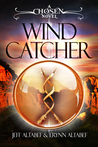
Juliet Wildfire Stone hears voices and sees visions, but she can't make out what they mean. Her eccentric grandfather tells her stories about the Great Wind Spirit and Coyote, but he might as well be speaking another language. None of it makes any sense.
When she stumbles upon a series of murders, she can't help but worry her grandfather might be involved. To discover the truth, Juliet must choose between her new life at an elite private school and her Native American heritage. Once she uncovers an ancient secret society formed over two hundred years ago to keep her safe, she starts to wonder whether there's some truth to those old stories her grandfather has been telling her.
All she wants is to be an average sixteen-year-old girl, but she has never been average- could never be average.
Betrayed by those she loves, she must decide whether to run or risk everything by fulfilling her destiny as the Chosen.
"Wind Catcher is a suspenseful, wonderfully written story that will capture your attention
and hold it prisoner. A book that you won't want to escape from. Brava!" - Stephen Fisher, Readers'
Favorite Book Reviews
Wind Catcher is the story of Juliet Wildfire Stone and how she has to choose between ignoring her Native American heritage in order to live the new elite, rich life her mother has built for her and submitting to the strange, old-fashioned ways of Sicheii, her grandfather, and the voices and visions in her head. It's a classic coming-of-age story with a side dose of fantasy, dipping generously into Native American legends.
Overall, Wind Catcher is a fine novel told in the voice of a very uncertain sixteen-year-old Juliet, who wants nothing more than to go back to her old life before Bartens, and, when things get decidedly weird in a Native American way, to go back to Bartens and fit in with the rich, popular kids (or maybe just Katie) without worrying about strange symbols, secret societies and whether Sicheii is really a murderer.
Trust seems to be a major theme of the story, as it is in a teenager's life. Can Juliet trust Sicheii, who is acting extremely cagey? Can she trust her best friend Troy, who doesn't seem as supportive as he used to be? What about her mother who's often lost in her own world? When things turn strange, and long-held secrets are revealed, who can Juliet really trust or believe? The Altabefs do a fine job with this theme, allowing Juliet to stumble through misplaced trust and unwarranted fears.
The one thing that put me off about this debut novel by Jeff & Erynn Altabef (hence the lower rating) is the pacing. It felt like it took forever to get anywhere, with Juliet dithering about the same thing over and over again (realistic, I know, but trying in a novel), and when it felt sufficiently built up and raring to go, it was almost over.
Still, if you love coming-of-age stories told in first person, this would be the book for you.
I received a copy of this e-book in exchange for an honest review via Novel Publicity.
Jane sat on the rocking chair under the shade of their porch. She could hardly believe that it had only been a day since she’d made her way into the Old Fairy Kingdom and met so many memorable fairy creatures. She was a little afraid that when she went to sleep that night, she would wake up and have no memory of Ataneq, Euthalia or the beautiful Fairy Queen. My grandmother, she thought with some astonishment. She had always believed that both her parents were orphans - true enough on Darrick’s side. I have a great grandfather too! It was hard to wrap her head around. Opening her journal in her lap, she started to write, trying to remember every detail of the day before it faded away.
Hearing a sound beside her, she looked up to find a beautiful girl sitting next to her, watching her write.
“Who are you?” she asked, surprised at her lack of astonishment, as if somehow since last night, nothing could astonish or frighten her anymore.
The girl laughed, a cheery tinkling sound. “I am one of the Zână. I bestow gifts of beauty and fortune to those who deserve them. I’ve always been with you in this place.”
“Have you? I’ve never seen you before.”
“You’ve only just had your eyes opened,” the Zână replied.
Jane thought about it for a while. “That’s true. But how do I know you are who you say you are?”
“I suppose you have to take me on trust.”
“Can my mother see you?”
“Of course she can. Do you think I come here just to watch you write?” she laughed again. “Though it is fun. You do make up such interesting things.”
Jane blushed. “I’ve never shown this to anyone.”
“Oh, I’m not quite anyone. And don’t worry. I haven’t told any of this to your mother.”
“Promise?”
“Pinky promise. That’s what you say, don’t you?”
“Yes.”
“Well. Do you want to go play? We could go to the stream and meet the Ghillie Dhu. He’s real fun - when he’s not trying to sleep.”
Jane pursed her lips as she thought. “You know what, I’m going to talk to my mother about you. Just in case.”
The Zână smiled. “Go ahead, Jane. I’ll be right here when you come back.”
Closing her journal, Jane tucked the book under her arm as she walked into the kitchen.
“Mother?”
“Yes, Jane?”
“There’s this girl on the porch who says she’s a Zână.”
“Oh, Diana? What about her?”
“Remember you said we need to be careful?”
“Oh, don’t worry about her. She’s been around for a long time. In fact, she used to help me take care of you. I wondered when you’d notice her.”
“Okay then. Can I…”
“Go off and play with her. Just remember to come home for dinner.”
Ivy smiled indulgently as Jane ran back out the door.
“Are you sure about this?” Darrick asked, looking up from the woodcarving he was working on.
“Oh, she’ll be safe. After all, she has important family in all three lands. Who would dare harm her?”
Zână (plural zâne; zînă and zîne, d̦ână and d̦âne in old spellings) is the Romanian equivalent of the Greek Charites. They are the opposite of monsters like Muma Padurii. These characters make positive appearances in fairy tales and reside mostly in the woods. They can also be considered the Romanian equivalent of fairies and of the Germanic Elf.
They give life to fetusesin utero and bestow upon them great gifts like the art of dancing, beauty, kindness, and luck. In folk tales, it is told not to upset them because they also have the power to do bad things or put a curse on the wrongdoer. They also act like guardian angels, especially for children who enter the woods, or for other good people.