Showing posts with label church. Show all posts

Wednesday, 19 August 2026

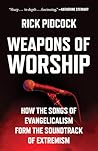
#Book Review: Weapons of Worship | Rick Pidcock

Weapons of Worship: How the Songs of Evangelicalism Form the Soundtrack of ExtremismWeapons of Worship: How the Songs of Evangelicalism Form the Soundtrack of Extremism by Rick Pidcock
My rating: 5 of 5 stars

Rick Pidcock's posts have been appearing on several of my social media feeds for a while now. A friend shared a post, I resonated quite a bit with it and read a few more, my clicks fed the algorithm (or however that works) and he just kept appearing after that. So when I found Weapons of Worship while browsing Edelweiss, I snapped it up immediately.

Which is to say that I was probably predisposed to like it and resonate with it anyway.

The recent history of the worship movements that Pidcock tracks were the soundtracks I grew up with, albeit at a distance and a slight delay. Passion's One Day Live was *THE* big album in my teens. (Weird note: I actually don't quite remember that last track, "America", probably because it didn't feel relevant to me.)

Being on the other side of the world (Malaysia), Hillsong Australia and Planetshakers still held a little more sway in the early noughts, but by the time I started leading worship in the main service somewhere around 2007 to 2018, our "top 25" charts were also filled with all the usual suspects: Chris Tomlin, Bethel, Kari Jobe/Gateway, Hillsong. We did like Israel Houghton, but generally decided his songs were too hard to sing in church; we did not have a choir or Black voices.

It's not surprising that there is little variation between worship songs in English-speaking churches in Asia and those in America. Due to colonialism, our faith is a very white-washed one, and Pidcock does address it in context of USA. This quote (of a quote) felt particularly relevant):
Cultural genocide, [George e. Tinker] argues, is "the effective destruction of a people by systematically or systemically (intentionally or unintentionally in order to achieve other goals) destroying, eroding, or undermining the integrity of the culture and system of values that defines a people and gives them life."
At any rate, we have very few local churches that write and produce their own worship songs - in English, at least. (Funnily enough, the book traces how what gets sung in church may actually be influenced by Spotify more than anything else...)

It was not with a little horror that I realised how all these songs - songs that in and of themselves aren't exactly wrong - have culminated in and fed a twisted, unrecognisable brand of Christian Nationalism that is standing proud and ugly in America today. But how, then do churches elsewhere not have the same impact, seeing that we mostly sing the same songs globally? I think part of it is the mindset of the people themselves, as well as the direction coming from their pastors and leaders. It's the context we bring to lyrics that we sing. I wrote about singing victorious songs once, and whilst some of it echoes what Pidcock says American evangelicals are pushing back against, the context and tone is very different. I tend to believe that Malaysia is generally not a war-like country (tendency of running amok aside) so when I think of victory, and of winning, I do not go straight to wars and guns, or somehow subjugating everyone else to prove that God is on my side. I think of going into situations with the peace that whatever the outcome is, God has already dealt with it in the somehow, somewhere, nebulously (probably some back-office talk/nego, strange compulsions, lol) and I don't have to fight for anything.

...also there's the fact that we shouldn't be hypocrites by welcoming the attempt to Christianise America, when we protest and claim oppression when Malaysian politicians try to claim we're a Muslim nation.

All that aside, Weapons of Worship is an extremely eye-opening read for anyone in the church, especially those who are involved in the music ministry in any capacity. If I had any criticism, it's that there is no "what's next" or "how do we fix this?" - but that was never in the scope or premise of the book.

Note: I received a digital ARC of this book from Broadleaf Books via Edelweiss. Opinions expressed in this review are completely my own.

View all my reviews

---

I feel like I should write a proper blogpost about this, but I already procrastinated on this review for very long because I couldn't organise my thoughts properly, so that may never come. 

Anyway, BUY THE BOOK.  

Wednesday, 20 May 2026

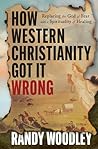
Book Review: How Western Christianity Got It Wrong: Replacing the God of Fear with a Spirituality of Healing | Randy Woodley

How Western Christianity Got It Wrong: Replacing the God of Fear with a Spirituality of HealingHow Western Christianity Got It Wrong: Replacing the God of Fear with a Spirituality of Healing by Randy Woodley
My rating: 5 of 5 stars

How Western Christianity Got It Wrong: Replacing the God of Fear with a Spirituality of Healing is a very thought-provoking book, as you can tell from the very title itself. No one wants to hear that the way their religion is practiced is (almost) completely wrong, but sometimes it's what you need to hear.

I picked up this ARC from Edelweiss because I've been facing a dissonance for a while now between how Christianity is commonly practiced globally vs my understanding of Scripture (and the whole but What Would Jesus Do! thing) and I wanted to see what Woodley had to say. There are some bold statements in the book (especially re: Jesus' purpose with regards to religion) that would probably require further thought, but on the whole, Woodley's explanations on church history and how Western Christianity got to where it is today is eye-opening and resonates with a lot of things I've been working through (and that's been coming out of the woodwork with the whole MAGA thing). It's also very accessible reading, even whilst being heavy on historical details - so it feels both solid and in depth without turning into some academic slog.

One thing I am ambivalent about - and Woodley does address it briefly - is that reinterpreting Scripture through his Indigenous lens does at times feel a little like syncretism. Which, on one hand, is what Western Christianity has totally done through out history (while wiping out other cultures), so it probably balances back out somewhat. Part of it could just be verbiage, and how Woodley expresses himself, which feels jarring to me tonally. This is one of the things I think would work for his community - and indigenous groups specifically - but not for a large majority of urban and mostly displaced and/or already culturally-disconnected Christians.

Yet, looking at the examples given, what it really highlights is the fact that all cultures and all tribes have the knowledge of God hidden in their histories and understanding of the world - it's a matter of looking at them and seeing where they align with the Bible, even if the symbols used are something completely different.

Chapter 11: How We Recover from Western Christianity is where things get a little muddy for me. This chapter is very heavy on repatriations from White churches to Native American communities, and is very rooted in the American context. I understand that Woodley can only write from his context, but it's very weird to have, in the midst of how community is strength, and how we need unity and diversity, caveats about cultural appropriation. It also sometimes feels like there's a need to punish the current generation for the sins of the past. How that looks like in Malaysia is vastly different, so a lot of the examples in chapter are not directly applicable except in the broadest terms when reading this from a Malaysian context

But, as he points out, any movement forward must be "place-based, rooted in the specific lands, histories, and cultural contexts that shape community needs, rather than imposing one-size-fits-all solutions that ignore local Indigenous wisdom." This is something I'll need to contemplate on further.

Overall, I think this book is important reading to understand what has shaped the current church, no matter where you are based, especially since a lot of Asian/Southeast Asian churches are heavily influenced by American churches through their former missionary work and mass media.

Note: I received a digital ARC of this book from Broadleaf Books via Edelweiss. Opinions expressed in this review are completely my own.

View all my reviews


Interested in reading? PREORDER NOW (Affiliate link)

Wednesday, 28 August 2024

#bookreview: Becoming by Beholding | Lanta Davis

Becoming by Beholding: The Power of the Imagination in Spiritual FormationBecoming by Beholding: The Power of the Imagination in Spiritual Formation by Lanta Davis
My rating: 4 of 5 stars

This was a fascinating read - there's so much about ancient religious practices that have been lost to time that Davis has laid out here.

It's really very hard to associate art in any form with the church as it is today, especially since the church is so often the most vocal against any form of artistic expression that deviates from "standard painting" or "literary novel" (with the emphasis on must be clean and family-friendly).

I was particularly captured by the potential meaning(s) behind the weird illustrations you often see laughed at in monastic/ancient texts, and how bestiaries were used more as devotionals than actual books about strange animals! It puts a lot of things in to context. As someone who could never get through Paradise Lost, it was also interesting to see the shifts in literature and our understanding of "the seven deadly sins" as opposed to what it was originally intended/written to be.

The only downside of reading this as a digital arc was that the images never made it through, so I had to do some side googling to see what was being talked about. The image descriptions in the book did help though!

This book is potentially a great resource for Christian artists in the current day who are looking to see how other Christians have expressed their faith artistically throughout the years.

Note: I received a digital ARC of this book from Baker Academic via NetGalley. Opinions expressed in this review are completely my own.

View all my reviews


Wednesday, 20 March 2024

Book Review: In Defence of Doubt | Val Webb

In Defence of DoubtIn Defence of Doubt by Val Webb
My rating: 4 of 5 stars

Everything you hear from the modern church seems so cut-and-dried. This Truth is the absolute, the Bible is the literal answer to everything; you have to believe in every word it says, or you are not a true Christian. But is that really true?

Val Webb reveals a long history of doubt in the church and how that has moved the understanding of faith and belief-as well as church practices, norms, and culture-forward in many different ways. It's important to note that the protestant church, in its current form, would not be in existence without the many saints who moved in and worked through their doubt and stood up against the church of their day to bring fresh revelation and revival. There are no easy solutions.

Reading In Defence of Doubt is liberating. It gives you freedom to address the doubts and questions that you have about God, faith, and the church even as you discover that this is nothing new. Noted (notable?) Christians over the centuries have struggled over these same questions, and having them being downplayed, glossed over, or left unaddressed is a disservice to everyone.

My only concern (and a wavering one at that) is the last chapter on Interfaith Dialogue. In one sense, I agree with everything she says, but as a whole... I don't know. Maybe I'm not there yet. There are many things in the preceding chapters that, if I read this when I was younger, I would have utterly rejected. So maybe in the future I might end up agreeing with Webb's stance fully, or maybe I'll end up shelving it as one of the things that's not really important to me in the grand scheme of things.

View all my reviews


Wednesday, 26 October 2022

#NetGalley #bookreview: Single Just Because: A Pilgrimage into Holy Aloneness | Bridget Gee

Single, Just Because: A Pilgrimage Into Holy AlonenessSingle, Just Because: A Pilgrimage Into Holy Aloneness by Bridget Gee
My rating: 4 of 5 stars

Most Christian books on being single end up talking about how to be married. Or you find out at the end of it that the author, while writing about being single, is actually married...or about to be. Which, I mean, isn't their fault, but it kind of leaves you feeling a little let down because...reasons.

Bridget Gee is still blessedly single at the end of this book. And in her thirties. Which makes this book very relatable, like we're all in this together! It's the story of Gee's life, the ups and downs of being single, and how the church fails the singles in their community. Which is great to read, but at the same time...not very useful. Maybe because it seems to meander a little halfway through. Yes, each chapter ends with a Pilgrimage Moment, a call to action to pause, reflect, pray. But getting to the end also leaves you with a big fat "So?"

Maybe I'm just expecting too much. But I'm also reading this after a camp for Christians in their 30s to 40s, where the session on "relationships" was still very much about how to find a spouse, rather than...what should you do/expect if you find yourself still single at this stage of life? (Bearing in mind that probably 90% of the campers were singles.) Should you start building your life on the expectation of remaining single? Or do you keep waiting and hoping to get married? It does emphasise Gee's point that the church is failing to see the bigger picture - and thus failing the singles in their community - by buying into the world's "sense of entitlement to marriage [that] turns singleness into a problem, a curse, or a burden." I think I just need something more concrete than what Gee is offering in this book.

She does point out the truth that:
...the journey of singleness leads deeper into God's presence, or what I like to call "holy aloneness" - the place where you are wholly known, wholly seen, and wholly loved by your Creator. That's the place we all belong.

affirms that:
It's okay to want something you don't know you will ever have.

and also acknowledges that:
At the core of our discomfort in being physically or relationally alone, we long for this affirmation. That we are whole, no matter what we're offering, no matter our limitations. We need to experience the freedom of simply existing, to not produce or strive or hustle for a bit. To be gentle with ourselves and treat ourselves with kindness.

In a world that centres romantic/sexual relationships above all else, Gee invites Christian singles to press into learning how to be alone with God. It may not offer practical life skills but is thought-provoking in how it offers suggestions on how to deal with your expectations and spiritual life.

Note: I received a digital ARC of this book from InterVarsity Press via NetGalley. Opinions expressed in this review are completely my own.

View all my reviews

Friday, 23 September 2022

Dear Malaysian churches, here's how to pretend to be more creative than you really are

Look, the easiest way to be creative (when really, you're not), is to hire a creative. There are many hidden creatives in your church, most of them not doing anything because you do not ask them to. 

Ask them. Better still, pay them.

Whether you pay them or not, most Christian creatives will usually feel, uh, led enough to offer their time to you for free or at a severely discounted rate because, church, you know?

When that isn't an option for whatever vague reasons you tell yourselves, remind yourself that stealing is a sin. So, whatever you do, DO NOT STEAL. Even if your intention is to give credit and skate along on the safe side of the applicable laws.

However, as they say, "Good artists copy. Great artists steal.

What? But you just said don't steal! Go read the article. I'll wait.

---

You back? Well, okay. Here is a super handy-dandy cheat sheet on how YOU as a Malaysian church can ultimately pretend to be OH SO CREATIVE by being inspired by Christian shows from America. Because honestly, one come-to-Jesus youth summer camp romance is pretty much the same as another, and as the author of Ecclesiastes says, there is nothing new under the sun.

There IS nothing new under the sun. 

The idea itself (falling in love at summer camp and also finding Jesus) is not copyrighted, but the execution of it is. First of all, here are a few DO NOTS you should adhere to.

  1. DO NOT under any circumstances copy all the dialogue and present yourself as the scriptwriter. NO. That is copying, that is stealing, and that is LYING. 
  2. DO NOT use all the same songs (or 90% of the same songs) from the show because that is being really, really blatant. 
  3. DO NOT use the same names la. Even if you change the surname, it's pretty obvious ok. Can don't be so obvious or not?

Why? Really simple. Because if there are sufficient similarities, even if you credit the original inspiration, people are going to be like, "eh, copy only. So same wan." Very not creative!

But you have an edge here, okay? Because once you localise the show, and I mean seriously localise it, not just change a few words, you have the best opportunity to pretend to be WAH SO CREATIVE HOW YOU THINK OF THIS?!

Remember: the idea of it is not copyrighted, the execution of it is. So take the overall idea and run with it. 

Ok ok, but how? Here are some very simple pointers:


Change the main character backgrounds

The Boy is in his last-chance foster home? Foster system WHAT foster system. It kind of exists in name la, but in practice??? In Malaysia, the Boy is more likely to go to an orphanage or group home, or even, say CPS. Even where places mention "fostering programme" it's more towards child sponsorship (like World Vision-style) and not USA-style where the child goes to stay with another family. Also, the government portal talks about "Probation Hostel/Asrama Akhlak" not "juvie" and they seem to jump directly from shelter homes to adoption (though foster child is mentioned once or twice). Also, the Boy is in trouble for stealing a cop car. Do people steal police cars? IDK maybe they do. But that is a very recognisable plot point. So change it. Make him a Mat Rempit or something. 

Then the Girl is the daughter of the campsite owner? Look, no one in Malaysia owns a summer camp, ok. We all just rent a hotel or maybe a campsite owned by some big church or NGO. So "owner of the campsite and daughter" doesn't make sense. Change it to the youth pastor and his daughter. Wah tension already. You want more tension? Try senior pastor's daughter. Bwahahaha.

The rest are teens, everyone's in school, not much is said about them so it's fine to just not mention it.

Just changing these two key background stories would actually already make your story different enough that it's not immediately recognisable.


Localise the jokes & language

Look, the reason it was ridiculous/funny that the Boy lied that they were "cousins" was because the Boy is White and the Friend & Camp Mom are Black. It's an obvious LIE. Your casting has two Chinese guys, cousin ma cousin lor, your church is 90% Chinese, what's the big deal? Find another joke that makes it obvious they're not actually related. Or think of another joke altogether. 

Your localisation must be thorough. John Hughes who? If it doesn't make sense to you because it's too American or too old, find something else that people watch which has the same "makeover" impact. The Chinese-Ed/English-Ed divide is also big enough a barrier - and probably more relevant in a local context. If the final connection point between Friend and his Love Interest is a quote from some super obscure show from the USA that no one here knows, find some super obscure show from Malaysia (or Singapore) that they can be crazy about and quote from. (I like horrible, terrible, vegetable as an inside joke, but that's just me.)

Malaysia is very multilingual. We tend to call things by their original names, whether they're in BM or in Chinese or whatever. USE THOSE TERMS. Lean into stupid bilingual puns. It's what your audience is used to anyway.

You have your own version of church camps, each has its weird points and competitive aspects. At my youth camp, we used to have marks for how tidy our rooms were, so there was a guy who SLEPT ON THE FLOOR so he wouldn't have to make his bed the next morning. What dumb things have your own friends done in camp? Draw from your own experiences.

You can also draw inspiration from scouts/guides camps and their chants! 100% relatable because I was never a girl guide but I've heard them in school and from friends anyway. 


Choose new songs

Keeping one or two key songs might work, but if most of the songs are the same, there's no running from the fact that you're drawing very heavily from the original. You probably don't have time to write your own songs because duh, otherwise you'd have written your own script, but you can find songs with similar themes that may even fit your revised script better! Plus, if you consider local songs as well, you have a wider range to pull from. Or, well, yeah BTS will work. 

You have to pay for the music license anyway, no matter what songs you end up choosing.


Actually adapt it for stage

A screenplay and a stage play are very different things. There are many things you can do on screen that you can't do on stage, and vice versa. So the act of just adapting the script for stage will already change key scenes and how they play out, maybe even the sequence of events. You need to figure out entrances and exits because you can't tell people to only look at one part of the stage. You can't have a quick montage of days passing or camp games that involve the beach and diving, but you can't just remove the scenes either because then the heavy lifting of character development and establishing relationships would then disappear with those scenes. You'll have to find another way to do it on stage. 

The Boy has a fear of heights but brags about the Blob (a high dive) because he doesn't know what it is? That's not something you can do on stage. Find something else that he could possibly be afraid of but brags about anyway because the Camp calls it something else. I dunno, some food he just can't stomach? 

If you've changed the location, you can't have that special garden anymore. But you can still have a special hangout spot, especially if they always return to the same campsite. It just won't be a garden she's tended for eleven years.  

---

Just changing these four things would lead to vastly different dialogue, which would lead to a very, very different execution of the idea, which is still Boy meets Girl at Camp and finds both Jesus and love. 

Is it a lot of work? Yes. Will it take a lot of time? Yes. Will it make you seem more creative than you really are? Probably, yes, depending on how much you actually end up changing.

Now, wouldn't it have been more worth it to write your own script in the first place?

Wednesday, 21 September 2022

#bookreview: Invisible boy: A Memoir of Self-Discovery | Harrison Mooney

Invisible Boy: A Memoir of Self-DiscoveryInvisible Boy: A Memoir of Self-Discovery by Harrison Mooney
My rating: 5 of 5 stars

Reading Invisible Boy is like refreshing my memory about the weird pentecostal days I grew up in, even though I'm on a whole different continent with vastly different racial and religious tensions.

The book is Mooney's memoir about growing up black in white fundamentalist Christian churches & schools in Canada, but many of the same pervasive and, honestly, skewed messages that festered in white North American churches in the 90s also made its way over to Malaysia. The roots of what I've seen and experienced as echoes all the way over here are exposed in full technicolour in Mooney's experiences. It doesn't help that Malaysia still, on the whole, idealises and idolises whiteness and white proximity; and that Chinese Malaysians are often just as racist, especially with respect to Indians.

Mooney says in his author's note:
I acknowledge here that what is said is not the same as what is meant. It doesn't matter anyhow. Intent is not impact, and if we continue to prioritize the goodness of our thoughts above the violence of our actions, we will leave a trail of victims in our wake. Mine is a story of impact; I write for the millions impacted in similar ways.
I have seen this reflected elsewhere as well, with an acquaintance emphasising that when engaging, impact should be considered before intent. We live in tumultuous times and I think it's worth the wake up call for those who profess to be Christians to consider the unintentional harm the church has caused many communities in the name of Christ, even if the intentions were good.

After all, the road to hell is paved with good intentions.

Note: I received a digital ARC of this book from Steerforth Press via Edelweiss. Opinions expressed in this review are completely my own.

View all my reviews

Wednesday, 1 June 2022

#bookreview: Buried Talents: Overcoming Gendered Socialization to Answer God's Call | Susan Harris Howell

Buried Talents: Overcoming Gendered Socialization to Answer God's CallBuried Talents: Overcoming Gendered Socialization to Answer God's Call by Susan Harris Howell
My rating: 4 of 5 stars

Buried Talents was birthed from the question: If God calls women to pastor, why don't more churches have women leaders? 

And so Susan Harris Howell sets out to tell us why, or in her own words: to expose the subtle forms of socialization that pull women away from, and move men toward, leadership.

The title is tied to the parable of the talents and draws on Kristina LaCelle-Peterson's book, Liberating Tradition: Women's Identity and Vocation in Christian Perspective, which asks:
"Would the returning master of the household be mollified if the excuse for burying one's talent was, 'I got married', or 'My husband didn't want me to'?"
Chapters 1 to 3 cover what gendered socialization looks like in the different stages of growth from childhood to adulthood, how it affects the development of a child (whether male or female), and simply how pervasive it is even if it is unintentional. Even where parents may proactively reject gendered socialization in the home, by the time a child goes out into the world, they will be exposed to such messaging. It can also be as subtle as what stories get highlighted in the media, where "Men are the norm; women, the exception. Men accomplish in ways that are notable; women, not so much."

One thing I found myself ruminating over in these chapters was the point Howell made about identity and how many women, especially in church settings, do not have an identity of their own--because boys are told that achievement is a worthwhile goal in and of itself, but girls are often told that whatever they do, they will need to sacrifice it for their spouse. Why then pursue something only to have to give it up? She ties this back to the Fall, saying that "the imbalance in the husband-wife relationship is the natural consequence of sin", later saying:
"In the light of this interpretation, men feeling good about themselves when they are better than women, and women not using God-given abilities to their fullest in order to please men makes perfect sense. "
That's one interpretation I have not really considered before.

Chapter 4 is a fictional case study of how gendered socialization often plays out in real life. I found it to be very realistic --but felt that a concluding paragraph might have helped me understand what these stories were for. As it is, they just...ended and were never referred to again. And so...?

Chapters 5 to 7 offer suggestions and practical steps on how to overcome gendered socialization starting with the home and our personal lives. It also covers the wider societal spheres of church, work, and businesses, and how one can actively push back against gendered messaging, sometimes by just being persistently present.

I think I expected a little more exposition or teaching on what the Bible says about gender equality, but Howell's target appears to be egalitarian Christians; in talking about building a support network, Howell does advise readers to consider whether [a complementarian] church is the best place to serve, worship, and grow. It's also not written specifically to women--some of the suggestions cover how husbands can support their wives and work towards an equitable arrangement that ultimately allows both of them to live their callings.

While Buried Talents is written for Christians and is published by a Christian press, I felt that it could also be read and appreciated by a general readership that is working towards gender equality at work and in the home. Though there are some sections that are specifically targetted towards Christians and the church (especially in relation to pastoring or church leadership), almost everything else is generally applicable to pursuing gender equality and more women in positions of leadership: just exchange "God's call" for "dreams" or "ambitions".

Note: I received a digital ARC of this book from InterVarsity Press via NetGalley. Opinions expressed in this review are completely my own.

View all my reviews

Monday, 23 August 2021

#musicmonday: Jireh (You are enough) / How He Loves | Justin Bieber & Chandler Moore


So there's nothing I can do to let You down
It doesn't take a trophy to make You proud
I'll never be more loved than I am right now

Monday, 3 February 2020

#musicmonday: Body and Wine | Jars of Clay


Rusty ground and dusty roads
It's been a while since you were king
Undermined and overthrown
You tried to run it on your own

Forget the birds with broken wings
Under piles of things on things
No one stops and no one stares
Seen it all and no one cares

What if this was all that we were made of?
This was all that we could make of love
If there wasn't more, I wouldn't be here
Hero and crime, body and wine

Drove my heart toward the sea
Passed the graves up over hills
Saw the spires hit the ground
Voices raised without a sound

What if this was all that we were made of?
This was all that we could make of love
If there wasn't more, I wouldn't be here
Hero and crime, body and wine

What if this was all that we were made of?
This was all that we could make of love
If there wasn't more, I wouldn't be here
Hero and crime, body and wine

What if this was all that we were made of?
This was all that we could make of love
If there wasn't more, I wouldn't be here
Hero and crime, body and wine
Body and wine

notes.

Monday, 20 January 2020

#musicmonday: King of Majesty | Hillsong


Okay, so this song came up, and I was like, "I didn't know people still sang it."
And someone said, "Yea, all the kids think it's a new song. They don't know how to do the hey! hey! hey!"

... and then later, I'm thinking waitaminute... that version is the remake. THE ORIGINAL DOESN'T HAVE THAT.
This falls in the high school era, where I remember learning/introducing the song in the basement of Chong Nam Theatre.

Monday, 2 September 2019

Of Endings and Goodbyes

There’s always a sense of leaving.

Today I sit on the 607 to White City, to what may be my last Ealing write-in. I usually read on the bus, but today I watch the scenery and feel a sense of... nostalgia? A sense of saying goodbye? It doesn't make sense. It’s only been a year.

Not long enough to set down roots. Not long enough to belong. Not really.

But there is a sadness in saying goodbye. I’m maudlin. I don’t leave the UK until mid-December but I am moving away from this neighbourhood in West London down to the south.

Spotify croons You’re not finished yet. You’re not finished yet.


I’m not. I have an essay to hand in that I’m procrastinating on because of this finality.

These are neighbourhoods I’ve never explored, but have always thought one day, one day I’ll get off this bus at a random spot in between and I’ll see what you have to offer. 

I never have. Now I never will. They’re just shops. A suburb. I don’t do this back home. Maybe I should.


I take photos. It’s a beautiful day. I want to remember this place. It has been good to me.

You have been good to me.

~

I don’t write at the write-in today. I read and reread my essay, tweaking it to sound a little bit more academic, a little less like an irreverent Terry Pratchett-esque commentary. Deleting my snarky footnotes does the trick.

The discussion revolves around reasons to punch a priest and the differences between the Catholic Church and the Church of England. We should read more Austen to figure out what a parish is, one says.

I order the cream tea, telling myself it’s not the last cream tea I’ll have in England. I have another three months, more than enough time for tea and scones. I finish editing the essay, leaving only the references to be formatted. I have been putting off formatting the references for half a week now. What's another few hours?

I am restless. I'm always restless.


I leave early, at half-past four, to make it in time for church.

The Piccadilly is shakier than usual. I hate the Piccadilly line but the Metropolitan doesn’t serve Ealing. There doesn’t seem to be a direct train to Uxbridge coming anytime soon, so I take the Piccadilly to Rayners Lane and change to the Metropolitan there.

~

Church is a series of telling people that I'm done, I'm almost done, I'm leaving soon. I have plans, I don't know what my plans are, I'm working on plans. I hope to tour Europe before I go, I don't know if I will see you again.

It's a rash of goodbyes, some I take care to tell that it may be my last service, it will be my last evening service. Next week, my halls will kick me out at ten in the morning, so I'll have to wake up for the morning service. We have a life group BBQ after that, and then I'll be gone.


We have dinner.

I walk home in the gathering dark. It's getting dark earlier, there's a chill in the air. I've gone from complaining about the stifling heat to thinking I should close one of my windows. It's not that cold yet, 3/4 of my windows stay open. I don't use my scarf, though I brought it out.

I fix my references.

Submit my essay.

I'm done.


There's always a sense of leaving; all things come to an end.

You make all things new.

Monday, 4 February 2019

#musicmonday: Borrow Mine | Bebo Norman


Take my hand 
And walk with me awhile 
Because it seems your smile 
Has left here

And don't give in 
When you fall apart 
And your broken heart 
Has failed you

I'll set a light up
On a hilltop
To show you my love
For this world to see

But when [Moses'] arms grew heavy, they took a stone and put it under him and, as he sat, Aaron and Hur held up his hands, one on each side, so that his hands remained steady till sunset.
Exodus 17:12

And take my love
When all that you can see
Is the raging sea
All around us

And don't give up
Cause I'm not letting go
And the God we know
Will not fail us

We'll lay it all down
As we call out
Sweet saviour
Help our unbelief

Let us therefore boldly approach the throne of our gracious God, where we may receive mercy and in his grace find timely help.
Hebrews 4:16

When you are weak
Unable to speak
You are not alone
God of us save us
And never forsake us
Is coming to take us
And take us to our home

For ours is not a high priest unable to sympathise with our weaknesses, but one who, because of his likeness to us, has been tested every way, only without sin. 
Hebrews 4:15

You can borrow mine 
When your hope is gone 
You can borrow mine 
When you can't go on 
Cause the world will not defeat you 
When we're side by side 
When your faith is hard to find 
You can borrow mine 
You can borrow mine


Take my hand

Take my love
Don't give in, no
And don't give up

Monday, 28 January 2019

#musicmonday: In the Wilderness | Josh Yeoh


The new series in church is called "Into the Wild", covering Exodus 15 - 23 when the Israelites are in the desert, after the great miracle of the parting of the Red Sea.

And I remembered this song.

--

Waiting here before the morning
Staring out into the sky
Hearing voices I once silenced
Wondering why it's so hard to cry

It's not that I don't know where to go
I've been there many times before
It's not that I don't know how to get there
I don't have strength to anymore

Lead me here
In the wilderness
I need Your help
Can't do this by myself
Lead me here
In the wilderness
Speak to my soul
Come comfort, make me whole

In the valley of my trouble
Underneath the wounded sky
I will sing songs of salvation
I will hold my head up high

It's not that I don't know where to go (Lead me here)
You've shown me many times before (In the wilderness)
It's not that I don't know how to get there (Lead me here)
It's hope that brings me through the door

Lead me here
In the wilderness
I need Your help
Can't do this by myself
Lead me here
In the wilderness
Speak to my soul
Come comfort, make me whole

Show me Your love
Show me Your love
I am Yours and You are mine
Show me Your love
Show me Your love
I am Yours and You are mine

Show me Your love
I need Your love
Show me Your love
I am Yours and You are mine
Show me Your love
I need Your love
Show me Your love
I am Yours and You are mine

Lead me here
In the wilderness
I need Your help
Can't do this by myself
Lead me here
In the wilderness
Speak to my soul
Come comfort, make me whole

Wednesday, 28 November 2018

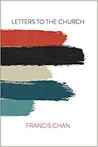
#bookreview: Letters to the Church | Francis Chan

Letters to the ChurchLetters to the Church by Francis Chan
My rating: 5 of 5 stars

Letters to the Church is thought-provoking, especially since it addresses some of the issues I am currently having around church.

Chan draws examples from his personal experiences, both in the old megachurch and in the new house-church style, but qualifies them with the statement that what he has done and what he is doing isn't representational of what Church is meant to be worldwide. He seems to ask instead, who are you following? Jesus or the church leadership team? What does faith, love, and community look like in your context? How would Jesus work in your situation, in your community?

The one thing he does come strongly against is the consumer mindset that besets many a churchgoer, myself included. The emphasis here is not how the church can cater to you, but how you can serve your church in its goal to reach the surrounding community.

I guess it all centres around the question What IS church? Is church as we know it the way it's supposed to be? Or is it supposed to be something more? Chan draws stark differences between the Westernised church (Westernised, not Western, because there are many churches in the East which follow the Western ways) and the persecuted church.

And that's the answer I'm still trying to find.

Note: I received a digital copy of this book from NetGalley. I was given the book with no expectation of a positive review and the review is my own.

View all my reviews

Wednesday, 6 June 2018

#bookreview: How to Be a Perfect Christian

How to Be a Perfect Christian: Your Comprehensive Guide to Flawless Spiritual LivingHow to Be a Perfect Christian: Your Comprehensive Guide to Flawless Spiritual Living by The Babylon Bee
My rating: 3 of 5 stars

Alright, I generally enjoy a little satire and usually find The Babylon Bee pretty hilarious. So when this came up on Edelweiss for review, it was pretty much asdfghjkl;omgineedtoreadthis.

As it turns out, I prefer my satire in small, concise soundbites (see: The Babylon Bee website), not in full-length, dense-ish, how-to-like books (see: How to Be a Perfect Christian). Some of the snark is spot on, but when it's in an endless stream like this one, it just gets a little too overwhelming. Or maybe it's a little too over the top that it ceases to stay funny after a while. Either that, or I've reached my eye-rolling quota for the week/month.

So yeah, if you really, really love satire (or you really, really hate super religious people and churchianity and want to laugh your head off at them), this is the book for you! [5 stars! Best ever!]

But if you're a new-ish Christian, easily confused, or you don't understand humour, you're pretty much going to be burning this book at the stake. [1 star. What rubbish is this! *angry face*]

Final star rating: 3, because I don't know how to rate things anymore.
Personal verdict: amusing, but eh.

Though I have to say that the ending does have pretty solid theology--if you get the roundabout way it's being said.

Note: I received a digital copy of this book via Edelweiss. I was given the book with no expectation of a positive review and the review is my own.

View all my reviews

Monday, 20 November 2017

#musicmonday: Saturday's #worship setlist


I really should have posted this on Saturday, but I didn't want to go dig for a Music Monday song.

So today you get 5!

Which was really the worship set from Saturday's service. 

Saturday, 23 September 2017

Saturday #worship setlist


I struggle. I don't want to do this. It's tiring, exhausting, I don't get anything out of it.

Yet, the reminder again is that this isn't for me.

It is, yes. But not alone.

In the end, it is for the church.