Wednesday, 27 May 2026

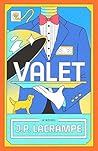
Book Review: Valet: A Novel | J. P. Lacrampe

Valet: A NovelValet: A Novel by J.P. Lacrampe
My rating: 5 of 5 stars

Valet is the sort of book that I would not have picked up on my own. It wouldn't even be on my radar. So imagine my surprise when I got a message on Edelweiss saying I've been granted access to read this... I don't always pick these up if I'm busy, but I had some time and it sounded interesting enough to try. (I did enjoy the rare Wodehouse I read in the past.)

Cy is a VALET, an android tasked to help Grayson St. Claire, his owner's 35-year-old son, start adulting. He's really very much the staff, beholden to his true owner and to his utility score, but Grayson treats him like a friend - or, more accurately, like a human. And, having "grown" up together with Grayson, Cy can read him and his moods the best - even better than his own mother.

Grayson is a mess of a human being, the stereotypical useless rich son who constantly fails at everything he puts his hand to, and yet is charming and kind enough to everyone that you really do want to see him succeed. He's both bumbling and earnest, and it's easy to see why Cy is loyal to him, more than Cy's guilt at stealing the late Mr St. Claire's praise and attention should account for.

Charlotte is exceptional as the competitive younger sister who's trying to prove herself by being the best at everything and looking down on her messed-up older brother. Mrs St. Claire is cold and grieving, and has mostly given up on her son. The other characters are in turns funny and weird, and though at times they seem a little too much, they also fit into the fabric of this future society well enough that you don't find it much more jarring than going "oh, those [rich/hippy/scheming] people..."

It's funny that throughout the novel, the two VALET characters, Cy and Larry, felt the most human in many ways. They worry about their ratings, they dread being made obsolete (which carries the repercussions of being destroyed, not just fired), they try to please the people around them (not just the humans, but the other androids they have to interact with - there's social status to be maintained!) and are most enterprising in how they try to get around the rules that govern them. Most of it is really being in Cy's POV and having insight into how androids fit into the fabric of society and what makes them tick.

But it really does make you think. What does it mean to be human? To be family? Charlotte is human, but she is so cold and calculating, with no sympathy or empathy for her own brother, that she might as well be an android herself. And Cy is very much a member of their family despite not being human - he feels like a butler from those old English movies that knows and keeps all the family secrets, yet remains ever so slightly worried about his position. I was surprised at how angry I was on his behalf when Mrs St. Claire and Charlotte threatened to have him decommissioned!

Overall, Valet was a fun and emotional read. It deals with humanity, family, grief, and love, and grapples with betrayal and jealousy, all while being part of a mad caper.

Note: I received a digital ARC of this book from Simon & Schuster via Edelweiss. Opinions expressed in this review are completely my own.

View all my reviews

Wednesday, 20 May 2026

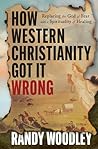
Book Review: How Western Christianity Got It Wrong: Replacing the God of Fear with a Spirituality of Healing | Randy Woodley

How Western Christianity Got It Wrong: Replacing the God of Fear with a Spirituality of HealingHow Western Christianity Got It Wrong: Replacing the God of Fear with a Spirituality of Healing by Randy Woodley
My rating: 5 of 5 stars

How Western Christianity Got It Wrong: Replacing the God of Fear with a Spirituality of Healing is a very thought-provoking book, as you can tell from the very title itself. No one wants to hear that the way their religion is practiced is (almost) completely wrong, but sometimes it's what you need to hear.

I picked up this ARC from Edelweiss because I've been facing a dissonance for a while now between how Christianity is commonly practiced globally vs my understanding of Scripture (and the whole but What Would Jesus Do! thing) and I wanted to see what Woodley had to say. There are some bold statements in the book (especially re: Jesus' purpose with regards to religion) that would probably require further thought, but on the whole, Woodley's explanations on church history and how Western Christianity got to where it is today is eye-opening and resonates with a lot of things I've been working through (and that's been coming out of the woodwork with the whole MAGA thing). It's also very accessible reading, even whilst being heavy on historical details - so it feels both solid and in depth without turning into some academic slog.

One thing I am ambivalent about - and Woodley does address it briefly - is that reinterpreting Scripture through his Indigenous lens does at times feel a little like syncretism. Which, on one hand, is what Western Christianity has totally done through out history (while wiping out other cultures), so it probably balances back out somewhat. Part of it could just be verbiage, and how Woodley expresses himself, which feels jarring to me tonally. This is one of the things I think would work for his community - and indigenous groups specifically - but not for a large majority of urban and mostly displaced and/or already culturally-disconnected Christians.

Yet, looking at the examples given, what it really highlights is the fact that all cultures and all tribes have the knowledge of God hidden in their histories and understanding of the world - it's a matter of looking at them and seeing where they align with the Bible, even if the symbols used are something completely different.

Chapter 11: How We Recover from Western Christianity is where things get a little muddy for me. This chapter is very heavy on repatriations from White churches to Native American communities, and is very rooted in the American context. I understand that Woodley can only write from his context, but it's very weird to have, in the midst of how community is strength, and how we need unity and diversity, caveats about cultural appropriation. It also sometimes feels like there's a need to punish the current generation for the sins of the past. How that looks like in Malaysia is vastly different, so a lot of the examples in chapter are not directly applicable except in the broadest terms when reading this from a Malaysian context

But, as he points out, any movement forward must be "place-based, rooted in the specific lands, histories, and cultural contexts that shape community needs, rather than imposing one-size-fits-all solutions that ignore local Indigenous wisdom." This is something I'll need to contemplate on further.

Overall, I think this book is important reading to understand what has shaped the current church, no matter where you are based, especially since a lot of Asian/Southeast Asian churches are heavily influenced by American churches through their former missionary work and mass media.

Note: I received a digital ARC of this book from Broadleaf Books via Edelweiss. Opinions expressed in this review are completely my own.

View all my reviews


Interested in reading? PREORDER NOW (Affiliate link)

Wednesday, 13 May 2026

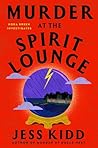
Book Review: Murder at the Spirit Lounge | Jess Kidd

Murder at the Spirit LoungeMurder at the Spirit Lounge by Jess Kidd
My rating: 4 of 5 stars

Nora Breen is settling in at Gore-on-Sea. Detective Inspector Hilary Rideout is getting into a habit of asking her to accompany him to cases, she stops by to listen to music and drink coffee with Hosmer of Hosmer's Photographic Studio, and she's been recommended for a writing gig with the Gore-on-Sea Herald. Then Dolores Chimes' reading goes disastrously wrong, leading to the death of the medium herself, followed by the people in attendance. Breen and Rideout must solve the mysterious killings before the last victim - Rideout - dies.

I enjoyed this one quite a bit more than the first book (Murder at Gulls Nest). I'm not sure whether it's because Breen is less unlikeable in this one, or because I'm somewhat familiar with her now. The third person present tense is still a little jarring at times, but it is what it is. (I cannot figure out why this irks me so much when I've read other stories in this style - maybe because those were usually short stories and not a full novel? idk)

I'm ambivalent about the love triangle subplot, even if it does add to some of the tension in the book. Rideout and Breen's relationship has progressed to a place where it feels more natural - and rather like a good partnership - even if Breen is a little oblivious to Rideout's feelings. Adding another suitor, which Breen is again rather oblivious about, felt rather awkward.

At any rate, the mystery itself is a tantalising morsel. There are so many threads to pull on, so many secrets and hidden relationships to reveal, and it's easy to get absorbed into the tragedies playing out in Gore-on-Nest. It snaps along at a good pace, full of tension.

Overall, another exciting whodunit!

Note: I received a digital ARC of this book from Atria Books via Edelweiss. Opinions expressed in this review are completely my own.

View all my reviews