Showing posts with label Southeast Asia. Show all posts

Wednesday, 11 February 2026

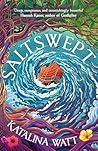
Book review: Saltswept | Katalina Watt

Saltswept (The Earthsalt Duology, #1)Saltswept by Katalina Watt
My rating: 4 of 5 stars

Paranish has finally reopened its borders and returners and visitors alike are thronging into Umasa for the birth of the princess. But not all is as it seems.

Finlyr Pane has returned to Paranish - and finds himself barely escaping the gallows. Ris' daughter Biba has powerful magic she can no longer hide - and in an attempt to avoid the Temple, Ris sets out on the perilous quest of retrieving the treasure from the Lahon Maelstrom. Hanan achieves her wildest dreams - only to find out that the Bastion holds dark secrets.

Saltswept is a quest adventure on the high seas, but it's also a dark fantasy that dips into necromancy, which leads to... zombie sailors. A content warning here: the book may look and feel rather YA, but it does contain several sex scenes (not graphic). It is also categorised as Adult, but it's hard to tell from the blurb and/or cover (though don't ask me what would make a distinction).

The narrative switches between Finlyr, Ris, and Hanan's POVs in first person. I personally think that if you have more than two viewpoint characters, you really should be writing in third person. As it is, it flows well enough despite having to keep tracking down whose first person POV I'm in. (But would've been easier, just saying.) Finlyr and Ris' POVs intertwine quite a bit, and they switch off rather seamlessly since they join forces early on in the book. It's Hanan's POV that often feels jarring, like it's not quite connected to the rest of the story. That storyline is important because it gives us insight into what the stakes are, and what's going on with the Temple and the Bastion, but since the two don't actually intersect until near the end, it feels a little like you're also reading a side quest of some sort.

Overall, Saltswept was an highly enjoyable read and I'm looking forward to book 2!

Note: I received a digital ARC from the Hodder & Stoughton via NetGalley. Opinions expressed in this review are completely my own.

View all my reviews

Wednesday, 31 December 2025

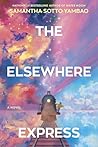
Book review: The Elsewhere Express | Samantha Sotto Yambao

The Elsewhere ExpressThe Elsewhere Express by Samantha Sotto Yambao
My rating: 4 of 5 stars

Near the anniversary of her brother's death, Raya Sia drifts off on the subway while on the way home. Q Chen Philips Jr. is delivering his last artwork to the gallery, and contemplating the end of his career and, possibly, his life. They both find themselves on the Elsewhere Express, a magical train that helps the purposeless find a sense of purpose and meaning. But behind the magic lies dark truths, truths that may very well destroy the entire train and everyone in it...

The Elsewhere Express is an exploration in letting go of the past. Raya is stuck in a holding pattern, pursuing her brother's dream of being a doctor, unable to move on because she blames herself for his death. Q knows it's only a matter of time until his sight fully disappears, so he's grabbing on to this new life on a magical train because he doesn't know who he is without his art. But letting go isn't about forgetting - even if people tend to conflate the two - and suppressing the past can be more dangerous and damaging than dealing with it.

I picked this up because I quite enjoyed Water Moon at the beginning of the year. Thematically, they're quite similar - both are about grief and regrets - but I did find it a little harder to get into this one. It's less whimsical and more surrealistic, for one, but the biggest hurdle for me was the concept of time. I spent a chunk of the beginning being confused about if they had actually died in real life, or if they'd entered the magical world but left their physical bodies behind. What if they never returned to the real world, since the point of the Elsewhere Express was for them to find a new purpose on the train? Would someone just find them dead? In the end I just had to stop wondering about it, and once I did, I enjoyed the story better.

For some odd reason, whilst Yambao never says where Raya and Q are from, they just had this Singaporean vibe. lol

Note: I received a digital ARC of this book from Transworld Publishers via NetGalley. Opinions expressed in this review are completely my own.

View all my reviews

Wednesday, 10 December 2025

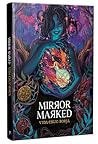
Book Review: Mirror Marked | Vida Cruz-Borja

Mirror MarkedMirror Marked by Vida Cruz-Borja
My rating: 5 of 5 stars

Mirror Marked was a fascinating yet somewhat confusing read.

It's written mostly in the second person (the prologue starts off in first person then segues into second), which was a novelty (for me) - and very well done. In fact, the POV really lends itself to the story; a kind of strange blend of storytelling, immersion, and something almost epistolary. I loved it.

The prologue ends with the ominous question, "Do you know where this story begins?" and then the narrator proceeds to tell us the story, starting over and over at different times leading up to the wedding, and at different points in Kelly's life. Some of the latter felt disjointed at times, but Cruz-Borja draws you along with the promise that all of it is important, all of it will eventually make sense. The confusing part is mostly because I'm quite a linear reader, and Mirror Marked is a very non-linear story. In fact, each section brings you further back into the past, before it culminates in the present. You just have to allow yourself to be led by Cruz-Borja's masterful storytelling and trust that she will not let you down.

Mutya, the mother of the bride, is a witch, and one of Kelly's main tasks is to make sure that she isn't at the wedding. And yet, whilst the wedding, and the planning leading up to it, is the backdrop to everything that's going on, the core of the story isn't about the wedding, or even about love. It's about facing up to yourself and your past, and the healing that comes from that. It's about memory, and the stories we tell ourselves around painful ones. It's about difficult families and how broken parent-child relationships negatively impact a child's view of the world and themselves. It can be a difficult read at times - Cruz-Borja even advises you in her author note to take a break if you need to.

Best of all, Mirror Marked is gloriously Filipino. It's set in a Manila populated by Kapre, Diwata, Sigbin, and Engkanto. There's no over explaining, and even no glossary. There's a mix of cultural references, like "It’s giving Princess Punzalan in Mula Sa Puso" as well as "Toby Maguire and Kirsten Dunst’s upside-down kiss in Spider-Man". I don't always get everything, but I don't have to. Google exists and even without it, the story still stands on its own.

Note: I received a digital review copy of this book from PS Publishing. Opinions expressed in this review are completely my own.

View all my reviews

Wednesday, 15 October 2025

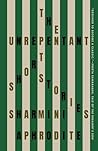
Book Review: The Unrepentant: Short Stories | Sharmini Aphrodite

The Unrepentant: Short StoriesThe Unrepentant: Short Stories by Sharmini Aphrodite


I'm reluctant to put a star rating on this one. The stories are tight, hard-hitting. They speak volumes of the era, revealing unspoken biases and grudges that have been passed down through generations, a peek into what the silent minorities in our midst have experienced and continue to experience. These are things young Malaysians should read to understand our histories, where we come from.

Yet, I find myself drifting halfway through the collection. I'm not a big fan of historical fiction, especially around World War 2, and whilst this sort of circumvents my feelings about that specific era, at some point, the stories start to feel seem too similar. Sharmini seems to loop round several times - I can't tell if the stories refer to the same unnamed rebel (insurrectionist?), from different perspectives in different eras - or if it's a different person but with similar histories. I'm a noblebright kind of reader myself; I want a bit more hope in my stories than appear here.

And there are a lot of dark pain points in these tales - The Unrepentant: Short Stories is a visceral exploration of generational loss and sacrifice as well as Malaysia's struggle for independence. History is told by the victors, but in this collection, Sharmini shows us other perspectives and how everyone then, despite their differences in approach and clashing ideologies, were still working towards the same goal: Independence for Malaya.

Stories of note:
The Light of God is a great opening story, capturing me right from the start.
One Hundred Perumals is the voice of a people crying out for justice. There's a mythological feel to this, a creation of a hero of folklore, creating a beacon in the dark.
Atlantic City is an interesting exploration of voice, but with all the hedging going on as the POV character speaks around the main issue, whatever it is, it feels like the core of the story is lost. (It's explained in the Author's Note)
Kamus I like primarily because of its focus on language and intercultural marriages - what it means to marry out of your race, especially when one is a Malay and prescriptively Muslim. This is a uniquely Malaysian problem. How do you choose between your community and the one you love? It's a lose-lose situation, no matter what you decide.

Note: I received a digital ARC of this book from Gaudy Boy via NetGalley. Opinions expressed in this review are completely my own.

View all my reviews


The Unrepentant: Short Stories releases on 1 November 2025. Preorder your copy here. (Amazon affiliate link)

Wednesday, 7 May 2025

Book Review: OBJECTS OF DESIRE: 10 Malaysian Chinese Short Stories in Translation

OBJECTS OF DESIRE: 10 Malaysian Chinese Short Stories in TranslationOBJECTS OF DESIRE: 10 Malaysian Chinese Short Stories in Translation by Lee Hao Jie


Interesting things I have learnt about Mahua, which I think is different from English lit:
- naming the main protagonist is, apparently, almost unheard of. OMG like 8/10 stories do not name the MC and sometimes not even the other characters T.T And one of them, I'm not actually sure if the MC was named or not, so maybe that's 9/10 lmaoooo
- the writers reference English classics, which is interesting, because I wouldn't expect any English works to reference Chinese lit!
- there are a lot of stories around memories and losing the past. Maybe this is an outflow of how Malaysian Chinese feel like we're slowly losing our culture to time and modernisation.
- also a lot of family feels.
- maybe also a preoccupation with death... idk, I feel like only 2 stories don't mention death (or a dead person) in any form.

How Mahua is similar to English literary short stories:
- the writers have an obsession with affairs, sex, and the penis. 
- some of them have really weird endings? Like what? What am I supposed to get from this? Is this story even complete? IS THIS A FEVER DREAM.
- these are the same reasons I rarely read (or write) in the "literary" genre lol.

Anyway, notable stories, or stories I thought were really strong:
Xia Mei’s Clock by King Ban Hui, Yee Heng Yeh (Tr)
This is the story where the title comes from:
“At one point, he had swiped through the photos of these girls who, through the way they dressed, presented themselves as objects of desire on the website. Whoever they once were had been reduced to just their name, age, body measurements, and nationality.”

Xia Mei’s Clock is a pandemic story, where interpersonal connections are fraying and time has lost its meaning. The protagonist (also unnamed, unless that stray mention of ‘Xing Ye’ towards the end is his name?) requests for a human prostitute at the clock hotel instead of a silicone doll. Yet as the story slips from the protagonist, to Xia Mei, then back again; and as COVID rages and time skips; there’s an underlying surrealness to the story, making you question if Xia Mei is actually human.
As much as I thought this was a really iffy premise, this is a solid story on connection, the male loneliness epidemic, and the ravages of time.

Our Years on the Mountain Top by Tew Pak Ching, Lai Suk Yin (Tr)
If I had to make a snap judgement on Mahua based on this book, it would be the fact that Malaysian Chinese writers are somehow obsessed with penises. This heartwarming story of sibling love (and rivalry) as well as a mother’s sacrifice for her children (both evident in the mother and grandmother in this story) is framed by the very strange peeing competition in the morning, and the younger sister’s preoccupation for looking at her brother’s pee-pee. Like why.

Yesterday’s Sunken Fragrance by Chan Yeong Siew, Foo Sek Han (Tr)
A chance look at a Malaysian news headline reveals the truth behind the long silence from Liu Chen Xiang’s lover, Ma Yao Han.
Actually, the most exciting thing about this story is that finally, finally EVERYONE IS NAMED. It’s a weird thing to note, because like a predominant writing advice in English is to name your characters upfront and all these stories so far have gotten away with having a lot of unnamed characters. But I digress.
Yesterday’s Sunken Fragrance dwells in memories and loss, and also secrets and the grief that comes from them. It’s bittersweet, and yet also tinged with practicality as Chen Xiang says her goodbyes in the city she’s long left behind.

Panas by leemuzmuz, Ooi Yining (Tr)
Panas is a hard-hitting story of sexual assault in school, flitting from her present trauma to the past events that created them. It’s a painful look at how the perpetrators are often protected and victims told to just suck it up and move on. And that last haunting question: would none of this have happened if she were a boy?

All in all, this was a fascinating exploration of literature that I would normally never read, either because of the genre or because of the language.

Looking forward to the next in the series!

View all my reviews

---

Wanna grab your own copy? It's available on Amazon! (Affiliate link)

Wednesday, 25 December 2024

Book Review: Môo-Sîn-á: Mystery of The Invisible Tribe | Wang Chashung

Môo-Sîn-á: Mystery of The Invisible TribeMôo-Sîn-á: Mystery of The Invisible Tribe by Wang Chashung
Translated by Grace Tong En Hui & Tew YiQian
My rating: 4 of 5 stars

I finally got round to reading this! Received a complimentary copy during GTLF last year, and well, you know the TBR.

This English translation of Môo-Sîn-á was published in 2023 but mostly reads a little like early English sci-fi works from the 1950s or so. It's slightly meandering and quite deeply reflective, and while not exactly epistolic, reads more like a letter or diary than a modern narrative novel.

Set in 1990s in Taiwan, the novel follows Wang as he journeys into the interior jungles of Taiwan to reconnect with Hei, an old friend from his army days. It's also something of an escape or an exploration of midlife crisis - he's recently separated from his wife and has left his job, and the only thing that's piquing his interest is looking for Hei. Several times during his journey, aided only by a magical hand-drawn map, Wang admits to himself that he's really looking to discover himself.

There isn't much of a "fantasy" or "magic" structure in place - these are myths, intertwined with spirituality/religion, with a strong folklore base. Primary is the Taiwanese myth of the Môo-Sîn-á, a dark-skinned people with magical powers) with a strange connection to Bornean tribes. Including time-travelling Japanese! Unfortunately, this does colour it with a colonial lens, with the impression of "civilised" people trying to connect with the "primitive" people in the mountains. However, since it's Taiwanese, there's less of a " discovering savage barbarians" feel and more of a cautious exploration of supernatural mystique overlaid with fear of ghosts. I'm curious to know if there really is some connection between the Taiwan aborigines and Borneo natives, or if this is something Wang made up.

Wang sometimes makes very strange detours and ruminations even in the midst of an ongoing conversation which I found a little annoying. Maybe it works better in the original writing, if that's some form of writing convention in Chinese.

I guess to summarise, I did enjoy the story, but I also had a lot of questions about editing choices. Though I don't really know how that is supposed to work with translations.

View all my reviews

Wednesday, 13 November 2024

Book Review: The Diamond Device | M.H. Thaung

The Diamond DeviceThe Diamond Device by M.H. Thaung
My rating: 4 of 5 stars

Picked this up free at Glasgow 2024.

The Diamond Device is a fun steampunk adventure? Mystery? thingamabob. Genre definitions are hard. There are British class vibes (impoverished lord trying to pretend he's doing fine, his last household servant is more loyal to him and his family than to her own friends), cosy mystery vibes (neither Alf Wilson nor Richard Hayes are detectives, and yet they must help the police solve this mystery without creating an international disaster), and all round fun shenanigans.

Alf Wilson is pulled into a lot of things he doesn't want to do out of a sense of duty and honour, and overwhelming concern for his sister and mother. Lord Richard Hayes is desperately trying to find enough money to pay his property taxes whilst pretending that everything is fine! And obviously getting a job is not going to cut it, just because of his title. It makes for a very interesting pairing as they both try to navigate each other's foibles.

The Diamond Device was a breeze to read, and I was captured from the start. The plot is twisty enough to keep you on your toes - you think the kidnapping is solved at the 50% mark, but ohoho! More complications crop up!

The one thing that didn't quite sit well was the Hayes' parents very odd lack of concern for him. In some ways, it felt inevitable that they would have to come appear sometime, but after all the explanations, I found myself going, "You knew all that and yet you just... didn't do anything?"
It also felt like Richard accepted their reasoning much too easily and calmly, like, sure, everything's fine now because he found them again.

Anyway, there is book 2 (The Sapphire Solution) so I may proceed on to that after I'm done with my current read.

View all my reviews

---

Get The Diamond Device or The Sapphire Solution on Amazon! (affiliate links)

Wednesday, 4 September 2024

#bookreview: The Friend Zone Experiment | Zen Cho

The Friend Zone ExperimentThe Friend Zone Experiment by Zen Cho

Renee Goh is a successful businesswoman blazing her own trail in London, away from her patriarchal Singaporean family. Then her father offers Renee the one thing she's been hankering after: approval in the form of offering her the chance to take over the family business. But is that what she really wants? (Insert break-up drama, family feuds, old-flame reunion, plus that one skeevy ex.)

I'm trying to figure out what I feel about this one. I do quite like Zen Cho's fantasy works - and I especially love the Malaysiana she brings into her stories. She's especially deft at capturing the Malaysian Auntie Voice.

The usual "not quite my genre, bla bla" comments apply here. This is straight up realistic fiction, not a ghost or supernatural creature in sight! The style feels like a throwback to her earlier short story style, not so much her long-form fantasy style. (I haven't gotten round to Black Water Sister, which may have been the beginnings of the shift?) This isn't a bad thing. I do like that voice and I want to see more of it in fiction. However, I don't think I've read a romance (as the main plot) in a while (if I have ever! haha), so there were bits that felt a little draggy here and there, especially where everyone's keeping secrets and not telling anyone important stuff. Then again, that's also the bits I get annoyed with in all kinds media and without which there would be no story, so, eh.

MAYBE what's throwing me off is the whole, uh, sub-plot that it's wrapped around. It hits very close to real-life happenings in Malaysia. Maybe someone who isn't based here would just read it as fiction (I'm seeing a lot of K-drama references in other reviews) but I'm also going like OH THE SARAWAK REPORT. OH CLARE REWCASTLE-BROWN. OH 1MDB! ALL THE ILLEGAL LOGGING. OBVIOUSLY THEY KIDNAPPED AND KILLED HIM WHAT DID YOU THINK. Which also makes me wonder whether the stuff we read as fiction from other countries hits as hard for their readers in the same way.

Cho brings up the Malaysian/Singaporean family dynamics really, really well - which adds to the ultra-realism of this novel. The family squabbles! The expectations of marriage (and grandchildren)! The fight over who pays for dinner! All that annoying one-upmanship... ugh. Though I can't help but feel that Ket Siong is something of a wish-fulfilment fantasy - he's a little too good to be true.

There's also a lot of corporate drama (and some sexual harassment) going on, plus a heavy dose of family loyalty vs ethics considerations. Do you keep the peace in order to save your family's face/reputation? Do you let yourself love the person whose family has destroyed your own? CAN you put aside your own personal boundaries if that's going to help your family business?

It isn't quite a light read (despite "romcom" being thrown around), but it does have a Happily Ever After. I don't know the genre well enough to say if it'll be a hit for romance readers, but I'd say it's a solid rep of how Malaysian society works (even displaced as they are in London) if you're looking for that.

Note: I received a digital ARC of this book from Pan Macmillan via NetGalley. Opinions expressed in this review are completely my own.

View all my reviews

---

If you're looking for a GREAT Zen Cho book to start with, I'll always recommend The Order of the Pure Moon Reflected in Water. (Get it here)

Wednesday, 10 July 2024

#bookreview: These Deathless Shores | P.H. Low

These Deathless ShoresThese Deathless Shores by P.H. Low
My rating: 4 of 5 stars

These Deathless Shores is a Captain Hook origin story, where Peter Pan isn't the bright, happy, beloved kid you remember from the Disney movie. No, something incredibly sinister lurks behind that childish smile. It's darker than I expected it to be; it deals with, amongst others, addiction, eating disorders, childhood trauma, codependency, suicide ideation, gender dysphoria (? well, at least some discussion on gender) and extremely bloodthirsty revenge.

Because that last bit is Jordan's whole motivation, isn't it? To return to the island and to take her revenge on Peter Pan. Everything else is incidental, something to be utilised to serve her end goal of stealing Tinkerbell from Peter. If Low were to have focused only on Jordan, that would have made for a very boring story.

Fortunately, it's the cast of supporting characters that add colour to the story. Baron - whose love for Jordan makes him do difficult things. Tier - who's still trying to become his own man. Chay - who has somehow managed to stay on the Island past adulthood.

For a novel that the author touts as Malaysian-inspired (which was really what interested me, though it's not actually on the blurb), there's nothing that really screams "Malaysia" to me. For obvious reasons, the bulk of the book is spent on the Island, which is that magical-mystical Neverland brought to somewhere on the physical plane instead of up in the sky (and conceptually feels more Bermuda Triangle). The parts and flashbacks to Jordan & Baron's original home of Burima/Hanwa (I'm still not sure if Hanwa is a place or a language or both?) has a more generic Southeast Asia vibe in a Raya and the Last Dragon kind of way. Case in point: the opening fight scene feels more Muay Thai (Thailand); I do not know that I'd be able to find something similar in Malaysia.

Anyway, setting aside, if you're into dark fairy tale retellings, this might be of interest to you!

Note: I received a digital ARC of this book from Orbit via NetGalley. Opinions expressed in this review are completely my own. 

View all my reviews

Wednesday, 29 May 2024

Book review: The Light Between Us | Elaine Chiew

The Light Between UsThe Light Between Us by Elaine Chiew

As books go, I went in to this warily because I tend not to like WW2 (and adjacent) stories. But I also wanted to read this to support a SEA writer! So ok la #cubatry.

Excellent points:
I loved the writing and the language, the fluidity of moving between English and Malay and Chinese (of various dialects). I felt that it represented us so well. I am pretty much a banana, so I skimmed some of the Chinese phrases (note: I didn't realise there was a glossary at the end until I finished, since I was reading a digital arc), but I felt that Chiew was deft enough in her writing that you could pick up on what it was supposed to mean.

The only confusion I had was probably because of my own muddled language proficiency, where koon sah is apparently a TYPE of old Chinese dressing? I always thought it just meant pyjamas (i.e. koon = sleep, sah = clothes) HAHHAHAH. Also, Tangki as the Chinese (can't recall which dialect) term for the medium being possessed just kept me thinking of the Malay word "tangki", which is like a water tank, but that also makes sense because it's like a vessel kan. LOL

Content warning:
Slight implication of incest because of extended familial relationships, even though they're not blood related.

The setting and plot:
Yeah okay, so one of the reasons I figured I might give it a try is because there is a dual timeline of Charlie in the current day somehow reaching across the past to connect with Tian Wei in the 1920s. Which, I mean, is a cool concept. I liked it in Agnes Ong's Skyping Back in Time. But here...

So everything for Charlie is happening in the span of a few days, and at the longest stretch, maybe a month? But it's happening for Tian Wei over months and years (there's some fancy mathematical theory for this) which... I guess as a reader, I wasn't convinced their rather sporadic letters were enough for them to fall in love. It felt like first one or two letters were like hello who are you what's going on, then bam, oh the numerical-stars-are-aligned instalove.

And then there's a pretty long jump in time for Tian Wei, which (ugh) brings him to the 1940s and WW2, which YEAH. no. But this is a me thing, and also why I haven't read any TTE books (#sorrynotsorry).

Verdict:
If you're a historical fiction fan, especially around SEA WW2 stories, you'll probably love this! If you're a camera & photography nerd, you'll probably also love this! If you bangga Singapura and Malaysia (because come on, they were the same country back in those days) and you love codemixing, you'll also love this!

Note: I received a digital ARC of this book from Neem Tree Press via NetGalley. Opinions expressed in this review are completely my own.

View all my reviews

Wednesday, 3 April 2024

Book Review: Court of Wanderers | Rin Chupeco

Court of Wanderers (Silver Under Nightfall, #2)Court of Wanderers by Rin Chupeco


Had a rocky start because I couldn't remember how Silver Under Nightfall ended (And then couldn't find where that ARC (i think it was an ARC anyway? It was definitely an ebook, but it wasn't in my Kindle) went so I couldn't re-read the last few chapters to catch up on events).

So yes, Court of Wanderers throws you in the deep end, on the assumption that you'll remember what happened in the earlier book. Like it just starts in the middle of a scene and I'm like, who, what? Anyway, I just went off the vibes that I could remember from my previous review, except...the mood seems to have changed quite a bit.

But also, disclaimer upfront like for the first book (if you're following my reviews for clean-ish content): There are a lot of sexy times in this book (and not the fade-to-black kind), so if that is not for you, this book is not for you. Like really, really not. Also, since this is book 2 (and thus not a spoiler anymore), the main characters are in a polyamorous relationship with uh, kinky undertones. Which is also normalised in vampire Court etiquette.

Court of Wanderers as a whole feels a lot darker, and much more political. There's a lot of backstory being covered, and secrets being revealed, and a lot of talking heads going on about politics. And betrayal. And chunks and chunks of dialogue about what happened in the past, which should have worked, except that sometimes by the end of each paragraph I'd already forgotten who was talking to who. ACTUALLY, I think I have to note that a major part of the plot and everything that happens in this one is because of...backstory. Which maybe should have come up a bit more in the first book? Or maybe should be a book on its own so that this one would flow much better? idk

I loved the inclusion of Filipino mythology, the idea that there are various strands of vampires and that one of them, stemming from the First, had left the First Court and established their own colony in the Whispering Isles. Peacefully with the humans. Until the colonialists brought war, of course.

You can't avoid that bit of anti/post/whatever-colonialism.

But anyway, I loved Remy's exploration of his mother's heritage, and what that means to him after being brought up denying it.

There's less science in this one. Also I think less rompy sex, but more sad? emotional? omg-you-almost-died events. Just a lot more politics and politics. And twists because of secrets and manipulations. Have I mentioned politics? A side thought is that maybe this would also have worked better as two books instead of one, even though I have no idea how they'd do that. But it would make it feel less dense, in a way.

Overall, this is an interesting read if you want to finish the series.

Note: I received a digital review copy from S&S/Saga Press via Edelweiss. Opinions expressed in this review are completely my own.

View all my reviews

---

HAPPY RELEASE DAY! 

Court of Wanderers released on 2 April. Get your copy on Amazon now. I also suggest getting Silver Under Nightfall first, so you're not completely lost. (Affiliate links)

---

Read my review of Silver Under Nightfall here.

Wednesday, 13 September 2023

#bookreview: The Epic of Bidasari and Other Tales

The Epic of Bidasari and Other TalesThe Epic of Bidasari and Other Tales by Aristide Marre
My rating: 4 of 5 stars

There are four tales included in this book, which was first published in 1901. This edition doesn't seek to retranslate or even clean up much of the text, so the writing isn't exactly...stellar lol.

The Epic of Bidasari itself is amusing, a Snow White type of fairy tale written in epic verse that's divided into six songs. There are several key differences: Bidasari is a lost princess; the evil queen (Lila Sari) isn't related to Bidasari in any way; there's no magic mirror (heh) but the queen sends out her maidens to scour the land for "a face more beautiful than mine". It's not just pure vanity, though. The reason she does this is because her husband tells her TO HER FACE that if he finds anyone more beautiful than her, he'll take her as his second wife. Which, I mean, I can sympathise a little?

But of course, as this is a fairy tale, this very act of Lila Sari looking for the beautiful maiden then makes it a self-fulfilling prophecy. It's nice to note that the actual stepparents in the story (well, not really "step" but the merchants who find and adopt Bidasari) are the good guys.

There's hints of Sleeping Beauty, insofar as after escaping the palace, Bidasari is cursed to sleep throughout the day until the spell is broken. But seeing that her prince charming is a married man who's all like "I love you because you're more beautiful than my wife" and who goes back to visit his first wife and says "but it's all your fault that I married her because you beat her and hid her from me!!"... ugh.

Yeah, so not very romantic at all. Anyway, it's all very dramatic and twisty, with a lot of false accusations, quests and side quests, and "I cannot bear to part with you!" declarations so maybe it's worth it for that kind of OTT drama. Which kind of feels on par of what little I know of the stories of that era. (Most of these would have been told orally, and probably incorporated music and dance and singing.)

The main problems with the readability of this text (besides it being really old-school) is the inconsistency in titles (lack of modern editing!), where Lila Sari is Queen on one page, but Princess on another, and Djouhan Mengindra is sometimes Sultan, sometimes King, sometimes Prince. It's fairly easy to follow at first, but when the other Kings/Princes from other lands come into play, that's where the reader needs to track who's who very carefully. It's rather amusing, though, to look at transliterations from an earlier century and snigger a little at how odd they look - eg: dyang, mantri, tjempakka - or to try to puzzle out what on earth that word was really supposed to be.

I skimmed through the second one, Sedjaret Malayou, because I've read the full text of (Sejarah Melayu: The Malay Annals) which is a much, much better (and complete) translation. I feel like I should get around to reading the newest translation, though (The Genealogy of Kings), which would probably be more accurate and less clunky, seeing that it's a 2020 translation by Muhammad Haji Salleh.

The Princess Djouher-Manikam is another fascinating tale, this time set in Baghdad. It's about a princess who really has no agency and is just shunted from place to place and through harrowing events "because of God's will" (but mostly because of horny men who think they should own every pretty woman they see). It gets a little annoying the longer goes on, but towards the end, the princess does take matters into her own hands in a meaningful way to direct her own life, albeit by dressing up as a man. It's hard to criticise this meaningfully because those were the constraints of the time, for a woman in her culture.

The final piece in this book is Makota Radja-Radja (The Crown of Kings), which isn't so much a single narrative, but a collection of stories/extracts about various kings that's intended to showcase how a king should act. It was a little jarring to read at first because most of the stories are centred around Middle Eastern countries, but the foreword sheds light that it was originally written in the 1600s by a Bokhari who lived in Djohore (Johor). The text jumps around a lot and doesn't have any meaningful arrangement or sequence, though I don't know if that's a translation problem or the fact that it feels like just a fragment of the original text.

ANYWAY. Read this for the TBR challenge. I don't know if I'd recommend it as a "you should read this" but if you're on a fairy tale/folklore kick and want to know more about stuff from Asia, this would fit. I'd say just focus on The Epic of Bidasari and The Princess Djouher-Manikam though.

View all my reviews

---

This was supposed to be August's stretch goal but it took longer than expected, because I had other books to review and post. Plus, I did change my book at the last minute. 

Wednesday, 6 September 2023

#bookreview: Lime Pickled and Other Stories | Marc de Faoite

Lime Pickled and Other StoriesLime Pickled and Other Stories by Marc de Faoite
My rating: 4 of 5 stars

I am not making the same mistake I did with reviewing de Faoite's TROPICAL MADNESS - that "coming soon" long review will probably never come now. (That said, I probably should reread that one, if only to see why I remember liking it more than this collection.)

Comparisons aside, Lime Pickled and Other Stories is a fascinating collection of 27 short stories by Marc de Faoite, some of which have been published in various platforms or anthologies over the past decade. The collection is a little on the darker, grimmer side of stories than I usually prefer to read, so you'll have to adjust my feedback accordingly, I guess.

We burst on the scene with "Red Monkey Sam", which sets the tone for the collection. This is Malaysia, laid bare in words. Many of these stories are about cultural clashes: between Malaysians and expatriates, Malaysians and migrant workers (what makes one a migrant worker vs an expatriate anyway?), between different groups of foreigners, between the different ethnic groups in Malaysia. There is a feeling of transience and otherhood, and yet also one of a strange sort of belonging, even though it's hard-won, clinging to the crevices, through sheer familiarity.

I felt like the longer stories were often the stronger ones, but also more chilling, laying bare the darkness of human nature. "Floodbaby" is one of them, as is "Dr. Fintan" and "Kurang Manis". Many details in "Kurang Manis" might as well have come directly from a newspaper article; "Big Balls" might have well been referring to uh, you know, someone real.

Even in the darkest stories, de Faoite offers no moral judgement, no long backstory or explanation. It's just a story written, a thing that happened, it is what it is. Which, in a way, makes them even more frightening because there is no justification for why and how such things could have come to be. (Troubling that these are also the stories that ring most true to current events.) That, I think is a strength, because modern storytelling is often too prone to excusing evil by blaming circumstances and trying to shoehorn in redemptive arcs.

The shorter works often ended very ambiguously, almost as if they were somehow truncated or never quite resolved. This open-endedness is an oft-used literary device, but it's one that often leaves me underwhelmed especially when there's no sense of closure.

The pandemic-related stories - "MCO: Manicure Control Order" and "Ah Girl Wants A Vaccine" - really shone, and there's a little of the supernatural in "Return Guest" and "The Green Fuse", which I appreciated.

At the end of the book, de Faoite offers some insight into how he came to be in Malaysia and why he left - and the context of many of the stories included in this collection.

Overall, Lime Pickled and Other Stories is one I'd recommend if a) you like dark stories and b) you'd like to read more about Malaysia.

View all my reviews

Monday, 3 July 2023

Join the #MalaysianMagic launch team!

 New book, new tour!


This one's an anthology that I really loved putting together. IT'S AMAZING, PEOPLE! Even if I have to say so myself *ahem*

Anyways, join the launch fun! Cover reveal's in about 2 weeks and the launch is in November at GTLF! Again! We have rough dates of between 23 - 26 November, which are the festival dates, but don't know the exact day/time yet.

But ebooks launch 23 November anyway. 

HERE'S THE SIGN-UP FORM. COME SHARE SHARE THIS BOOOOOOOK.


Wednesday, 12 April 2023

#bookreview: UNSAID: An Asian Anthology | Anitha Devi Pillai (ed.)

UNSAID: An Asian AnthologyUNSAID: An Asian Anthology by Anitha Devi Pillai
My rating: 4 of 5 stars

UNSAID: An Asian Anthology started off strong, but ended up a little meh towards the end. It was a really weird feeling of going "ooh I really like the stories in this anthology" to "ummmm like that only ah?", especially since the sequence of stories moved from sad, dark real-to-life stories I tend to get bored by to supernatural, legend type stories that I tend to like so I kind of expected it to be the inverse.

The first four stories in The Others category deal with dark matters - the constant othering and prejudices many Asians face, even within their own cities. Nothing is more relatable than Saras Manickam's "When We Are Young"; which non-Malay Malaysian hasn't faced this very scenario? How often do we have to talk about meritocracy and quotas for nothing to change? Cherrie Sing's "The Taste of Pickles" also elicited nods: yes, these things happen, what can you do about it? "Broken Filaments" by Paul GnanaSelvam presents a very odd premise - yet I can imagine it happening in small-town Malaysia in the 80s; we all know weird old teachers like that with strange ideas and the inability to accept a no. I resonated with the home-away-from-home in "Diwali Lights" by Adwiti Subba Haffner; that feeling of in-betweenness where you long for what was even though you know that the here and now are your true home.

Knotted Ties explores relationships, both familial and within the local community. Of the five stories here, the middle three (The Peanut Turtle, The Broken Window, Lata) stood out to me. These are the kinds of stories that I, personally, would like to read more of: that dissonance between your own and your adopted cultures, of having to match what you know with what you were supposed to have known. "The Peanut Turtle" (Dennis Yeo) was the most intriguing, probably because of the format. It switched between the protagonist's first trip to Malaysia as a child (told in the present tense), and something like a memoir (diary?) of the events written in the future that explained the historical & cultural background plus many of the gaps in the child's knowledge - which really made for a strange reading. Oddly enough, it works. Whilst I did like "The Apartment of Good Intentions" (Adriana Nordin Manan), it ended rather abruptly and felt a little incomplete to me.

That dissatisfaction of "huh, something feels missing here" carried over into the last section, The Unknown, which felt like the weakest set of the whole anthology. Maybe I was bored by the time I got to it, I don't know, or maybe I've read too many similar ghost/supernatural stories that nothing really stood out or got me excited in this batch of stories. Or maybe there was just too much revenge going on, whether in life or from beyond the grave. That said, they're interesting enough, and still worth a read.

As a whole, Unsaid is a solid collection of short stories set in Asia. (I hesitate to say "by Asians" because there are a couple of names that don't seem to be specifically Asian based on their bios.)

Note: I received a review of this book from PRH SEA. Opinions expressed in this review are completely my own.

View all my reviews

Wednesday, 25 January 2023

#bookreview: Nusantara: A Sea of Tales | Heidi Shamsuddin

Nusantara: A Sea of TalesNusantara: A Sea of Tales by Heidi Shamsuddin
My rating: 5 of 5 stars

Nusantara: A Sea of Tales is a wonderful collection of fairy tales, folklore, and fables from the core geographic area of the Malay Archipelago or what used to be called Nusantara. A large majority of the stories come from Malaysia, both East and West (since Heidi Shamsuddin is Malaysian), and Indonesia (because both countries share quite a lot of the same folklore), which I guess automatically includes Singapore (because they were historically always linked before they became their own country).

There are a smattering of stories from other Southeast Asian countries - the Philippines, Vietnam, Thailand - and, oddly, one story each from Guam and Madagascar. Heidi justifies the latter two as being included because they share the Austronesian language. Frankly, I felt they were just a little too far away to share much cultural similarity and probably could have been kept for a later collection.

Some of the more familiar tales (to me) are several Sang Kancil stories, variations of the Bawang Putih, Bawang Merah tale, Si Tanggang, The Swordfish Attack of Singapore and The Curse of Mahsuri. Some of the other tales are vaguely familiar - whether because I have heard of/read them before in other collections or they are similar to European tales, I cannot quite tell. But quite a few were new to me, especially those from Borneo and from other countries. I was delighted to discover Pak Pandir stories for the first time. How did I not know these exist?

Heidi includes notes at the end of each tale or, sometimes, at the end of a group of similar tales. This provided a lot of background knowledge about where the story comes from (and where similar stories are told across the region), explanations of untranslated words and names (where they hold specific meanings that add nuance to the story), as well as some hidden meanings behind cultural practices that are not quite apparent face value.

Some other books you may be interested in checking out include: Tales of Superhuman Powers: 55 Traditional Stories from Around the World, Pearls on a Branch: Arab Stories Told by Women in Lebanon Today, Tales of Japan: Traditional Stories of Monsters and Magic.

Nusantara: A Sea of Tales is a timely book that collects tales from oral storytellers and
older print sources that are increasingly hard to find before they are lost to us altogether.

View all my reviews

---

And that's book 1 from the 2023 Booktempter's TBR reduction challenge!

Wednesday, 7 December 2022

#bookreview: Ripples and Other Stories | Shih-Li Kow

Ripples and Other StoriesRipples and Other Stories by Shih-Li Kow
My rating: 4 of 5 stars

It's hard to say what I really think of this.

On one hand, I'm not a huge fan of this kind of writing. By themselves, each short story seems to be a rather banal slice of life that doesn't quite lead anywhere. There's some drama in a few of them, but in a majority of the stories, it's just a thing that happened, something that's being told; there's no inherent conflict, no quick emotional hit that we tend to look for in a short story. This thing happened, so-and-so said something, the end.

And yet, there is a certain something about the way Kow weaves the compilation together, centred around a few key characters and their families. Each person's actions, each person's story creates ripples that affect the next. The POVs shift, identities are sometimes unclear. Despite the utter normalcy and banality, there's a lingering mystery that draws the reader to want to go back and read it again to figure out where the interconnections are made, where the ripples were formed and how far they stretched. Did this thing referenced in this story really...? Is this the same person that...?

The language is fluid and beautiful; it's not the stiltedly polished English we tend to get in Malaysian literature (can you tell I'm jaded yet?). Instead, it's a true reflection of our tongues and inflections, the mix of languages that make up our everyday lives.

Ripples and Other Stories is unapologetically Malaysian in setting and in tone and definitely deserves a closer read.

View all my reviews

 ---

Ripples doesn't seem to be in print anymore, but you can get it as an ebook via Pakka English/Silverfish Books

Sunday, 27 November 2022

#AbsolutionNovel excerpt

CHAPTER 8 (excerpt)

Story note: Tulen (POV) is living as a servant in the Impian Palace under the name Sabit. Tengku Nawal has discovered that her father is trying to marry her off to Sultan Mikal and is trying to find a way to get out of it. Magda, her childhood nanny, has been out all morning and has just returned to the palace.


Tengku Nawal is delighted to see Magda. 

“Magda, oh Magda, you have to help me!” she says, almost prancing.

“What is it, sayang?” Magda guides her to sit at the table where I’m laying out the various dishes the kitchen has prepared.

“I’ve been thinking all morning, and Sabit has been a great help,” Magda’s eyebrows shoot up, “but she’s not you, Magda, she doesn’t know anything!” 

“Anything about what?” 

“About how to deal with Ayahanda. You know how to deal with him, don’t you?” she wheedles.

“I don’t—”

“He listens to you. I just need to know what to say to him so that he won’t make me marry the Sultan!”

I have to bite my cheek to prevent myself from laughing at Magda’s incredulous expression.

“But sayang…”

“No, Magda, no buts! I’ve already thought about it all night and all morning and I’ve come to my conclusion. You cannot take Ayahanda’s side in this. He has no right to send me into a marriage I do not want!”

“But it’s the Sultan!”

“I know!” she says, stamping her foot. “But it’s not the Sultan’s request, so it doesn’t matter. It’s Ayahanda’s request.” 

She’s beginning to get annoyed, so I quickly push her attention towards the food. She looks down at the steaming hot rice and the freshly fried fish. She makes a face at the fried kangkung belacan but pulls the bowl of cabbage soup nearer.

“Sayang, your father only wants what’s best for you. This is why he is asking. You will have to get married eventually, and all he wants is to find the best husband for you. One who has the power and ability to take care of you and provide for you.”

“Eventually, Magda, but not yet.” She looks up sharply. “I’m still too young for this and Ayahanda knows that!”

“Many women get married at seventeen. This is just an engagement—you won’t have to marry him immediately.”

Tengku Nawal clicks her tongue in annoyance. “But I don’t want to get engaged! Not yet. I’m supposed to have time to enjoy myself and tour the Sultanate first!”

“Who says you cannot do that when you are engaged or after you are married? All you do is delay the inevitable, sayang. One day you will have to get married and leave home. It may not be to Sultan Mikal, but it will happen unless Kudus Himself wills it otherwise.” 

The hand reaching for the fish stills. 

Magda freezes where she sits. 

A look of glee spreads over Tengku Nawal’s face. “Kudus. That’s the answer.” 

“The answer?” Magda says, trying to recover her composure. “How?”

“A pilgrimage. I should seek the face of Kudus to find out if it is his will for me to marry Sultan Mikal. No matter what the Sultan’s reply is, he can’t stop me from doing that.” She starts stuffing her face with rice and fish, satisfied now that she’s found a solution.

Magda’s face darkens. “Do not take Kudus lightly, Tengku. A pilgrimage is not something you should embark on just on a whim.”

“But it’s the perfect excuse!” Tengku Nawal argues. “I will avail myself to the service of Kudus and by the time I return, whatever urgency Ayahanda has for this match will be over. Then we’ll see if he still wants me to marry the Sultan. Or if the Sultan even wants to marry me. I get to travel, and no silly engagement will be involved!” 

“And what if Kudus answers you?” Magda grips the edge of the table. “What if Kudus Maha Esa decides to call you into His service? What will you do then?” 

Tengku Nawal glares at Magda. I want to send her calming thoughts, but I don’t want to risk something that might change her behaviour too much—not while Magda is observing her so intently. Distracting her now is not going to work, anyway.

“What would Kudus want with me? Don’t be silly, Maggie. You know I don’t believe in your fairy tales. You may go now,” Tengku Nawal says curtly.

Jaw clenched, Magda gets up, gives the princess a deep curtsy, shoots me a warning look, then she backs out of the room.

~


I was going to post the excerpts yesterday, but it got a little too long, what with the photos and the video. So you get the excerpt today! 

Get Absolution now!


Get the other books in the series at USD2.99 each as part of our Launch Week Sales!


Looking for paperbacks?

We're currently working on getting the books printed, but you can pre-order a paperback directly from Teaspoon Publishing if you're based in Malaysia!

Living elsewhere? Ask for Absolution from your nearest independent bookstore!

Wednesday, 16 November 2022

#bookreview: Red Scholar's Wake | Aliette de Bodard

The Red Scholar's WakeThe Red Scholar's Wake by Aliette de Bodard
My rating: 4 of 5 stars

SPACE PIRATES. That's all.

---

Xich Si's scavenger ship is taken by pirates in the wake of the Red Scholar's death, and you know how it goes: she can never go home again. But will she be pressed into service as a bondsperson? Or will she be tortured to death as her business partner had been? What she doesn't expect is to be offered a marriage contract by Rice Fish, the ship itself and also the Red Scholar's widow. It's a marriage of convenience, of business and protection, and you know how that usually goes as well.

And to put this right at the start, it's advertised as a sapphic romance, so if that's not what you can accept, then this story is not for you. No blindsiding in this one, it's obvious from the start that the two of them are going to, well... Anyway, there is at least one graphic scene, obviously right before the betrayal (or misunderstanding) though it's a strange stretch (for me) to think of a person and a mindship? An avatar? Relationships-wise at any rate, I do not think there is a single heterosexual relationship in this novel. If there was, it was just never really talked about at all.

The entire novel is layered in Vietnamese imagery, like a peek into a new world for me. One that seems faintly familiar in its Asianness and yet vastly different as well. There's that hierarchy of both age and status: the distance of the elder aunts and young child, the closeness of sisters. The descriptions - especially of their clothes and their overlays - are rich and detailed I sometimes wonder what's the significance of the phoenixes and the peaches and all the other stuff that appears on Tien's clothes that I've already forgotten.

The Red Scholar's Wake is a story full of open tropes and yet one full of hidden depths...skilfully engineered together to fulfil your every expectation--and beyond. It's Xich Si doing anything she can to keep her daughter alive and safe, and Rice Fish learning to love again from the ruins of her past. It's lawful space pirates against a corrupted legal society, the small people against the Big Powers, power plays and politics, a building and breaking of trust, family lost and family found. And all-too-perceptive children.

Come for the tropes, stay because it's a truly entertaining read.

Note: I received a digital ARC of this book from the Orion Publishing Group via NetGalley. Opinions expressed in this review are completely my own.

View all my reviews

Tuesday, 1 November 2022

#coverreveal: Absolution!

If cursed is the hand that kills, then it wouldn’t matter if that same hand stole, would it?

Tulen feels doubly cursed, forced to serve the bratty princess of Impian as punishment for her crimes. When said princess embarks on a pilgrimage, Tulen grabs her only chance to offer a sacrifice at the holy city of Suci—and maybe, finally, feel clean again.

Sultan Mikal has set his face towards Suci—and certain death. Nothing about his Penance is clear, except the fact that if he fails, Terang will fall along with him.

When Tulen’s pilgrimage intersects with Sultan Mikal’s quest to fulfil the Covenant of Salt, Tulen faces a difficult dilemma: What is her absolution worth in the face of the sultanate’s very existence?

~

At long, long last, we're entering the last stages of publishing Absolution. And today, we reveal our stunning cover, by the outstanding Jiwosopy!

Absolution launches online on 24 November 2022!

Here's where you can currently pre-order your copy!

Amazon | Other ebook retailers | Paperbacks (Malaysia)

Absolution (Absolution, #2)

~