Showing posts with label book reviews. Show all posts

Wednesday, 15 July 2026

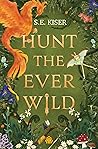
Book review: Hunt the Ever Wild | S.E. Kiser

Hunt the Ever WildHunt the Ever Wild by S.E. Kiser
My rating: 5 of 5 stars

King Edgard is offering a great prize to anyone who can catch the elusive phoenix and turn him into a bird, that is, someone who can find the spell to give him eternal life in order to extend his glorious reign over Gescany. Sylas (Sy) Cassirer, spellscribe to the King, jumps at this one chance to pay off his indenture and escape the King's whims. Anya Degen, a skilled huntress, needs to bind the phoenix to the witch in order to escape a curse. Both need the other to navigate Lichtenwald forest, evade other magicians, and capture the phoenix, but neither can actually split the prize, even though they agreed to. At least they're strangers, working together with the knowledge that they will eventually betray each other. Right?

Hunt the Ever Wild is a richly layered dark fairy tale (they use the term gaslamp fantasy, but idk, I'm giving up on genre terms and it does very much read like a fairy tale). Magic is powered by blood and words. The Forest has a will of its own. It feels very much like a story against Empire; not so much post-colonialism, but more of an angry Eat-the-Rich vibe.

Sy is the scholarship student who makes it, but finds himself in an untenable position - with an indenture (student debt) that hardly ever reduces no matter how hard he saves. He makes money from serving the nobility, but also performs "charity" (an act highly looked down on by his peers) by healing the ailments of the poor in the district (slum?) he grew up in. He's made it, but he will never fit in. His relationship with David is confusing at first - self-serving and selfish, amidst genuine care. It isn't until you learn that David, whilst secure in his own social class, is battling bankruptcy that you realise why the two of them, with Bernard (the failed spellscribe) and Sabina (the woman), end up pulling together, even if half the time they need to fight each other to stay afloat in society. Half-friends are better than no friends in a cut-throat society.

Kiser showcases in stark relief the attitudes of the rich nobility towards the poor and unfortunate, especially those who have managed to make something of themselves ("Oh, the poor indenture!"). Much of Sy's posturing is to hide his vulnerability from those who are supposed to be his peers, yet Anya sees them as an affectation put on to mock her. Funnily enough, Anya's secret origins may actually provide the acceptance in high society that Sy can never hope to gain.

The Forest itself is an active character in the book. It doesn't speak, of course, but it acts in subtle ways, changing every person who enters its domain - revealing the darkest secrets of those who came to hunt the phoenix, manipulating the actions of others to achieve its own goals. Even Anya, who has grown up in its shadow and knows how to navigate its whims, gets drawn into its plans without quite realising it. To be fair, she has other concerns on her mind - not just the curse that's transforming her, but her growing affection for and attraction to Sy, whom she knows she must eventually betray.

The slow burn romance between Sy and Anya works for me - a push and pull, a romantic tension that ebbs and flows. How much of it is the influence of the forest? And how much of it is the understanding that grows between two outcasts fighting for their lives? We'll never know, but it doesn't quite matter. What really nailed it for me, in the end, was Sy's intrinsic dignity and honour, the fact that his love was underscored with sacrifice - he accomplished what he meant to do, then he gave it away for her.

Note: I received a digital ARC of this book from Angry Robot via NetGalley. Opinions expressed in this review are completely my own.

View all my reviews

---

Wednesday, 24 June 2026

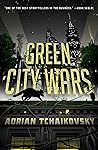
Book review: Green City Wars | Adrian Tchaikovsky

Green City WarsGreen City Wars by Adrian Tchaikovsky
My rating: 4 of 5 stars

Skotch, a freelance raccoon investigator is tasked by his former employers, big corp Uzco, to bring in the fugitive mouse scientist, Dr Meece. The problem is, every single animal faction in the city (and from the country) is also trying to get their hands on Meece. Not necessarily alive. Oh, AND they all think that Skotch knows where he is. What's a raccoon to do to stay alive?

The fun part of this story is obviously the world building. This isn't one of those completely anthropomorphic animal stories like Redwall or the Farthing Wood series where the animals are given human attributes and speech just because.

These animals are artificially engineered by humans to be smart and tasked to run human green cities from the shadows. All the undesirable jobs that are looked down upon? Animals do them, from turtles to rats to mice and racoons. But it's also nature vs artificial intelligence, where sometimes sheer animal instinct overrides the intelligence gifted to them by science (also known as plangent). There are scientific repercussions and rules that govern these societies - the most important of which, Rule Number One, is to not involve the humans.

It's first and foremost, though, a PI story - in a rather old-school, hard-boiled detective noir style. Dark, gritty, with a main protagonist that keeps talking at you. Which, unfortunately, is a style I rather dislike. Still, the plot itself, while simple, unfolds in a complex maze with revelation upon revelation, hooking you again at just the right time to go "hhmmm just a bit more". It also starts off slow, but picks up as more and more factions try to get in on the action. There's a "last stand" scene that reminds me of Colin Dann's Battle for the Park - beautiful and tragic and perfect.

I'd actually recommend this more for noir readers than sci-fi, because whilst the science is important and underpins the whole thing (you cannot actually take out the science worldbuilding and be left with ANY story), it kind of comes second to the tone of the story.

Note: I received a digital ARC of this book from PanMacmillan/Tor via NetGalley. Opinions expressed in this review are completely my own.

View all my reviews

---

Preorder on Amazon now (affiliate link)

Wednesday, 27 May 2026

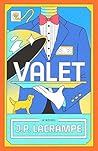
Book Review: Valet: A Novel | J. P. Lacrampe

Valet: A NovelValet: A Novel by J.P. Lacrampe
My rating: 5 of 5 stars

Valet is the sort of book that I would not have picked up on my own. It wouldn't even be on my radar. So imagine my surprise when I got a message on Edelweiss saying I've been granted access to read this... I don't always pick these up if I'm busy, but I had some time and it sounded interesting enough to try. (I did enjoy the rare Wodehouse I read in the past.)

Cy is a VALET, an android tasked to help Grayson St. Claire, his owner's 35-year-old son, start adulting. He's really very much the staff, beholden to his true owner and to his utility score, but Grayson treats him like a friend - or, more accurately, like a human. And, having "grown" up together with Grayson, Cy can read him and his moods the best - even better than his own mother.

Grayson is a mess of a human being, the stereotypical useless rich son who constantly fails at everything he puts his hand to, and yet is charming and kind enough to everyone that you really do want to see him succeed. He's both bumbling and earnest, and it's easy to see why Cy is loyal to him, more than Cy's guilt at stealing the late Mr St. Claire's praise and attention should account for.

Charlotte is exceptional as the competitive younger sister who's trying to prove herself by being the best at everything and looking down on her messed-up older brother. Mrs St. Claire is cold and grieving, and has mostly given up on her son. The other characters are in turns funny and weird, and though at times they seem a little too much, they also fit into the fabric of this future society well enough that you don't find it much more jarring than going "oh, those [rich/hippy/scheming] people..."

It's funny that throughout the novel, the two VALET characters, Cy and Larry, felt the most human in many ways. They worry about their ratings, they dread being made obsolete (which carries the repercussions of being destroyed, not just fired), they try to please the people around them (not just the humans, but the other androids they have to interact with - there's social status to be maintained!) and are most enterprising in how they try to get around the rules that govern them. Most of it is really being in Cy's POV and having insight into how androids fit into the fabric of society and what makes them tick.

But it really does make you think. What does it mean to be human? To be family? Charlotte is human, but she is so cold and calculating, with no sympathy or empathy for her own brother, that she might as well be an android herself. And Cy is very much a member of their family despite not being human - he feels like a butler from those old English movies that knows and keeps all the family secrets, yet remains ever so slightly worried about his position. I was surprised at how angry I was on his behalf when Mrs St. Claire and Charlotte threatened to have him decommissioned!

Overall, Valet was a fun and emotional read. It deals with humanity, family, grief, and love, and grapples with betrayal and jealousy, all while being part of a mad caper.

Note: I received a digital ARC of this book from Simon & Schuster via Edelweiss. Opinions expressed in this review are completely my own.

View all my reviews

Wednesday, 20 May 2026

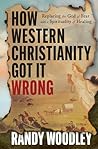
Book Review: How Western Christianity Got It Wrong: Replacing the God of Fear with a Spirituality of Healing | Randy Woodley

How Western Christianity Got It Wrong: Replacing the God of Fear with a Spirituality of HealingHow Western Christianity Got It Wrong: Replacing the God of Fear with a Spirituality of Healing by Randy Woodley
My rating: 5 of 5 stars

How Western Christianity Got It Wrong: Replacing the God of Fear with a Spirituality of Healing is a very thought-provoking book, as you can tell from the very title itself. No one wants to hear that the way their religion is practiced is (almost) completely wrong, but sometimes it's what you need to hear.

I picked up this ARC from Edelweiss because I've been facing a dissonance for a while now between how Christianity is commonly practiced globally vs my understanding of Scripture (and the whole but What Would Jesus Do! thing) and I wanted to see what Woodley had to say. There are some bold statements in the book (especially re: Jesus' purpose with regards to religion) that would probably require further thought, but on the whole, Woodley's explanations on church history and how Western Christianity got to where it is today is eye-opening and resonates with a lot of things I've been working through (and that's been coming out of the woodwork with the whole MAGA thing). It's also very accessible reading, even whilst being heavy on historical details - so it feels both solid and in depth without turning into some academic slog.

One thing I am ambivalent about - and Woodley does address it briefly - is that reinterpreting Scripture through his Indigenous lens does at times feel a little like syncretism. Which, on one hand, is what Western Christianity has totally done through out history (while wiping out other cultures), so it probably balances back out somewhat. Part of it could just be verbiage, and how Woodley expresses himself, which feels jarring to me tonally. This is one of the things I think would work for his community - and indigenous groups specifically - but not for a large majority of urban and mostly displaced and/or already culturally-disconnected Christians.

Yet, looking at the examples given, what it really highlights is the fact that all cultures and all tribes have the knowledge of God hidden in their histories and understanding of the world - it's a matter of looking at them and seeing where they align with the Bible, even if the symbols used are something completely different.

Chapter 11: How We Recover from Western Christianity is where things get a little muddy for me. This chapter is very heavy on repatriations from White churches to Native American communities, and is very rooted in the American context. I understand that Woodley can only write from his context, but it's very weird to have, in the midst of how community is strength, and how we need unity and diversity, caveats about cultural appropriation. It also sometimes feels like there's a need to punish the current generation for the sins of the past. How that looks like in Malaysia is vastly different, so a lot of the examples in chapter are not directly applicable except in the broadest terms when reading this from a Malaysian context

But, as he points out, any movement forward must be "place-based, rooted in the specific lands, histories, and cultural contexts that shape community needs, rather than imposing one-size-fits-all solutions that ignore local Indigenous wisdom." This is something I'll need to contemplate on further.

Overall, I think this book is important reading to understand what has shaped the current church, no matter where you are based, especially since a lot of Asian/Southeast Asian churches are heavily influenced by American churches through their former missionary work and mass media.

Note: I received a digital ARC of this book from Broadleaf Books via Edelweiss. Opinions expressed in this review are completely my own.

View all my reviews


Interested in reading? PREORDER NOW (Affiliate link)

Wednesday, 13 May 2026

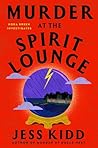
Book Review: Murder at the Spirit Lounge | Jess Kidd

Murder at the Spirit LoungeMurder at the Spirit Lounge by Jess Kidd
My rating: 4 of 5 stars

Nora Breen is settling in at Gore-on-Sea. Detective Inspector Hilary Rideout is getting into a habit of asking her to accompany him to cases, she stops by to listen to music and drink coffee with Hosmer of Hosmer's Photographic Studio, and she's been recommended for a writing gig with the Gore-on-Sea Herald. Then Dolores Chimes' reading goes disastrously wrong, leading to the death of the medium herself, followed by the people in attendance. Breen and Rideout must solve the mysterious killings before the last victim - Rideout - dies.

I enjoyed this one quite a bit more than the first book (Murder at Gulls Nest). I'm not sure whether it's because Breen is less unlikeable in this one, or because I'm somewhat familiar with her now. The third person present tense is still a little jarring at times, but it is what it is. (I cannot figure out why this irks me so much when I've read other stories in this style - maybe because those were usually short stories and not a full novel? idk)

I'm ambivalent about the love triangle subplot, even if it does add to some of the tension in the book. Rideout and Breen's relationship has progressed to a place where it feels more natural - and rather like a good partnership - even if Breen is a little oblivious to Rideout's feelings. Adding another suitor, which Breen is again rather oblivious about, felt rather awkward.

At any rate, the mystery itself is a tantalising morsel. There are so many threads to pull on, so many secrets and hidden relationships to reveal, and it's easy to get absorbed into the tragedies playing out in Gore-on-Nest. It snaps along at a good pace, full of tension.

Overall, another exciting whodunit!

Note: I received a digital ARC of this book from Atria Books via Edelweiss. Opinions expressed in this review are completely my own.

View all my reviews

Wednesday, 8 April 2026

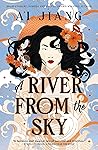
Book Review: A River From the Sky | Ai Jiang

A River from the Sky (Natural Engines, #2)A River from the Sky by Ai Jiang
My rating: 4 of 5 stars

A River from the Sky picks up right after A Palace Near the Wind. Liu Lufeng is escaping the Palace near Feng with her younger siblings Chuiliu and Changqing, along with Geyser, also known as Exile Song. They are to meet Sangshu in Gear, but an encounter with the rebels disrupts all their plans.

This second novella of the Natural Engines duology is told in two POVs: Lufeng and Sangshu. On one hand, this gives us a deeper perspective of all the things that Lufeng has been completely unaware of. On the other, it makes for another confusing ride - we're not just grappling with the present, we're also having to come to terms with everything Sangshu has gone through in the years since she left Feng.

Where Lufeng had been almost passive, only stirring at last to try to save her younger siblings, Sangshu's story is one of both great ambition and betrayal. Sangshu caught up in all that progress and science seems to offer, only to find that gaining what she wants means giving up other things just as precious to her. These are presented as hard choices in the struggle for survival, and it's just not progress versus tradition, old vs new.

It's progress, but at what cost? Who (not just what) are you willing to sacrifice to get richer and more powerful? And is it truly worth it? But, as with the world we live in, everyone is complicit in the system and breaking away completely may have a higher cost than maintaining the status quo, no matter how terrible the system is.

There's layer upon layer of deception slowly being laid bare, and it should be exhilarating to finally discover what drives this world. And yet... after the build up in A Palace Near the Wind, the reveal here wasn't half as devastating as I was led to believe it would be. I found myself going, "Oh, that's it?"

Still, it's a gripping tale of surrender and sacrifice, and the desire to make the world a better place, not only for yourselves but for everyone - including your perceived enemies. Ai Jiang points out the interconnectedness of Feng, Glace, Clay, Engine; Wind Walkers and Water Shifters, Cogs and Land Wanderers, Natural Titans. Just like our world, no one place or people truly stands on their own.

Note: I received a digital ARC of this book from Titan Books via NetGalley. Opinions expressed in this review are completely my own.

View all my reviews

Wednesday, 11 March 2026

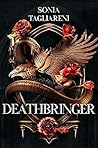
Book review: Death Bringer | Sonia Tagliareni

Deathbringer (Deathbringer, #1)Deathbringer by Sonia Tagliareni
My rating: 5 of 5 stars

Viola Corvi hates her magic. The death magic has only ever taken from her - her father, her grandmother, and now her sister. Sylas Ronin, a poison mage, also hates death magic - for taking his mother from them. And then the two are thrown together in Gorhail Institute of Magic and must learn to work together if they are to achieve their goal - to find and stop the serial killer who's coming after Viola.

Despite the academia setting, Deathbringer is more enemies-to-lovers than academic rivalry. Besides Lyria's desperate attempt to master lifedrain theory, there is little actual studying going on in the book; everyone's too busy panicking when students start turning up dead. Besides, Viola is adamantly refusing to actually learn anything about magic, even if it will eventually help her, whilst Sylas is pretty much an insufferable, reckless, know-it-all with anger issues. Okay, both of them have anger issues, but Viola is just a smidge better at using her anger to further her goals.

Tagliareni is deft with her knife, whether it's the twisty murders that keep happening or the devastating secrets that stab like a knife to the gut. To be honest, there are (a lot of) times where Sylas' bullheaded recklessness makes me want to slap him, but Tagliareni layers on the emotions and the painful backstory so well that it often feels forgivable or, at the least, understandable. The dual POVs work exceptionally well for this - giving readers both sides of the story, so to speak, and presenting a sympathetic point of contact/information for both rival houses instead of making one better than the other. There's no clear "evil" house or strand of magic in this one, even if death magic is often seen as dark and scary.

Loyalty is a theme that's explored with great depth - whether personal loyalty to one's friends and loved ones or loyalty to one's house/magic. Blind loyalty is both encouraged and called out at differing times, but where it's most wrenching is when it's pitted against love. Sylas has to decide whether to act with blind loyalty to the House of Poison, or if his growing love for Viola will force him change his beliefs. Viola has no loyalty to any mage or house, but it's the various loyalties of family, friends, and lovers in the past that has placed her in this current situation - as the one person sought after for her unwanted magic and relic.

Altogether, it's a very tantalisingly twisty dark fantasy. Deathbringer has been one of the most enthralling reads of 2026 so far.

Note: I received a digital ARC of this book from Atria Books via Edelweiss. Opinions expressed in this review are completely my own.

View all my reviews

Wednesday, 25 February 2026

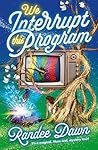
Book review: We Interrupt This Program | Randee Dawn

We Interrupt This ProgramWe Interrupt This Program by Randee Dawn
My rating: 5 of 5 stars

When I saw Randee Dawn's post that We Interrupt This Program was up on NetGalley, I tell you, I clicked that request button so fast. I loved Tune in Tomorrow, and this is another novel in the same magical universe!

The TROPE town of Seaview Haven is breaking down and Finch, an SCN intern, has wrangled an assignment to figure out what's wrong with it - so that he can prove his Unseelieness by dismantling it forever. But Winnie Arrowmaker, Siggy, and Martin are doing their best to prove to him that the town can still be saved. Can it?

We Interrupt This Program is a wild romp into a fantastical world and - at the same time - an insightful look into what it takes to be creative. At times, it feels a little meta - Winnie Arrowmaker is a writer of mysteries, and the Muses are involved - but as the book blurb says, "Winnie and Finch are going to have to tell a Truly Great Tale. Because, as they realize, real power lies not in the stories we watch, but in the stories we tell ourselves."

In this day and age when the great Threads fight of the day is whether it's ok to use AI for covers and for writing, it's validating to read something that's so honest about the struggles of writing something. (I was going to say "something worth reading", but who's the arbiter of what's worth reading? Everything written by humans is worth being read by someone.) And how it feels when your best work still isn't good enough. Will it ever be good enough?

In that same vein, Finch is also struggling to be good enough any anything. He's so convinced that his one Hideous Deformity makes him an Unseelie, despite all other indications, that he's willing to destroy his life and his friendships to prove it. And yet, he's...not really good at being naturally destructive? Neither is he good at being, well, Seelie.

Behind the hilarity and light-heartedness is a thoughtful exploration of how our perceptions of ourselves - and what we think others think of us - affect our behaviour, whether for good or for bad. And how best friends spur us to be the best of ourselves - but can also bring out the worst. And maybe we're not always just one thing, but many, in all our humanness.

Note: I received a digital ARC of this book from Solaris Nova via NetGalley. Opinions expressed in this review are completely my own.

View all my reviews

---
WE INTERRUPT THIS PROGRAM releases on 3 March! Preorder here (affiliate link)

Wednesday, 18 February 2026

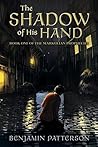
Book Review: The Shadow of His Hand | Benjamin Patterson

The Shadow of His Hand: Book One of the Markulian PropheciesThe Shadow of His Hand: Book One of the Markulian Prophecies by Benjamin Patterson
My rating: 3 of 5 stars

A princess, a soldier, and a baby set off to fulfil a prophecy that will save the Realm: The Mark must reach a place known as The Hand of God before Embracing's Day, or all is lost. The problem is, The Hand of God now lies in Jerikan territory-the same enemy who's trying to destroy them.

The Shadow of His Hand is an interesting read, but uses several tropes that annoy me greatly. YMMV, so ignore the star rating as you like.

As an epic fantasy, the novel delivers. Our heroes set off on an impossible quest and face all kinds of hardships. There's friendship and betrayal, love and loss, and politicking galore. They trek through what feels like the whole world - jungle, desert, and the open sea. It is quite a militaristic book, so if you're not one for battle descriptions, you may find some of that just a tad too detailed. As a medieval fantasy, it is, as expected, rather Euro-centric. There are weirdly modern-sounding words or phrases that pop up at times which, when set against some almost-archaic formal sentences, feels a little odd.

The most annoying bit about the worldbuilding is the racism. Because, of course, the dark-skinned foreigners are described as heathens, poor, uneducated, primitive, lacking in ambition, eat weird food, are possible cannibals, and none of them speak the common tongue. They are the plot device that turn up to help our travellers (at least twice!) out of the sheer goodness of their hearts. When all of them are captured by slavers - on a journey they are only on because they are helping them on the quest - only our heroes make it out. Fredrick never even thinks of saving the slaves caught in the hold. The worst thing about this is that the Princess herself has foreign blood - her mother (or maybe grandmother?) comes from the same geographic area.

Now we come to the part where YMMV. The characters and their relationships are the major pain points for me, mostly because I'm easily irritated by some of these characteristics or character flaws.

If Patterson intended us to very annoyed at (or even hate) High King Eldilin Mancott, then he did a superb job there. I have a thing for competent people in important roles, and the High King is NOT it. Eldilin is always whining about his duties and responsibilities and acts as if the whole Realm is on his shoulders, but he isn't even competent at carrying them out. It's his adviser who does practically everything for him, but he has the gall to complain that he can't be himself and he can't do ANYTHING for himself. He's pretty useless, imo, and probably thinks its a sin to be happy. And when people actually try to help him, like his wife, he rejects their help (You don't understand! It Is My Duty!).

His wife, Jaithe, is another whole matter. Their marriage was the most insta-est case of (one-sided) instalove I have seen in a while. I mean, she sneaks into the hall to see him because she wants to laugh at her sister and the other hopefuls who want to be chosen as High Queen, and then SHE SEES HIM AND IMMEDIATELY FALLS IN LOVE. Because he's such a sad, sad man and just needs a woman to truly love him and then he'll get better. Um no. This is how women get trapped in bad marriages because they think they can change their husbands through the power of love. I guess if you like that trope you might like their "romance". Where, tbh, he spends most of the time ignoring her and shutting her down for even attempting conversation. At least they haven't even consummated the marriage because she refuses to sleep with a man who doesn't love her. Good for her, but also LMAO.

TBH, the other case of instalove in this book, is between Fredrick, our hapless soldier, and Princess Kathryn, who he saves, but at least Fredrick is aware enough to figure he's just crushing because she's rich and beautiful AND A PRINCESS. he's such a glorious mess anyway, so that just adds to his quirks. (He thinks he's crushing, but the text really wants to imply it's true love, so take from that what you will.)

Final bit! This is touted as Christian fiction, so let's look at it from the lens of faith. The faith set up is interesting (implied British tone), where there is a God - Elan - and twelve Guardians. The Realm is supposed to believe in Elan, but generally, worship practices have somewhat shifted from Elan to praying to/worshiping the Guardians instead (feels like a swipe at Catholics). It's a classic apocalyptic set up transplanted into a fantasy world - the world is ending, and the prophesied one must save the Realm. Jerika has summoners, who work with demons - so, very Good vs Evil, God vs Devil.

Patterson is daring in a sense that of the people sent on the quest, both Fredrick and Kathryn have shaky holds on their faith in Elan. Even High King Eldilin, who is supposed to uphold worship of the true God, only sends them on the quest because he can't deny the evidence of The Mark. Focusing on Fredrick's journey, you can see how his faith in and reliance on Elan grows. Fredrick comes across as a second-generation Christian-type, who knows generally what he's supposed to believe, but not why, and his relationship with God is affected by his circumstances growing up. He starts with a faith not his own, but grows in it through the hardships he faces in trying to fulfil the quest. Elan does step in to save the day several times (through various means), and the set up is good enough that it feels organic to the plot, with Elan as an active player instead of coming across as contrived/deus ex machina.

Final note on our heroes. At first, I was going to give them (both Fredrick and Kathryn) the Too Stupid To Live label, but honestly? They don't deserve it. They do try their best against the worst circumstances, so I'll just say that they work well together even if they're just Slightly Useless.

Note: I received a digital ARC of this book from the author. Opinions expressed in this review are completely my own.

View all my reviews

Wednesday, 11 February 2026

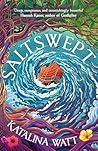
Book review: Saltswept | Katalina Watt

Saltswept (The Earthsalt Duology, #1)Saltswept by Katalina Watt
My rating: 4 of 5 stars

Paranish has finally reopened its borders and returners and visitors alike are thronging into Umasa for the birth of the princess. But not all is as it seems.

Finlyr Pane has returned to Paranish - and finds himself barely escaping the gallows. Ris' daughter Biba has powerful magic she can no longer hide - and in an attempt to avoid the Temple, Ris sets out on the perilous quest of retrieving the treasure from the Lahon Maelstrom. Hanan achieves her wildest dreams - only to find out that the Bastion holds dark secrets.

Saltswept is a quest adventure on the high seas, but it's also a dark fantasy that dips into necromancy, which leads to... zombie sailors. A content warning here: the book may look and feel rather YA, but it does contain several sex scenes (not graphic). It is also categorised as Adult, but it's hard to tell from the blurb and/or cover (though don't ask me what would make a distinction).

The narrative switches between Finlyr, Ris, and Hanan's POVs in first person. I personally think that if you have more than two viewpoint characters, you really should be writing in third person. As it is, it flows well enough despite having to keep tracking down whose first person POV I'm in. (But would've been easier, just saying.) Finlyr and Ris' POVs intertwine quite a bit, and they switch off rather seamlessly since they join forces early on in the book. It's Hanan's POV that often feels jarring, like it's not quite connected to the rest of the story. That storyline is important because it gives us insight into what the stakes are, and what's going on with the Temple and the Bastion, but since the two don't actually intersect until near the end, it feels a little like you're also reading a side quest of some sort.

Overall, Saltswept was an highly enjoyable read and I'm looking forward to book 2!

Note: I received a digital ARC from the Hodder & Stoughton via NetGalley. Opinions expressed in this review are completely my own.

View all my reviews

Wednesday, 7 January 2026

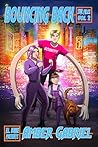
Book Review: Bouncing Back | Amber Gabriel

Bouncing Back (SVR Files Book 2)Bouncing Back by Amber Gabriel
My rating: 3 of 5 stars

Bouncing Back completes Elam Bentley's redemption arc - he's finishing his stint in the Supervillain Rehabilitation Project by serving a one-year term on the Reno team. If he gets through this, he'll be a full-fledged hero. If he doesn't, well, it's back to jail. He has his work cut out to earn the trust of the team, though. And his attraction to his team leader, single mom Rightcross, isn't helping matters.

I'm not sure what I thought about this one. I enjoyed Stretched Thin, and I think Bentley is a fun character with much to root for, but for some reason, Bouncing Back didn't quite hit the spot. There was a lot going on with the DOSA team, along with a child with epilepsy, and everything just felt a little messy going between the POVs of Rightcross and Elam.

The gospel message was also a bit more explicit and in your face than other SVR books, so it felt a bit odd.

At any rate, it was still a fun read!

View all my reviews

Wednesday, 31 December 2025

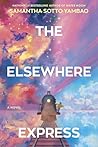
Book review: The Elsewhere Express | Samantha Sotto Yambao

The Elsewhere ExpressThe Elsewhere Express by Samantha Sotto Yambao
My rating: 4 of 5 stars

Near the anniversary of her brother's death, Raya Sia drifts off on the subway while on the way home. Q Chen Philips Jr. is delivering his last artwork to the gallery, and contemplating the end of his career and, possibly, his life. They both find themselves on the Elsewhere Express, a magical train that helps the purposeless find a sense of purpose and meaning. But behind the magic lies dark truths, truths that may very well destroy the entire train and everyone in it...

The Elsewhere Express is an exploration in letting go of the past. Raya is stuck in a holding pattern, pursuing her brother's dream of being a doctor, unable to move on because she blames herself for his death. Q knows it's only a matter of time until his sight fully disappears, so he's grabbing on to this new life on a magical train because he doesn't know who he is without his art. But letting go isn't about forgetting - even if people tend to conflate the two - and suppressing the past can be more dangerous and damaging than dealing with it.

I picked this up because I quite enjoyed Water Moon at the beginning of the year. Thematically, they're quite similar - both are about grief and regrets - but I did find it a little harder to get into this one. It's less whimsical and more surrealistic, for one, but the biggest hurdle for me was the concept of time. I spent a chunk of the beginning being confused about if they had actually died in real life, or if they'd entered the magical world but left their physical bodies behind. What if they never returned to the real world, since the point of the Elsewhere Express was for them to find a new purpose on the train? Would someone just find them dead? In the end I just had to stop wondering about it, and once I did, I enjoyed the story better.

For some odd reason, whilst Yambao never says where Raya and Q are from, they just had this Singaporean vibe. lol

Note: I received a digital ARC of this book from Transworld Publishers via NetGalley. Opinions expressed in this review are completely my own.

View all my reviews

Wednesday, 24 December 2025

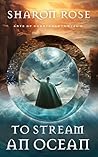
Book Review: To Stream an Ocean | Sharon Rose

To Stream an Ocean (Arts of Substance #3)To Stream an Ocean by Sharon Rose
My rating: 5 of 5 stars

The first book in the Arts of Substance series, To Form a Passage, focused on the Formers and their work with stone, whilst the second, To Weave the Wind, focused on Wind Weavers and their work with air. I suppose it's only fitting that we finally get a story that focuses on Streamers and water. It's also the first that is wholly above ground!

The king of Welcia is dead and the Dirkland Ambassador, Danivid, returns to Regissa City to take the throne. But his coronation is marred by a quake and by his sister-in-law attempting to steal the crown for her daughter, Aneen. Recent changes during his brother's reign and the state of their finances soon make Danivid question what has been happening in the years that he was away.

A repeated theme from the earlier books is the misuse of the gifts for personal gain as well as the gradual falling away from faith as a society. However, unlike the other two books, To Stream an Ocean doesn't focus as directly on Ellincreo and the gifts, even though it's woven into the background. Yes, the frequent quakes are a concern and Danivid is butting heads with Shevnal, the Chief Former, to properly protect the city, but the main concern is the use of Ambertrop, a controversial new drug that seems fine in the short term but has devastating impact in the long term.

There's a lot of lovely political intrigue going on in Regissa, including poisoning, attempted murder, and theft. Trellian - a detective/ambassador from the neighbouring country of Felverland - was an interesting addition, and whilst I predicted some turns of events, I was expecting a little reveal at the end about her background that... doesn't happen. Oh well.

If you're looking for disability representation, Aneen's development is delayed, (view spoiler). Whilst everyone ignores her, Aneen proves smart and observant despite her speech delays; she trains her Flyound dog to track down the people she loves, and her knowledge of events in the palace helps Danivid and Trellian fit the missing pieces together, even if her testimony cannot be used in court.

Overall, To Stream an Ocean is a great read, but personally, it a little weak compared to the first two books.

Note: I received a digital ARC of this book from the author. Opinions expressed in this review are completely my own.

View all my reviews


To Stream an Ocean will be available from Amazon and Kindle Unlimited on December 26,
2025. The paperback version can also be ordered from bookstores and libraries.

A note about reading order: The books of this trilogy can be enjoyed in any order. There are
some minor spoilers in novels 2 and 3, but they won’t ruin your enjoyment of earlier novels if
you read out of order.

Wednesday, 10 December 2025

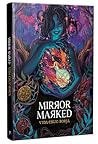
Book Review: Mirror Marked | Vida Cruz-Borja

Mirror MarkedMirror Marked by Vida Cruz-Borja
My rating: 5 of 5 stars

Mirror Marked was a fascinating yet somewhat confusing read.

It's written mostly in the second person (the prologue starts off in first person then segues into second), which was a novelty (for me) - and very well done. In fact, the POV really lends itself to the story; a kind of strange blend of storytelling, immersion, and something almost epistolary. I loved it.

The prologue ends with the ominous question, "Do you know where this story begins?" and then the narrator proceeds to tell us the story, starting over and over at different times leading up to the wedding, and at different points in Kelly's life. Some of the latter felt disjointed at times, but Cruz-Borja draws you along with the promise that all of it is important, all of it will eventually make sense. The confusing part is mostly because I'm quite a linear reader, and Mirror Marked is a very non-linear story. In fact, each section brings you further back into the past, before it culminates in the present. You just have to allow yourself to be led by Cruz-Borja's masterful storytelling and trust that she will not let you down.

Mutya, the mother of the bride, is a witch, and one of Kelly's main tasks is to make sure that she isn't at the wedding. And yet, whilst the wedding, and the planning leading up to it, is the backdrop to everything that's going on, the core of the story isn't about the wedding, or even about love. It's about facing up to yourself and your past, and the healing that comes from that. It's about memory, and the stories we tell ourselves around painful ones. It's about difficult families and how broken parent-child relationships negatively impact a child's view of the world and themselves. It can be a difficult read at times - Cruz-Borja even advises you in her author note to take a break if you need to.

Best of all, Mirror Marked is gloriously Filipino. It's set in a Manila populated by Kapre, Diwata, Sigbin, and Engkanto. There's no over explaining, and even no glossary. There's a mix of cultural references, like "It’s giving Princess Punzalan in Mula Sa Puso" as well as "Toby Maguire and Kirsten Dunst’s upside-down kiss in Spider-Man". I don't always get everything, but I don't have to. Google exists and even without it, the story still stands on its own.

Note: I received a digital review copy of this book from PS Publishing. Opinions expressed in this review are completely my own.

View all my reviews

Wednesday, 3 December 2025

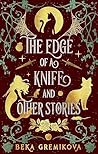
Book review: The Edge of a Knife and Other Stories | Beka Gremikova

The Edge of a Knife and Other Stories (Unexpected Encounters, #2)The Edge of a Knife and Other Stories by Beka Gremikova
My rating: 5 of 5 stars

What is our fascination with monsters and the monstrous? Can we truly tell who is monstrous by looking at them? What if the monsters are actually the victims?

In The Edge of a Knife and Other Stories Beka Gremikova presents a mix of new and retold stories, spanning fairy tales and science fiction, that urges us to rethink monsters in fiction. Her retellings come from earlier source materials where the price of human feet was to feel the stab of knives in every step and the evil queen was sentenced to dance to her death.

The best of Gremikova's stories lie in the intersection between the personal and national:
- In "Every Bone in the Body", deposed princess Adria Edeapli rebels against new laws to honour her dead brother in keeping with tradition. Her uncle, the new king, has to decide to save his niece or uphold his shaky grip on the throne. What is power worth if it divides and kills your own family and loved ones?
- "Once Upon a Pumpkin", a brilliant mash up of Cinderella and Snow White, ponders redemption & atonement. Can the Evil Queen truly change - and can her stepdaughter forgive her? And yet, does forgiving her mean allowing an ex-murderer to run free in society?
- Similarly in "Pay the Piper", Mayor Oswald wants to rid the city of Hamelin of the infestation of rats. But what is he willing to pay the piper? Sacrifices may be necessary, but is giving up your own child for power and glory ever necessary in the grand scheme of things?
- "Like a Fox" explores belonging and family, and the use of personal power to protect or oppress the weak.

Other notable stories include:
- "Echo Among The Stars", where Kaz Kitoska has to confront the true source of his family's inheritance.
- "Golden Child", a mix of Midas's golden hand and Romeo and Juliet.

There's darkness and horror in every story, but also redemption and the hope of a better future.

Note: I received a digital ARC of this book from SnowRidge Press via NetGalley. Opinions expressed in this review are completely my own.

View all my reviews

Wednesday, 19 November 2025

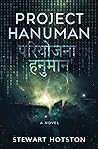
Book Review: Project Hanuman | Stewart Hotston

Project HanumanProject Hanuman by Stewart Hotston


I picked this up on a whim because it was by Angry Robot and because the blurb mentioned Indian mythology. This is usually a good strategy, but in this case, didn't quite hit the spot.

Project Hanuman on the whole, is a great science fiction novel about a strange alternate future (maybe far future?), where humans have finally uploaded themselves in the cloud, known as the Arcology. Everyone lives online, and only rebels and prisoners print themselves physical bodies. Great so far. Then the Arcology is attacked and Praveenthi "Prab" Saal (one of the rebels), Kercher (a prisoner pilot) and a sentient ship become the last survivors bringing the remnants of the Arcology and Sirajah's Reach to safety.

Hokay, so this is where my misunderstanding starts. For all that it's a scifi/space opera book, I kinda figured that these Indian mythology figures would come in as Actual Gods. But actually, no. Instead of Hanuman-a-god coming into save the day, one of the characters (I suppose you could guess, but let's avoid spoilers) lives out various events that correlate to Hanuman's experiences. There are a lot of cultural touchstones, references to dharma, samsara, death and rebirth - I would say a very Indian (Hindu?) outlook underpins both Kercher & Prab's view of society. In a way, this is very much a space opera retelling of mythology, but not quite what I expected.

One thing I found interesting was the idea that as much as we think we're rebelling against society, we are in many ways still reliant on it and the support network that it provides. Prab is one of the "Excluded", those who decide to live outside the Arcology, but she comes to realise that even her rebellion is supported by the Arcology itself. I feel like there is a commentary there on Empire and Colonialism and how it still affects our lives in very paternalistic ways, but I'm not going to go there in this review.

Another thing that also comes up, that I feel relates to the present-day AI wars, is that Hotston seems to be saying that for all that this utopia is run by AI, that everything is calculated by the great machine, at the end of the day, you still need humans to save the day. A machine can be smart and have all the facts, but in the end, it is the human experience that matters the most, that makes connections the Arcology could not see or recognise, and takes the leaps of faith where necessary. And as much as we are living in a digital society, physicality and embodiment is still very important.

Not gonna put a star rating on this because I can't quite define how much I liked it or not. On one hand, it was a great, thoughtful read, and I liked a lot of things thematically. On the other, I'm not really a space opera reader so I skimmed a lot of technical details, PLUS Hotston (or his editors) and I seem to have a fundamental difference in where commas should be placed, which made me have to stop and figure out what on earth the sentence meant way too many times.

Note: I received a digital ARC of this book from Angry Robot via NetGalley. Opinions expressed in this review are completely my own.

View all my reviews

Wednesday, 29 October 2025

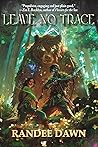
Book Review: Leave No Trace | Randee Dawn

Leave No Trace (Stories from The Green Place, #2)Leave No Trace by Randee Dawn
My rating: 4 of 5 stars

Lexi has been living in the mountains for the past decade, taken there by her father, who is paranoid about the "sickness" in the world "Outside". Unbeknownst, to him, Lexi has that sickness he's trying to avoid -- she can do magic.
Outside, TJ Furey is an upcoming popstar who mesmerises his audience with his voice. To escape the paparazzi, TJ convinces his manager Tony that he wants to head into the mountains and shoot a bear.
And when city boys go into the mountains to do country boy things, you can bet that things go horribly, horribly wrong.

I'm kinda a little torn about this one. If you've read The Only Song Worth Singing, you'll get vibes of that in the sections with TJ and Stef. It's set in the same world, after all. There's that music magic, what I think are allusions to Ciaran, Mal, and Patrick, the appearance of the various fae, and, of course, the Green Place. But this book tells of a great war between humans and the fae, and how the Green Place is slowly shrinking and dying. I loved those bits.

The bits I didn't really like - and I think this is mostly due to the voice - is Lexi's parts. Which is terrible, because she's one of the main protagonists. She just kinda... annoyed me, and it was hard to gloss that over because her sections were written in first person. So like, 100% in her voice.

My conclusion, overall is that I still love The Green Place and what Dawn is doing with Irish mythology in modern, urban settings, but this one was a little too... rural for me. (I am, unfortunately, a very city girl).

Note: I received a digital ARC of this book from Caezik SF & Fantasy via Edelweiss. Opinions expressed in this review are completely my own.

Wednesday, 15 October 2025

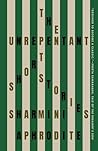
Book Review: The Unrepentant: Short Stories | Sharmini Aphrodite

The Unrepentant: Short StoriesThe Unrepentant: Short Stories by Sharmini Aphrodite


I'm reluctant to put a star rating on this one. The stories are tight, hard-hitting. They speak volumes of the era, revealing unspoken biases and grudges that have been passed down through generations, a peek into what the silent minorities in our midst have experienced and continue to experience. These are things young Malaysians should read to understand our histories, where we come from.

Yet, I find myself drifting halfway through the collection. I'm not a big fan of historical fiction, especially around World War 2, and whilst this sort of circumvents my feelings about that specific era, at some point, the stories start to feel seem too similar. Sharmini seems to loop round several times - I can't tell if the stories refer to the same unnamed rebel (insurrectionist?), from different perspectives in different eras - or if it's a different person but with similar histories. I'm a noblebright kind of reader myself; I want a bit more hope in my stories than appear here.

And there are a lot of dark pain points in these tales - The Unrepentant: Short Stories is a visceral exploration of generational loss and sacrifice as well as Malaysia's struggle for independence. History is told by the victors, but in this collection, Sharmini shows us other perspectives and how everyone then, despite their differences in approach and clashing ideologies, were still working towards the same goal: Independence for Malaya.

Stories of note:
The Light of God is a great opening story, capturing me right from the start.
One Hundred Perumals is the voice of a people crying out for justice. There's a mythological feel to this, a creation of a hero of folklore, creating a beacon in the dark.
Atlantic City is an interesting exploration of voice, but with all the hedging going on as the POV character speaks around the main issue, whatever it is, it feels like the core of the story is lost. (It's explained in the Author's Note)
Kamus I like primarily because of its focus on language and intercultural marriages - what it means to marry out of your race, especially when one is a Malay and prescriptively Muslim. This is a uniquely Malaysian problem. How do you choose between your community and the one you love? It's a lose-lose situation, no matter what you decide.

Note: I received a digital ARC of this book from Gaudy Boy via NetGalley. Opinions expressed in this review are completely my own.

View all my reviews


The Unrepentant: Short Stories releases on 1 November 2025. Preorder your copy here. (Amazon affiliate link)

Wednesday, 10 September 2025

Book Review: The Last Tiger | Julia Riew and Brad Riew

The Last TigerThe Last Tiger by Julia Riew
My rating: 5 of 5 stars

I picked this up because a) it was really pretty and b) it was inspired by true stories from Korean history.

In a classic rich girl falls in love with poor boy story, Choi Eunji and Lee Seung face not just class prejudice, but also racial discrimination - both from within and without. Whilst both of them are Tigers, the rich Choi family are considered race traitors/collaborators for sucking up to the Dragon administration to preserve their family wealth and power.

The POV switches between Eunji and Seung, which provides a well-rounded background to what both of them are facing and the obstacles they have to overcome. From Seung, we understand the struggle to survive - and the hope for a better future - only to be beaten down again and again by circumstances and those in power. From Eunji, we learn that even the rich can be powerless when everything they have is beholden to another party. Her life may seem like a fairy tale to others, but we soon see that one misstep by her father - or her - could end in not just a fall from favour, but death.

Kenzo Kobayashi is an annoyance, and I couldn't quite figure him out. He switched from helping Eunji to betraying her to double-crossing the Dragons so seamlessly, all coloured by Eunji's dislike of him, that it was difficult to pinpoint what exactly about him annoyed me.

I think my one criticism of the book is that at random times, often in speech, they seem to lapse into a kind of modern (teen?) slang which feels a little out of place with the setting. Still, since this is a YA book, maybe that was meant to resonate better with its intended audience.

All in all, I enjoyed reading The Last Tiger.

View all my reviews

Wednesday, 3 September 2025

Book Review: Elsewhere | Gabrielle Zevin

ElsewhereElsewhere by Gabrielle Zevin
My rating: 4 of 5 stars

Liz Hall gets hit by a car, dies, and goes to Elsewhere, where she is supposed to age backwards until she is born again.

Elsewhere is mostly about coming to terms with death and grief. Liz grieves for the things she will never experience in life: turning sixteen, prom, falling in love, learning to drive - all the things one associates with adulthood. The themes may seem heavy, but the writing itself is light, dealing with Liz's denial and anger in ways that aren't too over-the-top and yet full of teenage angst. I mean, how else do you accept you're dead when you wake up on a ship with no memory of what happened?

But as Liz soon finds out, she can still have most of those longed-for experiences in Elsewhere, once she lets go of her past life on Earth. It won't be exactly the same, but living is what you make of it, no matter where you are. She even gets more than she bargained for, with heartbreak thrown into the mix!

There's no twist ending to this. You know from the start that when Liz ages down young enough, her story in Elsewhere will end, rather like another death, but culminating in a new birth.

Note: I received a digital ARC of this book from Farrar, Straus and Giroux via Edelweiss. Opinions expressed in this review are completely my own.

View all my reviews