Showing posts with label Malaysia. Show all posts

Wednesday, 15 October 2025

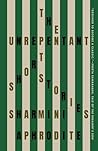
Book Review: The Unrepentant: Short Stories | Sharmini Aphrodite

The Unrepentant: Short StoriesThe Unrepentant: Short Stories by Sharmini Aphrodite


I'm reluctant to put a star rating on this one. The stories are tight, hard-hitting. They speak volumes of the era, revealing unspoken biases and grudges that have been passed down through generations, a peek into what the silent minorities in our midst have experienced and continue to experience. These are things young Malaysians should read to understand our histories, where we come from.

Yet, I find myself drifting halfway through the collection. I'm not a big fan of historical fiction, especially around World War 2, and whilst this sort of circumvents my feelings about that specific era, at some point, the stories start to feel seem too similar. Sharmini seems to loop round several times - I can't tell if the stories refer to the same unnamed rebel (insurrectionist?), from different perspectives in different eras - or if it's a different person but with similar histories. I'm a noblebright kind of reader myself; I want a bit more hope in my stories than appear here.

And there are a lot of dark pain points in these tales - The Unrepentant: Short Stories is a visceral exploration of generational loss and sacrifice as well as Malaysia's struggle for independence. History is told by the victors, but in this collection, Sharmini shows us other perspectives and how everyone then, despite their differences in approach and clashing ideologies, were still working towards the same goal: Independence for Malaya.

Stories of note:
The Light of God is a great opening story, capturing me right from the start.
One Hundred Perumals is the voice of a people crying out for justice. There's a mythological feel to this, a creation of a hero of folklore, creating a beacon in the dark.
Atlantic City is an interesting exploration of voice, but with all the hedging going on as the POV character speaks around the main issue, whatever it is, it feels like the core of the story is lost. (It's explained in the Author's Note)
Kamus I like primarily because of its focus on language and intercultural marriages - what it means to marry out of your race, especially when one is a Malay and prescriptively Muslim. This is a uniquely Malaysian problem. How do you choose between your community and the one you love? It's a lose-lose situation, no matter what you decide.

Note: I received a digital ARC of this book from Gaudy Boy via NetGalley. Opinions expressed in this review are completely my own.

View all my reviews


The Unrepentant: Short Stories releases on 1 November 2025. Preorder your copy here. (Amazon affiliate link)

Wednesday, 7 May 2025

Book Review: OBJECTS OF DESIRE: 10 Malaysian Chinese Short Stories in Translation

OBJECTS OF DESIRE: 10 Malaysian Chinese Short Stories in TranslationOBJECTS OF DESIRE: 10 Malaysian Chinese Short Stories in Translation by Lee Hao Jie


Interesting things I have learnt about Mahua, which I think is different from English lit:
- naming the main protagonist is, apparently, almost unheard of. OMG like 8/10 stories do not name the MC and sometimes not even the other characters T.T And one of them, I'm not actually sure if the MC was named or not, so maybe that's 9/10 lmaoooo
- the writers reference English classics, which is interesting, because I wouldn't expect any English works to reference Chinese lit!
- there are a lot of stories around memories and losing the past. Maybe this is an outflow of how Malaysian Chinese feel like we're slowly losing our culture to time and modernisation.
- also a lot of family feels.
- maybe also a preoccupation with death... idk, I feel like only 2 stories don't mention death (or a dead person) in any form.

How Mahua is similar to English literary short stories:
- the writers have an obsession with affairs, sex, and the penis. 
- some of them have really weird endings? Like what? What am I supposed to get from this? Is this story even complete? IS THIS A FEVER DREAM.
- these are the same reasons I rarely read (or write) in the "literary" genre lol.

Anyway, notable stories, or stories I thought were really strong:
Xia Mei’s Clock by King Ban Hui, Yee Heng Yeh (Tr)
This is the story where the title comes from:
“At one point, he had swiped through the photos of these girls who, through the way they dressed, presented themselves as objects of desire on the website. Whoever they once were had been reduced to just their name, age, body measurements, and nationality.”

Xia Mei’s Clock is a pandemic story, where interpersonal connections are fraying and time has lost its meaning. The protagonist (also unnamed, unless that stray mention of ‘Xing Ye’ towards the end is his name?) requests for a human prostitute at the clock hotel instead of a silicone doll. Yet as the story slips from the protagonist, to Xia Mei, then back again; and as COVID rages and time skips; there’s an underlying surrealness to the story, making you question if Xia Mei is actually human.
As much as I thought this was a really iffy premise, this is a solid story on connection, the male loneliness epidemic, and the ravages of time.

Our Years on the Mountain Top by Tew Pak Ching, Lai Suk Yin (Tr)
If I had to make a snap judgement on Mahua based on this book, it would be the fact that Malaysian Chinese writers are somehow obsessed with penises. This heartwarming story of sibling love (and rivalry) as well as a mother’s sacrifice for her children (both evident in the mother and grandmother in this story) is framed by the very strange peeing competition in the morning, and the younger sister’s preoccupation for looking at her brother’s pee-pee. Like why.

Yesterday’s Sunken Fragrance by Chan Yeong Siew, Foo Sek Han (Tr)
A chance look at a Malaysian news headline reveals the truth behind the long silence from Liu Chen Xiang’s lover, Ma Yao Han.
Actually, the most exciting thing about this story is that finally, finally EVERYONE IS NAMED. It’s a weird thing to note, because like a predominant writing advice in English is to name your characters upfront and all these stories so far have gotten away with having a lot of unnamed characters. But I digress.
Yesterday’s Sunken Fragrance dwells in memories and loss, and also secrets and the grief that comes from them. It’s bittersweet, and yet also tinged with practicality as Chen Xiang says her goodbyes in the city she’s long left behind.

Panas by leemuzmuz, Ooi Yining (Tr)
Panas is a hard-hitting story of sexual assault in school, flitting from her present trauma to the past events that created them. It’s a painful look at how the perpetrators are often protected and victims told to just suck it up and move on. And that last haunting question: would none of this have happened if she were a boy?

All in all, this was a fascinating exploration of literature that I would normally never read, either because of the genre or because of the language.

Looking forward to the next in the series!

View all my reviews

---

Wanna grab your own copy? It's available on Amazon! (Affiliate link)

Wednesday, 22 January 2025

Book Review: A Stitch in Time | Lee Su Ann

A Stitch in TimeA Stitch in Time by Lee Su Ann
My rating: 4 of 5 stars

A Stitch in Time is a pretty lighthearted read.

Gavin Lai presents as something of a ghost through most of the book, but he's not a scary ghost - just a self-absorbed young actor trying to get back into the real world.

Clare Chong, a super quiet, introverted girl, is the only one in the school who can see him. Which means she's the only one who can help him. She has to confront her fears and inadequacies in order to solve the mystery of his disappearance... while he has to face himself and what has brought him to this place.

90s pop culture references abound, which makes it fun (and maybe a little nostalgic) to read as one who grew up in those times. I'm not sure if present day YA (ie the real target readers) would find that as exciting, or just incomprehensible. I mean, they're still using FAXES and DIAL-UP internet, and there are no smartphones! Only old-fashioned, large, bulky mobile phones that only business men use...

View all my reviews

Wednesday, 25 December 2024

Book Review: Môo-Sîn-á: Mystery of The Invisible Tribe | Wang Chashung

Môo-Sîn-á: Mystery of The Invisible TribeMôo-Sîn-á: Mystery of The Invisible Tribe by Wang Chashung
Translated by Grace Tong En Hui & Tew YiQian
My rating: 4 of 5 stars

I finally got round to reading this! Received a complimentary copy during GTLF last year, and well, you know the TBR.

This English translation of Môo-Sîn-á was published in 2023 but mostly reads a little like early English sci-fi works from the 1950s or so. It's slightly meandering and quite deeply reflective, and while not exactly epistolic, reads more like a letter or diary than a modern narrative novel.

Set in 1990s in Taiwan, the novel follows Wang as he journeys into the interior jungles of Taiwan to reconnect with Hei, an old friend from his army days. It's also something of an escape or an exploration of midlife crisis - he's recently separated from his wife and has left his job, and the only thing that's piquing his interest is looking for Hei. Several times during his journey, aided only by a magical hand-drawn map, Wang admits to himself that he's really looking to discover himself.

There isn't much of a "fantasy" or "magic" structure in place - these are myths, intertwined with spirituality/religion, with a strong folklore base. Primary is the Taiwanese myth of the Môo-Sîn-á, a dark-skinned people with magical powers) with a strange connection to Bornean tribes. Including time-travelling Japanese! Unfortunately, this does colour it with a colonial lens, with the impression of "civilised" people trying to connect with the "primitive" people in the mountains. However, since it's Taiwanese, there's less of a " discovering savage barbarians" feel and more of a cautious exploration of supernatural mystique overlaid with fear of ghosts. I'm curious to know if there really is some connection between the Taiwan aborigines and Borneo natives, or if this is something Wang made up.

Wang sometimes makes very strange detours and ruminations even in the midst of an ongoing conversation which I found a little annoying. Maybe it works better in the original writing, if that's some form of writing convention in Chinese.

I guess to summarise, I did enjoy the story, but I also had a lot of questions about editing choices. Though I don't really know how that is supposed to work with translations.

View all my reviews

Wednesday, 4 September 2024

#bookreview: The Friend Zone Experiment | Zen Cho

The Friend Zone ExperimentThe Friend Zone Experiment by Zen Cho

Renee Goh is a successful businesswoman blazing her own trail in London, away from her patriarchal Singaporean family. Then her father offers Renee the one thing she's been hankering after: approval in the form of offering her the chance to take over the family business. But is that what she really wants? (Insert break-up drama, family feuds, old-flame reunion, plus that one skeevy ex.)

I'm trying to figure out what I feel about this one. I do quite like Zen Cho's fantasy works - and I especially love the Malaysiana she brings into her stories. She's especially deft at capturing the Malaysian Auntie Voice.

The usual "not quite my genre, bla bla" comments apply here. This is straight up realistic fiction, not a ghost or supernatural creature in sight! The style feels like a throwback to her earlier short story style, not so much her long-form fantasy style. (I haven't gotten round to Black Water Sister, which may have been the beginnings of the shift?) This isn't a bad thing. I do like that voice and I want to see more of it in fiction. However, I don't think I've read a romance (as the main plot) in a while (if I have ever! haha), so there were bits that felt a little draggy here and there, especially where everyone's keeping secrets and not telling anyone important stuff. Then again, that's also the bits I get annoyed with in all kinds media and without which there would be no story, so, eh.

MAYBE what's throwing me off is the whole, uh, sub-plot that it's wrapped around. It hits very close to real-life happenings in Malaysia. Maybe someone who isn't based here would just read it as fiction (I'm seeing a lot of K-drama references in other reviews) but I'm also going like OH THE SARAWAK REPORT. OH CLARE REWCASTLE-BROWN. OH 1MDB! ALL THE ILLEGAL LOGGING. OBVIOUSLY THEY KIDNAPPED AND KILLED HIM WHAT DID YOU THINK. Which also makes me wonder whether the stuff we read as fiction from other countries hits as hard for their readers in the same way.

Cho brings up the Malaysian/Singaporean family dynamics really, really well - which adds to the ultra-realism of this novel. The family squabbles! The expectations of marriage (and grandchildren)! The fight over who pays for dinner! All that annoying one-upmanship... ugh. Though I can't help but feel that Ket Siong is something of a wish-fulfilment fantasy - he's a little too good to be true.

There's also a lot of corporate drama (and some sexual harassment) going on, plus a heavy dose of family loyalty vs ethics considerations. Do you keep the peace in order to save your family's face/reputation? Do you let yourself love the person whose family has destroyed your own? CAN you put aside your own personal boundaries if that's going to help your family business?

It isn't quite a light read (despite "romcom" being thrown around), but it does have a Happily Ever After. I don't know the genre well enough to say if it'll be a hit for romance readers, but I'd say it's a solid rep of how Malaysian society works (even displaced as they are in London) if you're looking for that.

Note: I received a digital ARC of this book from Pan Macmillan via NetGalley. Opinions expressed in this review are completely my own.

View all my reviews

---

If you're looking for a GREAT Zen Cho book to start with, I'll always recommend The Order of the Pure Moon Reflected in Water. (Get it here)

Monday, 29 July 2024

Yam Seng Lah: Wait, who’s making a scene now?


You walk into a restaurant for the Tan family reunion. There are familiar and unfamiliar faces, but on the whole you’re not quite sure who is who or how they’re related to you. Or if they even are. But you’ve been invited, and this is quite a fancy-looking place, so you might as well just make yourself at home.

There’s some drama going on in the background: cousins squabbling, so-and-so monologuing, gossip and rumours making their rounds. Nothing unusual. What’s a family reunion without a huge shouting match anyway? There are five branches of the Tan family here—really, who is that making a scene now?

*

Source: facebook.com/dabbledabblejer.co

Yam Seng Lah by Dabble Dabble Jer Collective and Curios-City was quite the experience. I attended the immersive theatre-and-dining show on Saturday evening, 27 July. Doors to The Lazy Bar opened at 6pm, creating a waiting space for those attending to check in and receive their “name cards” denoting which of the five families they were supposed to be part of: Tan, Teng, Raj, Mapon, Lee (I think?). I don’t know if I missed part of the instructions/information because I joined my group a little late, but this would’ve been a good time to set up quite a lot of expectations for the show.

At 6.30pm, we were ushered into Curios-City’s main dining hall. There was a bit of confusion—choose your tables, get snacks, wander around, look at family photos stuck on the pillars… but we were not really given enough time to do all this before things (sort of) kicked off with various family photos on the main stage, organised by individual “families” plus a whole group photo. I say sort of, because it was all terribly confusing.

Felicia Teng (Ysabel Loh) and Willy Teng (Yee Heng Yeh) threw us into the whole drama side of things after the photo with their dialogue (squabbles) about Sweet and Sour (chicken) versus Grandma’s Fried Chicken, playing up the differences between the studious girl making her way in fashion design in London and the spoiled party boy living it up and trying to assimilate in the USA. It was a great reflection on comfort food—especially for Chinese-Malaysians far from home, where just going to the nearest “Chinese” shop doesn’t actually reflect how things taste back home. Flavour profiles change in the diaspora, and I speak from experience when I agree that Chinese food overseas does not quite taste like Chinese food back home. (Also, what do you call yourself when you are a diaspora of a diaspora? Are we Chinese or Malaysian diaspora now?) We were then called to take our seats for dinner; most of the rest of the show was performed in between courses.

I am PEKASAM came next, with Darynn Mapon (Darynn Wee) bursting into the restaurant right off the plane from Sarawak carrying a tub of pekasam and an air fryer. The start of the monologue had Wee speaking as if she were the pekasam itself, which came off as a little awkward and weird, before she segued into what this traditional dish really meant for her and finding her identity as a half-Chinese, half-Bidayuh woman. Personally, I felt that the dual narrative could have been combined a little better. Trying pekasam itself was interesting (heh)—but it was much milder in taste that they made it out to be. It was also nice to have different variations of how it can be eaten!

This was followed by Sofea Lee’s (Sofea Lee) reflection in Laksa Lessons on how only one kind of laksa is true laksa for her, despite the fact that there are so many different styles of laksa throughout Malaysia that all bear the same name. This was the only piece that truly used the ensemble as a whole, with some kind of group speak going on so it felt the most “performed”. Two kinds of Northern laksa were served; I’m assuming the non-sour one was from Kedah.

Life is a Brief Khichdi was the final (main) course of the day, which involved rumours from the Raj family, a “secret” stove at the back, and a directed migration to “see what they’re hiding”. VJ Raj (Villmett Thanakody) fiddled with the stove, gave a monologue about khichdi and missing his grandmother, then made a pot of khichdi on the spot. The staging was such that since he invited us (the Raj family) to sit on the benches at the back of the stage before the others came around to kepo. Because he was mostly facing the crowd, this one fell a little flat for me. Maybe it’s because I was looking at his back? Then again, this is the third show I’ve seen Villmett in, and in all of them I have felt that his emotions were just not quite there. So there’s that.

We moved back to our seats for khichdi before being called again to a separate cooking area at the back for Love is a Plate of Kesari, where Monica Raj (Charity Yong) cooked Kesari with the help of Wee and Yee while reminiscing about her grandmother’s kesari and the last time she had it at fifteen. I couldn’t help loving this one because I originally published this creative non-fiction piece by Miriam Devaprasana as part of Nutmag 7: Inheritance in 2023. They tweaked it to fit the staging but Yong gave a delicately emotional performance to round up our dessert.

With these last two dishes also being cooked on the spot, we were offered a home-recipe version of the dish in contrast to the more modern/fusion restaurant version—the homestyle version was obviously better, despite how slapdash the cooking process looked!—which I thought was a fantastic personal touch.

*

Source: facebook.com/peopleideasculture

As a whole, Yam Seng Lah was an interesting exploration of food, memory, and culture. It offered a lot to reflect on, and a lot to taste as well! I won’t comment more on the food because I’m a picky eater, but everything was edible even with my limited palate (I was a little worried pre-show). There were some weaker spots in the performances as mentioned, but all the separate monologues mostly hung together, especially with how the separate narratives and families tied up at the end.

Where it failed for me was in how it was set up—I loved the fact that this one Tan grandma had such a multicultural extended family, but I still have no idea how the families are connected or how each character is related to each other. I don’t even know if I got all five surnames right even after scrolling through their social media for clues. Felicia and Willy at times sounded like cousins, but also felt like siblings (I’ve been told they’re cousins); I couldn’t figure out if VJ and Monica Raj were siblings or husband and wife; and if both Sofea’s and Darynn’s fathers were the ones related to this Chinese Tan family, why were their surnames Lee and Mapon respectively? I wish they’d given us a copy of the family tree along with our “family names” while we were waiting at the doors. Moving the family photos outside would also have helped with this, besides giving us more time to actually look at them.

Seeing that immersive theatre isn’t quite common, it would have been helpful to have a little announcement (or reminder) when the doors opened that once we entered the hall, the actors were already in character, and we were not waiting for a traditional type “play” to start. It took a little while for me to figure out what was going on; amidst the general confusion of where to sit and herding towards snacks and photos, it was only when Loh and Yee got into their actual scripted dialogue that things really began to click for me.

Though in all honesty, part of this disconnect could have been because I know most of the cast personally. As quite a few of the scripts were written by the actors themselves about their personal experiences, there was quite a weird blurring of lines between reality and fiction. I do wonder if this affected the general visiting audience in the same way, or if they would have been a little less disoriented.

*


Dinner concludes with a song, a dance, and the longest, loudest yam seng everyone in the room can manage. You look around and feel like you’ve gone through a journey with them, even if you still don’t know who they are. The family fight has been settled—for now—and it looks like you’ll be added into yet another WhatsApp group you’re probably going to mute immediately. But hey, that’s family, right?

You leave, sated. Thoughtful. Maybe a little nostalgic. Maybe it’s time to head for some comfort food after all that fancy restaurant stuff?

*

Despite all my quibbles, I loved what Dabble Dabble Jer Collective and Curios-City presented in Yam Seng Lah, as part of George Town Festival. It was a true celebration of our mixed, slightly confused cultures that’s coalesced into our Malaysianness. The restaurant itself was a lovely, cosy place that really set the mood. The music (Bernadine Jeanne Abeysekra) was superb and added to the vibe of the night—changing according to the culture of each piece. I guess I understand the need for the dim lighting—and the coloured lights were a nice touch—but I do like to actually look at the food I’m eating, instead of having to move the table light back and forth every time any one of us wanted a little more light!

This second show by Dabble Dabble Jer Collective, whilst quite a vast difference from their 2023 debut, Burden of Proof, is equally as stellar. It’s amazing to see the thought and care they put into each performance they craft—making it not just mindless entertainment, but something that reaches deeper into your soul.

Here’s to their next show!

Yam Seng!

Source: facebook.com/dabbledabblejer.co


Wednesday, 10 July 2024

#bookreview: These Deathless Shores | P.H. Low

These Deathless ShoresThese Deathless Shores by P.H. Low
My rating: 4 of 5 stars

These Deathless Shores is a Captain Hook origin story, where Peter Pan isn't the bright, happy, beloved kid you remember from the Disney movie. No, something incredibly sinister lurks behind that childish smile. It's darker than I expected it to be; it deals with, amongst others, addiction, eating disorders, childhood trauma, codependency, suicide ideation, gender dysphoria (? well, at least some discussion on gender) and extremely bloodthirsty revenge.

Because that last bit is Jordan's whole motivation, isn't it? To return to the island and to take her revenge on Peter Pan. Everything else is incidental, something to be utilised to serve her end goal of stealing Tinkerbell from Peter. If Low were to have focused only on Jordan, that would have made for a very boring story.

Fortunately, it's the cast of supporting characters that add colour to the story. Baron - whose love for Jordan makes him do difficult things. Tier - who's still trying to become his own man. Chay - who has somehow managed to stay on the Island past adulthood.

For a novel that the author touts as Malaysian-inspired (which was really what interested me, though it's not actually on the blurb), there's nothing that really screams "Malaysia" to me. For obvious reasons, the bulk of the book is spent on the Island, which is that magical-mystical Neverland brought to somewhere on the physical plane instead of up in the sky (and conceptually feels more Bermuda Triangle). The parts and flashbacks to Jordan & Baron's original home of Burima/Hanwa (I'm still not sure if Hanwa is a place or a language or both?) has a more generic Southeast Asia vibe in a Raya and the Last Dragon kind of way. Case in point: the opening fight scene feels more Muay Thai (Thailand); I do not know that I'd be able to find something similar in Malaysia.

Anyway, setting aside, if you're into dark fairy tale retellings, this might be of interest to you!

Note: I received a digital ARC of this book from Orbit via NetGalley. Opinions expressed in this review are completely my own. 

View all my reviews

Wednesday, 29 May 2024

Book review: The Light Between Us | Elaine Chiew

The Light Between UsThe Light Between Us by Elaine Chiew

As books go, I went in to this warily because I tend not to like WW2 (and adjacent) stories. But I also wanted to read this to support a SEA writer! So ok la #cubatry.

Excellent points:
I loved the writing and the language, the fluidity of moving between English and Malay and Chinese (of various dialects). I felt that it represented us so well. I am pretty much a banana, so I skimmed some of the Chinese phrases (note: I didn't realise there was a glossary at the end until I finished, since I was reading a digital arc), but I felt that Chiew was deft enough in her writing that you could pick up on what it was supposed to mean.

The only confusion I had was probably because of my own muddled language proficiency, where koon sah is apparently a TYPE of old Chinese dressing? I always thought it just meant pyjamas (i.e. koon = sleep, sah = clothes) HAHHAHAH. Also, Tangki as the Chinese (can't recall which dialect) term for the medium being possessed just kept me thinking of the Malay word "tangki", which is like a water tank, but that also makes sense because it's like a vessel kan. LOL

Content warning:
Slight implication of incest because of extended familial relationships, even though they're not blood related.

The setting and plot:
Yeah okay, so one of the reasons I figured I might give it a try is because there is a dual timeline of Charlie in the current day somehow reaching across the past to connect with Tian Wei in the 1920s. Which, I mean, is a cool concept. I liked it in Agnes Ong's Skyping Back in Time. But here...

So everything for Charlie is happening in the span of a few days, and at the longest stretch, maybe a month? But it's happening for Tian Wei over months and years (there's some fancy mathematical theory for this) which... I guess as a reader, I wasn't convinced their rather sporadic letters were enough for them to fall in love. It felt like first one or two letters were like hello who are you what's going on, then bam, oh the numerical-stars-are-aligned instalove.

And then there's a pretty long jump in time for Tian Wei, which (ugh) brings him to the 1940s and WW2, which YEAH. no. But this is a me thing, and also why I haven't read any TTE books (#sorrynotsorry).

Verdict:
If you're a historical fiction fan, especially around SEA WW2 stories, you'll probably love this! If you're a camera & photography nerd, you'll probably also love this! If you bangga Singapura and Malaysia (because come on, they were the same country back in those days) and you love codemixing, you'll also love this!

Note: I received a digital ARC of this book from Neem Tree Press via NetGalley. Opinions expressed in this review are completely my own.

View all my reviews

Tuesday, 28 May 2024

Cover reveal: Daisy Dunlap and the Cartoon Carnival | C.O. Bonham

Today, I have the privilege of sharing the cover reveal for C.O. Bonham's new book, Daisy Dunlap and the Cartoon Carnival. What makes it extra extra exciting is the fact that the cover designer is also my friend! 


Find the truth. Save the family legacy. Don't get eaten by the giant cartoon spider.

Reeling from the loss of her mother, twelve-year-old Daisy comforts herself with the cartoons and carnival run by her family's animation studio.

When an anonymous source accuses Grandpa of stealing his most famous character, the impish Tom Greenthumb, their family's reputation and business are on the line. The only thing that can clear their name? A mysterious sketch book hidden somewhere within the Cartoon Carnival.

Sneaking into the theme park at night, Daisy uncovers her family's greatest secret. Their cartoon creations are alive—and some of them are deadly.

PREORDER

Add to Goodreads

---

About the author:

C.O. Bonham is the pen name for a commonly misspelled first name. She loves stories of all kinds, but really likes the ones that are weird, and outside the norm. A certified book geek, when she isn’t writing stories of her own she is busy reading stories by others. A homeschool graduate with a degree in creative writing, her goal is to create stories that make people think, feel, and have fun.

Her debut novel, Runaway Lyrics, a steampunk fantasy retelling of Snow White and Rose Red, released in 2021.

Website | Facebook group | Facebook page | Amazon page | Goodreads | Instagram

---

About the artist:

Chew Yuin-Y is an artist and an educator. Her recent notable projects include the brand identities for Malaysian swing jazz band The Frankie Sixes and the KLSwing Fest lindy hop international community event in 2023. She was also a contributing illustrator to the 2020 Penang-based anthology “Home Groan” and has exhibited at Lukis Tulis Malaysia 2019, a community art festival at Jaya One.

While she primarily produces digital work, she also uses other traditional media such as watercolours and ink. She believes art should be both pleasing to the eye and mind, and endeavours to infuse elegance and harmony into her work. Among her artistic influences are American mid-century modern graphic styles, Nyonya batik, the bold simple ink paintings of China and the patterns of Japan.

Yuin-Y is from Penang and is currently based in Kuala Lumpur.

Instagram | linktr.ee

---


PREORDER

Add to Goodreads

Friday, 9 February 2024

Hair the Dragon

In conjunction with the year of the dragon and Chinese New Year, here's a short story I wrote and performed at the Butterworth Fringe Fest with Readings@Tanjong last year. 

HAIR THE DRAGON

They say that the tunnels under George Town are where the dragons used to live. I don’t know about that. It’s 2023, for God’s sake. What dragons? Have you ever seen a dragon? They’ve probably been hounded—or hunted—to extinction by now. It’s not like we’ve seen any in recent decades. Centuries, even. The stories still stick around, though. 

Like the one my uncle’s uncle’s uncle once told my uncle’s uncle, who told my uncle who told me about this dragon that he used to know. Yeah, but unlike the song, it wasn’t a breakup. It wasn’t even a romance. More like a…threat?

Anyway, back in ye olden days, we used to have wells. There’s one at Kuan Im Teng—The Goddess of Mercy Temple—if you want to know what a well looks like, though no one uses it anymore. It’s like this deep hole that’s all dried up and probably filled with rubbish, but that’s where people used to get fresh water and stuff in the past, no kidding. They didn’t twisty-turny or pushy-pully, yay clean water! You had to work for it by going out to the garden, to the well, and pull up a bucket of water on a chain. Then boil it or something so you don’t die. The water, not the bucket. You reuse the bucket. 

If I lived back then, I would have lots of muscles. Or I would be dead of dehydration. Probably dead.   


So, there’s this network of wells, and obviously they’re connected by tunnels, all the way from Fort Cornwallis through to Masjid Kapitan Keling. Or not so obviously because they’re hidden underground. I haven’t seen them myself and I don’t plan to. I don’t think half of them are even accessible now, so I really don’t think we have dragons living in Penang anymore. Where would they even stay? 

Source: https://atap.org.my/maps/ 

I’ve been trying to imagine this, but the best I can come up with is like the underground sewer network, which eww, why would a dragon live there? Aren’t they supposed to be majestic creatures of death and destruction and all that? 

But lots of the old stories say that dragons like caves, so I suppose this was maybe what they were used to. I dunno, I thought they’d hoard enough money to buy themselves a mansion or two. Maybe dragons are just weird that way.

This dragon that my uncle’s uncle’s uncle used to know was called Hair. Not because he had a lot of hair—dragons don’t have hair, they have scales. I definitely have the intonation wrong, but it’s something like the Hokkien word for prawn? Ha, He, Heh, Her, Haaaaiiir. ANYWAY. It probably means something else and may not even be Hokkien so who knows what his name is actually supposed to be? Hair is easier to say for a banana like me. 

Right. Back to the story. 

Hair is an ancient dragon, because all dragons are ancient, and my uncle’s uncle’s uncle was ancient, so everyone I’m talking about is very old right now and mostly dead. Except the dragon, because dragons don’t die, and my uncle, because well, he’s only seventy-ish. He still has a strong heart and he’d be here telling you this story except he doesn’t speak much English and he says his legs get tired, but I know that’s a lie because he always goes for these long walks to the apartment on the next road to see his mistress. (Who he thinks we know nothing about.) Now, if there were tunnels in Butterworth, I’m sure he’d be all for using them so that no one could follow him to her place.

I wonder where I can find that info...

I met Hair once. Or at least, I think it was him. My uncle wasn’t really clear in the introduction, but I think my Chinese was passable enough to understand that he said, “This is Hair the Dragon,” instead of “This is Prawn the Loan Shark.” Which is what I hate about Chinese languages, you know? Everything could be another word if you say it wrong and it should be so pretty and witty and poetic but really it’s not. Plus, I can’t really tell the difference between Mandarin and Hokkien and Cantonese and whatever else. So, who knows what my uncle really said?

The guy I met is now a Facebook friend, which is kind of cool, assuming I met the dragon and not the loan shark. If they even are the same person. He looked like a human, which is a thing I’m told dragons can do. Maybe you should prod your neighbour and see if they’re really human. They could be a dragon in disguise. 

Anyway, next year is the year of the dragon, which is Hair’s year. He hates it, apparently, and says it’s supposed to be mine. Because Rats and Dragons get along or something like that. Don’t ask me the specifics, it’s not like I believe in it anyway, but I believe in knowing stuff. Knowing stuff is always helpful. Maybe that’s why Hair likes me. I know a lot of stuff. 

But you’d think that you’d like your own year, right? I thought so too, because I always thought that if it was your year, they would favour you, right? Your greatest cable, right there. Boom! Direct connection to the gods or whatever. But he told me that having the same year as your zodiac animal was actually bad because then you would clash with them. The only way to resolve that is by signing a “peace treaty” with your “zodiac animal general”. Which is stupid. Like, we’re Chinese, we’re buddies, right? We’re Penangites, we’re buddies, right? So if you’re both dragons, you should be buddies, right? 

The problem, I was told, was that whilst Hair is a dragon, he’s not one of the dragons of the zodiac. There are five elements in the cycle, like earth, fire, wind, water, heart, by your powers—no, that’s Captain Planet. This makes me feel old, but I don’t think anyone remembers who Captain Planet is anymore. The shiny white guy with green hair? That anti-pollution campaign cartoon? Oh well. 

The five, um, Chinese elements, which I don’t remember, means there are five different dragon generals, and Hair isn’t one of them so I suppose that puts him in opposition with all of them. Unless I’m getting this wrong and all this applies only to humans and not to dragons. 


All that aside, Hair used to live in the tunnels under George Town for whatever reason. I’m actually still not convinced there are tunnels. Or that dragons lived there. Though I was told that if you visit the Pinang Peranakan Mansion—you know, that light green building where they filmed The Little Nyonya—there’s another well leading to a tunnel right there. I remember visiting once, but I can’t for the life of me remember if I saw a well. But they might have filled it in and covered it up because, well, tourists. You don’t want things falling in that might awaken something scarier than a dragon. 

SOOOOOOO...

They say the tunnels of George Town were used for other nefarious reasons in those days, besides potentially housing dragons which are not Balrogs. One of those reasons was to smuggle drugs like opium and other, um, illegal items, like guns and weapons. There was a gang war going on, after all. And a war against the British. I could be getting all the years wrong, so don't quote me on this, but anyway, another place where you’re supposed to be able to find a dragon—or THE dragon—in the tunnel network is at the Cheah Clock Tower, which was built to summon a dragon to save Penang from the Big Bad Mat Salleh. I guess it didn’t work because it's now called the Queen Victoria Memorial something or other.

So, the supposed tunnels somewhere under George Town is where my uncle’s uncle’s uncle met Hair, because dragons were honourable creatures who very much did not like smuggling going on in their homes, even if those homes were smelly old tunnels. I mean, I would be upset too, if someone were to use my house as their gang’s hideout and potentially get me into trouble. And obviously, my uncle’s uncle’s uncle was one of those involved in the smuggling. 

It was kind of how my family made their money back in ye olden days. It’s not like all the stuff they smuggled was bad, just controlled, kind of like if you bring chewing gum to Singapore now. Smuggling things like spices and tea to evade taxes was quite A Thing back then because He Who controls the Spice controls the Universe… It really was just that the British wanted to own all the things and didn’t want anyone else to have the money. And my family wanted to get in on that money, at least, until Hair frightened the living daylights out of this ancestor of mine so much so that he avoided the tunnels from then on and went back on the straight and narrow for pretty much the rest of his life. 

I’d like to say that my uncle’s uncle’s uncle never saw Hair ever again, but that’s not the truth. Hair kind of stuck around and checked in on him every once in a while to make sure he didn’t go back to smuggling things in tunnels, which is why, I guess, this story kept getting passed down through the generations. Plus, the story goes, after meeting Hair one too many times, the whole family just up and left George Town and moved to Butterworth. 

Actually, I should ask Hair whether he really lived in the tunnels of George Town or if all that was just a stupid story my uncle’s uncle’s uncle told my uncle’s uncle to entertain him, who in turn told my uncle, who in turn told me because I like knowing things and maybe I’m just gullible like that. I guess I’ll message him when I get home. He’ll probably laugh himself silly and say that everything my uncle’s uncle’s uncle said was a lie. 

He’s probably Prawn the Loan Shark anyway.

That's all, folks!

Originally written for and performed at:


Wednesday, 20 December 2023

#bookreview: Our Tethered Skates by Naadhira Zahari & School of Thieves by Sabrina Ismail

Might've binged a bit, because these were short. These are MG/YA novellas written for both younger & ESL readers, so I'm not quite judging them against like International Publishing standards. Instead, I'm leaning towards a viewpoint of IF I WERE A TEEN, WOULD I LIKE IT? in the star ratings, with my overall notes in the review.


Our Tethered SkatesOur Tethered Skates by Naadhira Zahari
My rating: 4 of 5 stars

Let's go with 3.5, rounded up.
It's a fascinating novella - much more could be developed if it were a longer story, but this worked fine as a short piece.
I had several weather & clothes-related questions that probably can be handwaved away with "magic" (Verglas a magical portal world, after all), but I'd really like to know the age gap between Maya and Layla because that seemed to be the fuzziest point given the 10-year gap between Maya's disappearance and Layla looking for her.

Not quite sure that the present tense quite worked for this story; it was a little clunky in places maybe because it kept wavering between simple and progressive for unclear reasons.

View all my reviews


School of ThievesSchool of Thieves by Sabrina Ismail
My rating: 3 of 5 stars

Hmmm. A little conflicted on this one. It was an interesting enough read, so I figure it's a little under 3 stars. Like, the plot moves you along enough that you get kind of invested in the story but when you reach the end and think about it, you're like... really? Really?! *side-eyes author*

I like the heist aspect, and the side quest of getting back at Amra's deadbeat father. The characters are likeable and relatable. But ultimately the whole point of WHY the School of Thieves exists and what they're trying to achieve doesn't really make sense.

Like MAYBE if the whole School of Thieves thing was just left vague (i.e. the school exists, don't question it), it would have worked better. I think it was the epilogue that threw me off. (It felt a little like the author was trying to be clever but didn't quite pull it off.)

View all my reviews


A final musing: 

It's fascinating that these Very Malaysian Writers writing for a Very Malaysian Crowd would choose to set their magical worlds in Not Very Malaysian settings. 

I mean, Our Tethered Skates was set in some undefined country with four seasons, the Layla's family name was Montgomery or something like that. Verglas, being a magical world can get away with having ice all the time. But why would the main family have to be White? (Not that they were described physically, but I mean the names, the setting.) I would have liked it better if say they were Malaysian transplants in some foreign country, or they live in KL and visit the local ice-skating ring (Sunway Pyramid?? lol) because they want to be figure skaters (we do have those!).

School of Thieves never quite says where they are and the school itself is set in some mystical island, but Amra's family name is De Silva, which fair, we have De Silvas in Penang (an old line of Eurasians), BUT! then it says her dad is from Mexico, which... WHY. This one at least seems to have a mix of races (there's Khai, Lee, Ratna and a bunch of ambiguous English names.)

I have a bunch more to read, so we'll see. 

Friday, 20 October 2023

#bookreview: Hantu Macabre | Jill Girardi

Hantu MacabreHantu Macabre by Jill Girardi
My rating: 3 of 5 stars

Hantu Macabre started off great. Suzanna Sim, the half-American, half-Malaysian protagonist is based in George Town, Penang, so I started off loving the Penang vibes. The setting is described with so much detail and love that you can tell that Girardi really did enjoy living here. There's a series of grizzly murders and Sim sets off to solve them with the help of her assistant, a toyol named Tokek. Some of the cases take Sim to other parts of Malaysia as well, but I felt those places weren't described with as much care or detail as she did George Town.

The thing that ultimately felt off to me was the way it was written and/or structured. The series of murders are all interconnected, but in many ways, it felt like a bunch of short stories/novelettes that were put together instead of a cohesive novel.

Part I, the one titled "Hantu Macabre" itself, felt like the best part of the book.
Part II was a leeeeetle bit too outlandish for me, involving magical Japanese swords and undying generals from the Japanese occupation. But whatever. Here's where we figure out who the recurring antagonist is, and that she's going to be the actual main nemesis in this book.
Part III flipped back to a more Malaysian paranormal crime feel, and also reveals more about Suzanna Sim's past. It's the most substantial part of the book and should've probably been the climax. See, there was this big black magic event that happens and felt like it could be the Big Battle but it doesn't... end... there.
In Part IV, Sim spends a lot of time doing nothing especially interesting before the final show down happens. It does, however, also solve the mystery of Sim's past besides resolving the main crime issue of the whole book. And then it ends on a line, which I guess sets it up to have more books in the series.

Ultimately, I felt like, as a novel, Hantu Macabre started off with great promise but kind of petered out.

View all my reviews

---

I've been behind on posting reviews, so I figured eh, whatever, I'll post even if it's not a Wednesday. lol. So, bonus post, I guess? Or belated one.

This one's for October's TBR challenge. I have a couple of ARCs to read this week for books that are releasing in October, so I'll probably be skipping the stretch goal. 


---

Affiliate buy link here:

Wednesday, 13 September 2023

#bookreview: The Epic of Bidasari and Other Tales

The Epic of Bidasari and Other TalesThe Epic of Bidasari and Other Tales by Aristide Marre
My rating: 4 of 5 stars

There are four tales included in this book, which was first published in 1901. This edition doesn't seek to retranslate or even clean up much of the text, so the writing isn't exactly...stellar lol.

The Epic of Bidasari itself is amusing, a Snow White type of fairy tale written in epic verse that's divided into six songs. There are several key differences: Bidasari is a lost princess; the evil queen (Lila Sari) isn't related to Bidasari in any way; there's no magic mirror (heh) but the queen sends out her maidens to scour the land for "a face more beautiful than mine". It's not just pure vanity, though. The reason she does this is because her husband tells her TO HER FACE that if he finds anyone more beautiful than her, he'll take her as his second wife. Which, I mean, I can sympathise a little?

But of course, as this is a fairy tale, this very act of Lila Sari looking for the beautiful maiden then makes it a self-fulfilling prophecy. It's nice to note that the actual stepparents in the story (well, not really "step" but the merchants who find and adopt Bidasari) are the good guys.

There's hints of Sleeping Beauty, insofar as after escaping the palace, Bidasari is cursed to sleep throughout the day until the spell is broken. But seeing that her prince charming is a married man who's all like "I love you because you're more beautiful than my wife" and who goes back to visit his first wife and says "but it's all your fault that I married her because you beat her and hid her from me!!"... ugh.

Yeah, so not very romantic at all. Anyway, it's all very dramatic and twisty, with a lot of false accusations, quests and side quests, and "I cannot bear to part with you!" declarations so maybe it's worth it for that kind of OTT drama. Which kind of feels on par of what little I know of the stories of that era. (Most of these would have been told orally, and probably incorporated music and dance and singing.)

The main problems with the readability of this text (besides it being really old-school) is the inconsistency in titles (lack of modern editing!), where Lila Sari is Queen on one page, but Princess on another, and Djouhan Mengindra is sometimes Sultan, sometimes King, sometimes Prince. It's fairly easy to follow at first, but when the other Kings/Princes from other lands come into play, that's where the reader needs to track who's who very carefully. It's rather amusing, though, to look at transliterations from an earlier century and snigger a little at how odd they look - eg: dyang, mantri, tjempakka - or to try to puzzle out what on earth that word was really supposed to be.

I skimmed through the second one, Sedjaret Malayou, because I've read the full text of (Sejarah Melayu: The Malay Annals) which is a much, much better (and complete) translation. I feel like I should get around to reading the newest translation, though (The Genealogy of Kings), which would probably be more accurate and less clunky, seeing that it's a 2020 translation by Muhammad Haji Salleh.

The Princess Djouher-Manikam is another fascinating tale, this time set in Baghdad. It's about a princess who really has no agency and is just shunted from place to place and through harrowing events "because of God's will" (but mostly because of horny men who think they should own every pretty woman they see). It gets a little annoying the longer goes on, but towards the end, the princess does take matters into her own hands in a meaningful way to direct her own life, albeit by dressing up as a man. It's hard to criticise this meaningfully because those were the constraints of the time, for a woman in her culture.

The final piece in this book is Makota Radja-Radja (The Crown of Kings), which isn't so much a single narrative, but a collection of stories/extracts about various kings that's intended to showcase how a king should act. It was a little jarring to read at first because most of the stories are centred around Middle Eastern countries, but the foreword sheds light that it was originally written in the 1600s by a Bokhari who lived in Djohore (Johor). The text jumps around a lot and doesn't have any meaningful arrangement or sequence, though I don't know if that's a translation problem or the fact that it feels like just a fragment of the original text.

ANYWAY. Read this for the TBR challenge. I don't know if I'd recommend it as a "you should read this" but if you're on a fairy tale/folklore kick and want to know more about stuff from Asia, this would fit. I'd say just focus on The Epic of Bidasari and The Princess Djouher-Manikam though.

View all my reviews

---

This was supposed to be August's stretch goal but it took longer than expected, because I had other books to review and post. Plus, I did change my book at the last minute. 

Wednesday, 6 September 2023

#bookreview: Lime Pickled and Other Stories | Marc de Faoite

Lime Pickled and Other StoriesLime Pickled and Other Stories by Marc de Faoite
My rating: 4 of 5 stars

I am not making the same mistake I did with reviewing de Faoite's TROPICAL MADNESS - that "coming soon" long review will probably never come now. (That said, I probably should reread that one, if only to see why I remember liking it more than this collection.)

Comparisons aside, Lime Pickled and Other Stories is a fascinating collection of 27 short stories by Marc de Faoite, some of which have been published in various platforms or anthologies over the past decade. The collection is a little on the darker, grimmer side of stories than I usually prefer to read, so you'll have to adjust my feedback accordingly, I guess.

We burst on the scene with "Red Monkey Sam", which sets the tone for the collection. This is Malaysia, laid bare in words. Many of these stories are about cultural clashes: between Malaysians and expatriates, Malaysians and migrant workers (what makes one a migrant worker vs an expatriate anyway?), between different groups of foreigners, between the different ethnic groups in Malaysia. There is a feeling of transience and otherhood, and yet also one of a strange sort of belonging, even though it's hard-won, clinging to the crevices, through sheer familiarity.

I felt like the longer stories were often the stronger ones, but also more chilling, laying bare the darkness of human nature. "Floodbaby" is one of them, as is "Dr. Fintan" and "Kurang Manis". Many details in "Kurang Manis" might as well have come directly from a newspaper article; "Big Balls" might have well been referring to uh, you know, someone real.

Even in the darkest stories, de Faoite offers no moral judgement, no long backstory or explanation. It's just a story written, a thing that happened, it is what it is. Which, in a way, makes them even more frightening because there is no justification for why and how such things could have come to be. (Troubling that these are also the stories that ring most true to current events.) That, I think is a strength, because modern storytelling is often too prone to excusing evil by blaming circumstances and trying to shoehorn in redemptive arcs.

The shorter works often ended very ambiguously, almost as if they were somehow truncated or never quite resolved. This open-endedness is an oft-used literary device, but it's one that often leaves me underwhelmed especially when there's no sense of closure.

The pandemic-related stories - "MCO: Manicure Control Order" and "Ah Girl Wants A Vaccine" - really shone, and there's a little of the supernatural in "Return Guest" and "The Green Fuse", which I appreciated.

At the end of the book, de Faoite offers some insight into how he came to be in Malaysia and why he left - and the context of many of the stories included in this collection.

Overall, Lime Pickled and Other Stories is one I'd recommend if a) you like dark stories and b) you'd like to read more about Malaysia.

View all my reviews

Wednesday, 9 August 2023

#bookreviews: Girls of Paper and Fire | Natasha Ngan

Girls of Paper and Fire (Girls of Paper and Fire, #1)Girls of Paper and Fire by Natasha Ngan
My rating: 5 of 5 stars

Okay, I am having trouble writing this review because I did really like it, but at the same time, it was just... okay? Not sure how to reconcile this. I'm thinking it's more of a 4? 4.5? star, because I did enjoy reading it, but I'm not at gushing levels of love.

Plot-wise... it's not anything really new. It feels like one of those old-time Chinese (or well, generally East-Asian) royal dramas where you have all the concubines in the palace, some there willingly, most there by force. There's a yearly selection of "Paper Girls", and obviously the one taken there by force stumbles into a plot against the king... Only there's no flying kungfu, except where the demons have bird forms. And since this is a harem story, obviously Angry-I-Hate-The-King protagonist falls in love with someone who is not the king.

Content warnings at this point would be: LGBT romance, sexual abuse, physical abuse. Obviously, the king does not take "no" for an answer, and there's quite a lot of raping and looting going on in the wider world of Ikhara. It's not graphic - which is why I suppose it still fits under YA - but it's not something everyone can stomach. Oh, and if you're against authors killing dogs, you might want to skip Chapter 2.

I think what I quite enjoyed throughout the book was the setting. There's layer after layer of Chinese culture embedded into every scene; no obvious cutting away to "oh, but that feels really White" or "look at me I'm so exotic!" scenes, at least for me. Added bonus: the Chinese half of Ngan's heritage is Malaysian, so I loved the little touches of Malaysiana amidst the very Chinese court setting. Ikhara itself is a land cobbled together by a conquering king, so besides the obvious difference between the castes (Paper - fully human, Moon - fully demon, Steel - humans with some demon features), there's that subtle intermingling of human cultures, with saris alongside kebayas and cheongsams.

Thinking back, this isn't really a book I would have bothered to pick up on my own; I would have found the blurb much too romance-focused, and maybe a little too generic. But Ngan was reading at SRFC in 2019, and there was a Malaysian connection, so I figured I might as well just get a copy and have it signed. heh.

So now, even though I'll likely never read it again or bother to read the sequel, it'll just sit on my shelves because it's signed to me. haha.

View all my reviews

Interested in the series? Get it here:


---

Whoo! I'm caught up on The 2023 Booktempter's TBR reduction challenge, with August's free read.

Monday, 3 July 2023

Join the #MalaysianMagic launch team!

 New book, new tour!


This one's an anthology that I really loved putting together. IT'S AMAZING, PEOPLE! Even if I have to say so myself *ahem*

Anyways, join the launch fun! Cover reveal's in about 2 weeks and the launch is in November at GTLF! Again! We have rough dates of between 23 - 26 November, which are the festival dates, but don't know the exact day/time yet.

But ebooks launch 23 November anyway. 

HERE'S THE SIGN-UP FORM. COME SHARE SHARE THIS BOOOOOOOK.