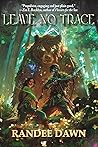
Lexi has been living in the mountains for the past decade, taken there by her father, who is paranoid about the "sickness" in the world "Outside". Unbeknownst, to him, Lexi has that sickness he's trying to avoid -- she can do magic. Outside, TJ Furey is an upcoming popstar who mesmerises his audience with his voice. To escape the paparazzi, TJ convinces his manager Tony that he wants to head into the mountains and shoot a bear. And when city boys go into the mountains to do country boy things, you can bet that things go horribly, horribly wrong.
I'm kinda a little torn about this one. If you've read The Only Song Worth Singing, you'll get vibes of that in the sections with TJ and Stef. It's set in the same world, after all. There's that music magic, what I think are allusions to Ciaran, Mal, and Patrick, the appearance of the various fae, and, of course, the Green Place. But this book tells of a great war between humans and the fae, and how the Green Place is slowly shrinking and dying. I loved those bits.
The bits I didn't really like - and I think this is mostly due to the voice - is Lexi's parts. Which is terrible, because she's one of the main protagonists. She just kinda... annoyed me, and it was hard to gloss that over because her sections were written in first person. So like, 100% in her voice.
My conclusion, overall is that I still love The Green Place and what Dawn is doing with Irish mythology in modern, urban settings, but this one was a little too... rural for me. (I am, unfortunately, a very city girl).
Note: I received a digital ARC of this book from Caezik SF & Fantasy via Edelweiss. Opinions expressed in this review are completely my own.
Translated by Grace Tong En Hui & Tew YiQian
My rating: 4 of 5 stars
I finally got round to reading this! Received a complimentary copy during GTLF last year, and well, you know the TBR.
This English translation of Môo-Sîn-á was published in 2023 but mostly reads a little like early English sci-fi works from the 1950s or so. It's slightly meandering and quite deeply reflective, and while not exactly epistolic, reads more like a letter or diary than a modern narrative novel.
Set in 1990s in Taiwan, the novel follows Wang as he journeys into the interior jungles of Taiwan to reconnect with Hei, an old friend from his army days. It's also something of an escape or an exploration of midlife crisis - he's recently separated from his wife and has left his job, and the only thing that's piquing his interest is looking for Hei. Several times during his journey, aided only by a magical hand-drawn map, Wang admits to himself that he's really looking to discover himself.
There isn't much of a "fantasy" or "magic" structure in place - these are myths, intertwined with spirituality/religion, with a strong folklore base. Primary is the Taiwanese myth of the Môo-Sîn-á, a dark-skinned people with magical powers) with a strange connection to Bornean tribes. Including time-travelling Japanese! Unfortunately, this does colour it with a colonial lens, with the impression of "civilised" people trying to connect with the "primitive" people in the mountains. However, since it's Taiwanese, there's less of a " discovering savage barbarians" feel and more of a cautious exploration of supernatural mystique overlaid with fear of ghosts. I'm curious to know if there really is some connection between the Taiwan aborigines and Borneo natives, or if this is something Wang made up.
Wang sometimes makes very strange detours and ruminations even in the midst of an ongoing conversation which I found a little annoying. Maybe it works better in the original writing, if that's some form of writing convention in Chinese.
I guess to summarise, I did enjoy the story, but I also had a lot of questions about editing choices. Though I don't really know how that is supposed to work with translations.
OMG like... I liked Queen of None well enough, (oh look I gave it 4 stars), but this one... I figure you could skip the first and just READ THIS. (Well, assuming you have a core knowledge of Arthurian legends.)
Hwyfar is fire and fury and everything you would want in a Queen. Of course, King Arthur can't have that because then she would challenge him and his authority too much. So he marries her sisters instead (in succession, not at the same time, lol). But Hwyfar is still a Princess of Avillion in her own right, not just Arthur's jilted bride, and when she's done wallowing, she finds a way to rise to her true calling and protect her homeland.
There's a dual POV in this one, so you're following both Hwyfar of Avillion and Gawain of Orkney, which is brilliant in this (okay, maybe a little tropish) tale of fated lovers, treason, and magic, especially since both parties present a very different persona to the world than they truly are/feel. There's interweavings of the tales of the green man (Green Knight?) and the lost kingdom of Lyonesse, cults with corrupt magic, and a navigating of forbidden love because King Arthur is a self-absorbed, insecure man who cannot abide anyone better than him nearby for fear that they will rise up and take his throne. Even if it's his own nephew.
Content warnings: I have to add that this is 100% NOT a clean read. A key theme in the magic of this story is the concept of "carioz" or partners, and the exchange of power or energy in this pairing worked out via a lot of blood and sex.
It's a marked shift from Anna Pendragon's story, where the protagonist herself is hidden in the shadows - and stays there. Here, Hwyfar is meant to be relegated to the background, but she steals the reins for herself, taking command of her own destiny. It's still very much a period piece though, showcasing what she can (or cannot) do within the constraints of a misogynistic, chauvinistic society - especially if she wants to balance agency with respectability. There's also that pesky thing about family loyalty and how all they want to do might break the peace of the kingdom since they're both from royal families.
Note: I received a digital ARC of this book from Solaris/Rebellion Publishing via NetGalley. Opinions expressed in this review are completely my own.
Nusantara: A Sea of Tales is a wonderful collection of fairy tales, folklore, and fables from the core geographic area of the Malay Archipelago or what used to be called Nusantara. A large majority of the stories come from Malaysia, both East and West (since Heidi Shamsuddin is Malaysian), and Indonesia (because both countries share quite a lot of the same folklore), which I guess automatically includes Singapore (because they were historically always linked before they became their own country).
There are a smattering of stories from other Southeast Asian countries - the Philippines, Vietnam, Thailand - and, oddly, one story each from Guam and Madagascar. Heidi justifies the latter two as being included because they share the Austronesian language. Frankly, I felt they were just a little too far away to share much cultural similarity and probably could have been kept for a later collection.
Some of the more familiar tales (to me) are several Sang Kancil stories, variations of the Bawang Putih, Bawang Merah tale, Si Tanggang, The Swordfish Attack of Singapore and The Curse of Mahsuri. Some of the other tales are vaguely familiar - whether because I have heard of/read them before in other collections or they are similar to European tales, I cannot quite tell. But quite a few were new to me, especially those from Borneo and from other countries. I was delighted to discover Pak Pandir stories for the first time. How did I not know these exist?
Heidi includes notes at the end of each tale or, sometimes, at the end of a group of similar tales. This provided a lot of background knowledge about where the story comes from (and where similar stories are told across the region), explanations of untranslated words and names (where they hold specific meanings that add nuance to the story), as well as some hidden meanings behind cultural practices that are not quite apparent face value.
Nusantara: A Sea of Tales is a timely book that collects tales from oral storytellers and older print sources that are increasingly hard to find before they are lost to us altogether.
Creatures of Near Kingdoms is a beautifully illustrated bestiary of Malaysian flora and fauna. Each one-page description is accompanied by a full-page illustration or lino print.
It's whimsical. And fantastic. And witty.
And occasionally confusing if you're trying too hard to figure out The Point.
It's best read in short bursts. Take it as a collection of microfiction, if you will.
I'm lagging behind in my reviews because... idk. I'm playing catchup with work stuff that I can't delay because I'm clearing up my schedule. So the book reviews are the first to go.
Anyways, thought I might as well post this to make up for yesterday's missed post, even if it's not in the current review schedule (which is messed up).
I was looking up my own notes for the panels I attended at Worldcon 2019, so here's a listing of the threads I made. Also so I can find it later on. lol. I dunno how this embedding thing works, I'm assuming you can click it to open the full thread.
The stories in Tales of Japan: Traditional Stories of Monsters and Magic were sourced from two 20th-century texts: Kwaidan by Lafcadio Hearn and Japanese Fairy Tales by Yei Theodora Ozaki (both in public domain), with each story accompanied by beautiful illustrations by Kotaro Chiba. Just the cover itself is fantastic!
It's no secret that I love fairytales and folktales, especially those of Asian/East Asian origin. These fit right in with the stuff I'm looking for--my only gripe is that the translator(s) sometimes sound a little too apologetic about their use of Japanese terms which aren't directly translatable. Honestly, I don't mind. That's the charm of reading stories from other cultures, isn't it? There's also the occasional stiltedness of language, but overall, these traditional Japanese stories are highly enjoyable, written in that timeless fairy tale style.
Journeys The Dream of Akinosuke: I'm not sure if there's an English fairy tale equivalent for this. When Akinosuke takes a break under a tree he is caught up in an elaborate dream where he is swept off at the behest of the Tokoyo no Kokuo (the ruler of an unknown country; or the King of Fairyland). Is it all a dream or is it a true fairy encounter? The Jelly Fish and the Monkey: An origin story of the jellyfish, in the vein of Rudyard Kipling's Just So Stories. Also a fascinating first look at the mythology surrounding Ryn Jin, the Dragon King of the Sea. Momotaro, or the Story of the Son of a Peach: In this Thumbelina/Tom Thumb-esque story, a childless couple cut open a giant peach to find a little child. Years later, Momotaro leaves his adopted parents to save a northeastern Japanese island from a band of devils. This gains some Bremen Town Musicians undertones with various animals joining him to help him in his quest. The Happy Hunter and the Skillful Fisher: A lost fishing hook sends Hohodemi, the Happy Hunter, to Ryn Jin's realm. Ultimately a good brother vs bad brother story, where the older brother uses the excuse of the lost fishing hook to send Hohodemi away so he can usurp the throne. It's never explained why the younger brother is the Mikoto though and not the older? Also likely an origin story of why Hohodemi is said to control the tides. The Bamboo-Cutter and the Moon-Child: This reminds me of Chinese tales of women (and bunnies) on the moon. No bunnies here, though. Also an amusing look at males who are so enamoured of a woman's beauty they say they would do anything to marry her... but then lie and cheat their way with the minimum of effort.
Ghosts and Monsters The Story of Mimi-Nashi-Hoichi: This takes a dark turn, where a blind lute-priest is seen entertaining spirits. Yuki-Onna: This story feels vaguely familiar--I probably came across it while writing When Winds Blow Cold--but it also follows the vein of traditional Chinese myths with mysterious (usually not so benign) female spirits/creatures who choose to stay with/marry a human man. The enchantment breaks and the spirit leaves when the man breaks their vow of secrecy. Diplomacy: How do you make sure a vengeful ghost doesn't haunt you? Apparently by distracting them. Mujina: Creepy faceless people story. I... dunno. A Dead Secret: Still on the theme of ghosts, this dead woman won't leave until her secret is destroyed. Rokuro-Kubi: Samurai-priests and headless goblins! It should be slightly macabre, but it's also quite hilarious.
Justice The Tongue-Cut Sparrow: This follows the classic good hapless man, evil shrew wife. A good man gets rewarded by fairies, the evil wife tries to get more but meets her just rewards. I suppose there are similar themes no matter where you come from. The Farmer and the Badger: An Aesop-like story, where the wicked badger tricks the farmer but then his neighbour the kind rabbit helps the farmer take revenge. The Story of the Old Man Who Made Withered Trees to Flower: Childless couple takes care of beloved dog Shiro, who is magical and brings them good fortune! The evil neighbour who hates dogs tries to get Shiro to also bless him, but whatever he does turns to bad instead. The Mirror of Matsuyama: Evil stepmother story. I said last week that evil stepmothers don't seem as prevalent outside Eurocentric stories, but here's one from Japan. Actually, the beginning as quite Beauty and the Beast; I was expecting the girl to be exchanged for something, but no. LOL.
I received a complimentary copy of this book from Chronicle Books via Edelweiss. Opinions expressed in this review are completely my own.
Star-Touched Stories is insanely lyrical and immensely beautiful. Chokshi writes with an enchanting rhythm and voice, which really makes you want to read the stories out loud. 100% performance pieces. As it is, I want to read them over and over again, but I can't because my TBR is too long. But since this is book #2.5 it means I need to go and find books #1 and #2 (The Star-Touched Queen and A Crown of Wishes).
My favourite of the three stories was Death and Night which tells of the courtship between the Dharma Raja, Lord of Death, who was cursed never to love and Night, who refuses to marry without love.
Poison and Gold was also enchanting--though it may set off some reader's squick metres as it touches on a f/f relationship. There's background to this which is possibly from A Crown of Wishes, but it's still easy enough to follow.
The last story,Rose and Sword, jumps between the present and the past. Gauri tells her granddaughter about her past, but it's shrouded in myth. There are allusions to both The Star-Touched Queen and A Crown of Wishes I figure, which made me think I probably don't appreciate this one as much as the other two due to lack of knowledge.
But I'd say read it for Death and Night. If that's all you have time for.
Note: I received a digital copy of this book via NetGalley. I was given the book with no expectation of a positive review and the review is my own.
Not So Stories has been one of my most anticipated reads ever since Zedeck Siew announced that he was part of the lineup. I was about to bite the bullet and buy the book when I managed to score a review copy, so YAY!
Not So Stories was compiled as a response to Rudyard Kipling's Just So Stories, which Nikesh Shukla describes in his foreword as "steeped in colonial nostalgia." I don't recall if I've specifically read Just So Stories (which I've recently found on Project Gutenberg) but if it's in the same vein as other Kipling books I've read, I get what he means. Not So Stories tries to recreate a new collection of animal tales from multicultural, multiethnic lenses, "confronting readers with the real harm colonialism did and taking the Just So Stories back." I cannot meaningfully compare the two right now but I will say that this book both succeeds and fails in its intent.
It succeeds because this wonderful collection of short stories does offer a multitude of unique voices, some of which I can personally identify with as a Southeast Asian, and some of which I can recognise and understand as stories from other cultures, none of which revert to the standard white male Christian point of view that I grew up with as an Anglophilic Chinese-Malaysian. Yet, where it fails is in its target audience--although the anthology is purported to be for children, one story has sexual elements unsuitable for younger readers and at least two others have themes that would probably only appeal to adults. Maybe if it had been targetted for "adults who grew up reading the original as children," it would have succeeded on all counts.
Now on to the stories!
Cassandra Khaw opens this anthology with the brilliant How the Spider Got Her Legs. It has a lovely folklorish feel, beautifully lyrical, but is also very, very brutal--not in physical sense, but how it rips away the veils from your eyes to reveal the evils of colonialism. At first, I wondered at "All of them pale, with hair like someone had spun the noon light into threads, eyes like ruptured sea glass", but Spider soon gets the [White] Man to admit that he took the land from "the Man who once lived here" and that his venom makes his victims "slowly wither of self-loathing." It's subtle, easily missed; yet as you read, you come to realise that this is what has been done to us in Malaysia (where Khaw comes from): we learnt to deify the White Man and loath ourselves, until we grew up and realised the lie--they are no better than we are. (5 stars!)
Queen (Joseph E. Cole) brings us into Africa (I presume?) with an inversion of roles: men here are described as beasts, whereas the anthropomorphic animals are the people. There is anger and pain, sorrow and desperation, a fight for life and freedom. There is also the quiet othering of what is usually a central narrative ("when they worship their cruel man-god who makes them eat his flesh and drink his blood, like savages") and harsh accusation against humanity ("... kill one another for paper and pieces of metal and for any number of pointless reasons. You rape the earth, molest the Earth, taking what you desire without thought or consequence"). Yet there is also reconciliation, the Queen who speaks to the princess who would be queen of her tribe. (5 stars!)
Wayne Santos's Best Beloved is one that I resonated with quite a lot, being set in nearby Singapore, but is also the first of the stories that step out of the children's domain into a rather more mature arena. In fact, Best Beloved also seems rather out of style with the other stories in the book. It's very much more contemporary in feel, with a horror/urban fantasy vibe, besides moving away from animal stories into the paranormal, featuring Chinese ghosts, angry spirits and pontianak. (5 stars!)
The next story hops over the causeway to Malaysia. The Man Who Played With the Crab (Adiwijaya Iskandar) has a Stranger trespassing Beting Beras Basah in a bid to find the great crab that wrecked his ship. There's a deliberate garbling of names--Adiwijaya emphasises the lack of effort made by white men to pronounce names from other cultures--and blatant disregard for lives and beliefs that aren't central to whiteness. There is also a sense of heavy resignation ("my kind shall be written away as myths") amidst a tinge of hope ("But your time shall pass too.") There is an amusing hint of an origin story for British perception of Malays and Malay culture in Malaysia--and because I got distracted, here's a link on the mysterious Tasik Pauh Janggi in Beting Beras Basah (in Malay, sorry). (5 stars!)
In Samsara, Georgina Kamsika explores what it means to be bicultural. Should Nina learn to embrace her mother's Indian roots, or should she fight to retain the white-passing privileges inherited from her English father? Must she choose one or the other? Can she not be both? I don't personally have experience in being biracial, but I do relate to her never-quite-fitting in, in my case because I am a "banana"--white on the inside, yellow on the outside. This one, like Best Beloved, dips into the spirit world, instead of the animal one. (Four-ish stars?)
And we finally get to Zedeck Siew's Serpent, Crocodile, Tiger! Other reviews complain that this is three (or more) stories in one. In a way it is--I see the thread that goes through the whole thing, but it's hard to digest. Siew weaves a convoluted story that begins with the river-mother, who makes the crocodiles, the youngest of which becomes a Tiger. This shifts into Were-Tigers and Were-Crocodiles, playing hard and fast with myth and religion, magic and faith, acknowledging the temptation to disregard culture, upbringing and heritage for the feeling of belonging and acceptance, before finally ending up back where he started with the river and the Tiger, and maybe a retribution (but maybe not). The ending feels satisfying, in its own way, but also as if I've missed something. This one isn't explicit, but part of the setting (a girl stays the night, they hang out at the club) might need some navigation with younger readers. (I'm confused. And conflicted. Four stars?)
How the Tree of Wishes Gained its Carapace of Plastic by Jeannette Ng was like a peek into a culture I'm supposed to be of, but I've never really identified with. I spent much of the time wondering whether the Tree of Wishes was located in Hong Kong, or if this was some other harbour, a village that worships dragons of the sea, "the price paid to buy peace" that becomes part of an "empire so vast that the sun never set upon their queen's soil". Ng returns to the beautiful style that Khaw uses effectively at the beginning of this anthology, tangling history with modernism and progress. I really want to know who Old Man Uncle is. (4 stars.)
After all that good stuff, Stewart Hotston's How the Ants Got Their Queen felt just a little too labourious to get through. It's mainly a powerplay between the ants and the pangolins anyway, with a lot of eaten ants. (I probably didn't get much out of this story as you can tell. Two... three stars, maybe?)
Tauriq Moosa returns us to fantastical animal tales in How the Snake Lost its Spine. I was amused by "the White Devils from distant lands" (Northern Mountains) who believed themselves "first and chosen, those who most resembled the Creators though no one knew what the Creators actually looked like" whilst the "Others, Those Below, Those Far Away" were believed "to be a mistake". There's no hiding that this part at least is allegory, plain and simple, except maybe to the White Devils themselves. (Four stars.)
The Cat Who Walked by Herself (Achala Upendran) is a myth of the origins of the homestead, relating how Man got himself Woman, Dog, Horse and Cow through his might and magic. This one veers out of cultural identity into a more feminist lens, focusing on the power play between Man and Woman. It's a little gory, with many severed limbs, so probably okay for older children. Also, more Woman than Cat, though it's Cat who instigates Woman mostly. (Ah, I'd say four stars.)
Zina Hutton's Strays Like Us meanders into Egyptian territory with Bastet drifting through Miami refusing to be forgotten. This one has hints of American Gods (with a nice reference to Neil Gaiman too!) so it doesn't quite blend in with the rest of the stories either. (Three stars.)
How the Simurgh Won Her Tail (Ali Nouraei) reminds me faintly of Haroun and Luka by Salman Rushdie. Against the backdrop of a children's hospital, Amir tells the story of the Simurgh, who sets off on a quest to make herself a tail. The story is charmingly told, juxtaposing the Simurgh's distress at seeing the state of the world with the comfort gained by the children in the Paediatric Oncology Ward. If there is equanimity to be achieved, it is from the words, "This too shall pass." (Five stars!)
Raymond Gates's There is Such Thing as a Whizzy-Gang is another story that doesn't quite fit. It seems to be about a mythical creature from Australia and reads like a Enid Blyton-type pixie/fairy story but it's never quite clear if this Whizzy-Gang actually exists. Oh well, I guess that's the mystery of the story? (Three stars.)
Back to the animals, How the Camel Got Her Paid Time Off (Paul Krueger) seems to be mainly harping about overwork, bad HR practices and recognising religious celebrations of minority cultures. It gives off a kind of hard-boiled detective vibe, without the detective, and features a lot of smoking, pizza and beer. This story will really only appeal to adults so I'm not sure what it's doing in here. (Three stars.)
Overall, I'd say that each individual story in Not So Stories is great on its own (except the ants. What was with the ants?) but the problem is that not all of them fit together quite well in the same book. Where I was expecting a fantastic collection of animal tales for children (or at least tales related to animals), some stories veered off into the paranormal and the mythical, and some into very adult mindsets/settings.
Note: I received a digital copy of this book via NetGalley. I was given the book with no expectation of a positive review and the review is my own.
Addendum:
I was going to post this for Music Monday, but didn't. Still. A song for today.
Kasih-Mu, karya-Mu, nyata dalamku | Your love, Your works, are evident in my life
Kau pegang hidupku dalam tangan-Mu | You hold my life in Your hands
Darah-Mu, salib-Mu, tebus hidupku | Your blood, Your cross, redeems my life
Nama-Mu berkuasa sanggup bangkitkan | Your Name is powerful enough to raise
Harapanku di dalam-Mu | My hope is in You Hanya Kau Yesus kuatku \ Only You, Jesus, are my strength Kupercaya kuaman dalam-Mu | I believeI have peace in You
Tak pernah gagal rencana-Mu | Your plans have never failed
T’rangi jalanku kuasa-Mu sempurna | Light my way with Your perfect power
Pengharapanku takkan hilang | I will not lose hope
S’bab masa depanku Kau sediakan | Because You have prepared my future
Tak pernah gagal rencana-Mu | Your plans have never failed
T’rangi hidupku kuasa-Mu sempurna | Light (Illuminate?) my life with Your perfect power
Pengharapanku takkan hilang | I will not lose hope
S’bab masa depanku dalam-Mu | Because my future is in You
Words & Music: Andre Hermanto, Andriyanto, Billy Simpson, Joshua Tremonti, Kevaz Lucky, Nina Sari Ishak, Ricky Sutanto, Tirza Agatha, Winny Jessica, Yumir Vishreda
Crappy translation by me.
On a private scale of internal squees, Coiled would rate somewhere between 4.5 - 5 stars. On the cosmic scale of books I have read, I'd put Coiled at 4 stars. Which is just a grand way of saying that it hit a lot of sweet spots, I liked it very, very much, but it's not the greatest book I've ever read. (And is also a fancy way of saying it falls into the category of books-I-won't-admit-to-liking-this-much because of literary pretentions.)
Two sets of twins from neighbouring countries are cursed. As they come of age, they're pitted against each other, as curing one would permanently curse the other. Soon it becomes a race--which twin will win? And what will happen to the one that loses out? Coiled is basically a fairy tale/myth with gods and half-gods, curses and magic, and a quest. Well, more than one quest. They are personal quests to break personal curses, but that doesn't make them any less valid. There's a lot of personal vendetta and family squabbling and guilty secrets.
The... thing... between Princess Laidra and Prince Calen is tooth-achingly, diabetes-inducingly sweet, and has the added advantage of being old-fashioned and gentlemanly and will-he-won't-he-WHATAREYOUWAITINGFORPRINCE, which is what I love in a good guilty-secret read, which usually involves princes and princesses, because I don't read romance [ahem]. It IS, however, clean YA, and while there are certain--allusions? Fade to blacks? Almosts?--hints of impropriety (to come and hoped for), it mainly stays in the teenage royal fantasy plane.
It's the sort of book my teenage self would have read over and over and over again. Now, I just read it, sigh, and go back to real life.
The serpent on the cover is also very cute.
Note: I received an e-galley via NetGalley in exchange for an honest review.
If you've already been following Liu's career as a short story writer from 2004 - 2014, you don't actually need to buy this book. The Paper Menagerie and Other Stories is a collection of Liu's science fiction and fantasy shorts, as follows:
- The Bookmaking Habits of Select Species (Lightspeed, 2012)
- State Change (Polyphony 4, 2004)
- The Perfect Match (Lightspeed, 2012)
- Good Hunting (Strange Horizons, 2012)
- The Literomancer (Fantasy & Science Fiction, 2010)
- Simulacrum (Lightspeed, 2011)
- The Regular (Upgraded, 2014)
- The Paper Menagerie (Fantasy & Science Fiction, 2011)
- An Advanced Readers' Picture Book of Comparative Cognition
- The Waves (Asimov's Science Fiction, 2012)
- Mono No Aware (The Future is Japanese, 2012)
- All The Flavors (GigaNotoSaurus, 2012)
- A Brief History of the Trans-Pacific Tunnel (Fantasy & Science Fiction, 2012)
- The Litigation Master and the Monkey King (Lightspeed, 2013)
- The Man Who Ended History: A Documentary (Panverse 3, 2011)
(There only seems to be one new/unpublished story.)
---
I find that I don't enjoy Liu's straight science fiction as much probably because his sci-fi veers towards a dryer, hard-science style and I don't really have much a feel for his aliens. The more spec-fic mash ups are pretty good, but it's his Asian fantasy that really comes alive.
At the top of the list is, obviously, The Paper Menagerie -- it's hauntingly beautiful; the poignancy of a boy torn between his Chinese roots and his American reality and a man finally coming to terms with being both. Similarly, in All the Flavors, Liu seems to be creating a new mythology for the Chinese-American, combining Chinese-type myths with the story of Chinese migration to America in the 1800s. The Literomancer, in turn, brings you to Taiwan where Mr Kan extends a magical world and an odd sense of belonging to Lilly Dyer, a Texan transplant.
I suppose it's this sense of transience that Liu manages so well -- his characters are in-betweens, never quite fitting in, never quite finding who they are, always searching and yearning. Even in Good Hunting and The Waves there's an unsettling sense of change -- whether it's because the magic is leaving the land, or that science is changing humanity.
There's also a sense of guilt and the need for redemption -- Liu bases some of his stories (The Litigation Master and the Monkey King, The Man Who Ended History: A Documentary) on injustices long hidden in history, as if he is apologising for them.
The stories in this collection are mostly hard-hitting. They're not light, bubbly type reads; but shorts with depth, often reaching into the dark sides of humanity. It's about balance and how humans can't, won't. It's past and future, hope and fear. And that muddly thing between that makes humanity what it is.
The men screamed and pointed as he transformed back to his true form. His golden feathers blazed in the sun, his horn burning with pure fire; hot white, deep black, flickering blue. He spread his wings and took to the air, the force of each beat of his wings driving the little men to the ground.
“Fight me, Jentayu!” he screamed his challenge into the air.
Lighting flashed across the sky—and there she was before him. Her sleek blue-white feathers gleamed in the rain that now poured, her crest glinting like a diamond crown. For a moment, he caught his breath, mesmerized. He'd forgotten how beautiful she was. How graceful in flight, how tender in speech, how she'd been his closest companion for thousands of years as they ruled the Bird Kingdom together. But the rain was chilling him, dousing his fire, and this would not do.
“It's not so easy to kill me, Jentayu,” he sneered.
“I'm not trying to kill you. It's enough for me to just stop you from carrying out your
nefarious plans.”
“Nefarious! Hah. Maybe you should go back to school and learn how to use your words properly.”
“I said exactly what I wanted to say, Garuda.”
Another beat of his wings. The earth shook and he smiled. “We'll see how you handle that.”
“Handle what? The earth shaking?”
“No. That.”
Jentayu wheeled in horror as the skies erupted in fire and brimstone. The eruption of the volcano filled her senses with searing heat, billowing smoke and the scent of wet ash. In retaliation, she called upon the waves. Two feet. Three. Five. Seven feet high they rose, water against fire. There was nothing she could do to help Merong Mahawangsa and his men now. They would have to survive on their own.
She pressed her apologies into his mind, directing the men to find safer ground far away from the battle. Away from the Garuda's butchery.
“Would you really kill me, my brother?”
“I will destroy anyone who stands in my way—including you, Jentayu!”
And then they crashed against each other, hissing and snarling. Claw raking bloody claw. Beak scoring beak. Mighty wing buffeting mighty wing.
It broke her heart. Where they'd once touched tenderly, as brother with sister, as friends forged in the fight together, they now lashed out at each other. There was death on his claws, and deep sadness in her heart. She knew all his weaknesses. Had once protected them, as he had done hers.
But that was why she had walked away before, wasn't it? Away from his delusions of grandeur, of conquering the world and being Emperor of All Earth—instead of being God's emissary and protector of birds. She couldn't just walk away now.
---
Jentayu's Tear is now available in the anthology Insignia: Asian Fantasy Stories.
INSIGNIA Vol.4 includes 9 Asian fantasy stories with a mix of literary, contemporary, myth-based, and historical fantasy pieces. Countries included are Singapore, Vietnam, Malaysia, the Philippines, Japan, China, India, and Nepal.
PART I: Adventure / Folktales
‘Four Claws’ by Allison Thai
‘I Found Love in an Urn Full of Ashes’ by Joyce Chng
‘Jentayu’s Tear’ by Anna Tan
‘Ribbons & Bones’ by Kelly Matsuura
PART II: Adult / Literary Tales
‘The Fireflies of Todaiji’ by Russell Hemmell
‘Birds of Heaven’ by EK Gonzales
‘Last Train to Begunkodor’ by Nidhi Singh
‘Untouchable’ by Sheenah Freitas
‘White Lady’ by Tina Isaacs

 Leave No Trace by Randee Dawn


