Wednesday, 11 November 2026

Book Review: Witches of Questionable Intent | Jenn McKinlay

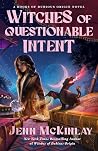
Witches of Questionable Intent (Books of Dubious Origin #2)Witches of Questionable Intent by Jenn McKinlay
My rating: 5 of 5 stars

I feel like librarian witches are slowly becoming my thing lol.

A dangerous magical tome has been stolen, and it's up to Zoe Ziakas and her colleagues at the Books of Dubious Origin (BODO) department of the Museum of Literature to track it down. Obviously, her more experienced colleagues are the ones organising the hunt, but Zoe has a perk they can use to their advantage - as a witch still learning to control her powers and settling into the city, she has unprecedented access to investigate people and places that the others already have history (and beef) with.

I actually picked this up because I thought it was a standalone, but it turned out to be book 2. At any rate, the story arcs are completely separate - Witches of Dubious Origin is about how Zoe received her family grimoire and discovers her magical heritage; it forms a background to this story, but this is a completely new arc. Except for, I suppose, the budding romance between Zoe and the very handsome containment specialist, Jasper Griffin which kinda sparked a little then and is building up now.

Zoe is determined and resourceful, the romance and banter is sparkling and witty, Jasper is *rolls eyes* stereotypically British, making for a very fun read. Though, tbh, I spent more than enough time sniggering because every time they mentioned BODO, I felt like they were calling the entire department stupid ["bodoh" means stupid in Malay].

The conclusion is an obvious set up for more books in the series, but as far as the main plot goes, this one finishes very satisfactorily.

Note: I received a digital ARC of this book from Berkley via NetGalley. Opinions expressed in this review are completely my own.

View all my reviews

---

HAPPY RELEASE DAY!

Witches of Questionable Intent released on 10 November, which would be yesterday according to my time, but possibly still today over in the US. 

Wednesday, 4 November 2026

Book Review: Glass Across the Sea | Sara Ella

Glass Across the Sea (Realms of Allumeria, #1)Glass Across the Sea by Sara Ella
My rating: 4 of 5 stars

I've been meaning to read a Sara Ella book for a while now so when this came up in Enclave's review list, I snapped it up. She's very popular in some of my circles, so that big hype around her name/books probably contributed to the slightly rocky start I had. That, and the fact that it's trying to be many things at the same time.

Glass Across the Sea came across to me first of all as a Cinderella retelling. After all, you have magical glass slippers, a commoner (Noelle Perault) falling in love with a prince (Dante Marin), and a father who leaves her alone at a crucial time. There's no stepmother, though Lady Duval, who is supposed to take care of Noelle & the house during her father's absence steps into the role. Noelle's own mother is lying under a curse, unable to remember who she is or anything of her past.

There's also the slightly in-your-face Christian allegory with the Lamplighter and being lights in the world, with the Lamplighter Parables forming a Bible/faith text of sorts in Allumeria. Yes, yes, we're supposed to share our light and be kind and etc. Okay, so most of it was very nicely done, but eh, idk.

It's also supposed to be a retelling of The Count of Monte Cristo (or apparently started off as that before the Cinderella mashup came in), but I don't know enough about that one to say if it's a good retelling or not - I have vague memories of the plot, but I cannot tell if I've actually read the book, or if it's one of those classics that I've heard about so much that I've somewhat absorbed it subconsciously.

As I said earlier, Glass Across the Sea started off a little slow for me, and it took getting to Part II or so for me to be fully invested. After that, I was just racing through the pages towards the end. The multiple POVs worked for this one; it's mostly between Noelle and Dante, with some of the other side characters when needed. I personally don't think those other POVs were really necessary but they didn't detract in any way. I actually really appreciated the fact that Noelle and Dante were close childhood friends!

I don't know if you can call the magical system complex; only the Fireflys have magic, and there's a limited number of them, but a key to the system is that each Vestige (which works something like a Relic/Grail) has both a blessing and a curse. This blessing/curse thing, which was obviously written in terrible poetry, was what added quite a bit of complexity to Noelle & Dante's bid to break the curse, especially where they overlap. I think the whole thing about the Order and the group countering them was more confusing than the actual magic thing. lol

Actually, my only solid beef with this book (hence why it's not a full 5-stars) is just the fact that it's got too much time travel talk (which is a personal bias, sorry). Like it's not even actual time travel, but there were many discussions about past and present and future and time streams and...

This would be a great read for anyone looking for Christian-based YA fantasy, sweet, no-spice romance (the most they do is kiss), with a little intrigue and adventure.

Note: I received a digital ARC of this book from Enclave Escape. Opinions expressed in this review are completely my own.

View all my reviews

Wednesday, 28 October 2026

Book Review: The Honjin Murders | Seishi Yokomizo with Louise Heal Kawai (translator)

The Honjin Murders (Detective Kosuke Kindaichi, #1)The Honjin Murders by Seishi Yokomizo
My rating: 4 of 5 stars

The Honjin Murders is a locked room murder told to us by an unnamed narrator, who posits himself as a writer of detective stories. At first, I read this to mean he was something of a Watson or Hastings character, but after a while I wondered if the "I" really referred to Seishi Yokomizo himself; I feel like this is a particularly old-school literary conceit, though I can't say with certainty where I've encountered it before. (I'm thinking of old British science fiction, maybe?) Then again, this is a novel in translation, so who knows if this is the convention for Japanese detective novels. As it is, there are a lot of references to other detective novels in this one which, along with the narrator-as-writer gives it a rather meta vibe.

At any case, the narrator assembles for us all the events surrounding the Honjin Murder Case at the home of the Ichiyanagi family back in 1937, which involves a newly-wed couple being brutally killed on the night of their wedding, a mysterious three-fingered vagrant thought to be the grooms "mortal enemy", a suspicious uncle who wants to know the truth about his niece's murder, and a quirky amateur detective, who is called to solve the unsolvable crime.

The novel offers great insight into the Japanese social structure as well as the unspoken classism outsiders would not have realised; I wonder if Yokomizo had originally explained all this, or if this was something the translators expanded on a little to give English-language readers a little more context. The Ichiyanagi family itself is made up of fascinating characters, with all their personality quirks and hidden emotions playing off against each other. There are definitely shades of Poirot in Kosuke Kindaichi, especially since he relies on his brain rather than the usual legwork, but personality-wise, he's rather young, laidback, and a little awkward. Plus, he does that big demonstration-reveal at the end as well.

I think what bothered me a little was the shifts in tone & narrative, where some chapters were very narrator-led with the MC providing his thoughts about everything and providing commentary, while others were in a distant 3rd-person POV, like actual chapters in a novel where the narrator disappears.

Despite that, it was a intriguing read with a tantalising mystery and an unexpected (to me) conclusion.

Note: I received a digital ARC of this book from Pushkin Vertigo/Steerforth Press via Edelweiss+. Opinions expressed in this review are completely my own.


View all my reviews


Wednesday, 21 October 2026

Book Review: Sons of Day and Night | Mariposa Aristeo

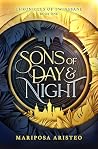
Sons of Day & Night (Chronicles of Twinsbane Book 1)Sons of Day & Night by Mariposa Aristeo
My rating: 3 of 5 stars

I AM SO ANNOYED AT THIS BOOK and yet I couldn't put it down.

Waruu is a Son of Day, and his one goal is to take the place of the king in order to free his people from tyranny. King Daccias is a Son of Night, and he will go to his grave with the secret of where the Separator is, even if his entire Kingdom is decimated by the plague.

As a retelling of the Prince and the Pauper, Aristeo has created a fascinating premise for this magical world - the fact that everyone has an opposite twin. Her writing pulls you through the story even when you don't want it to - I finished it in basically one sitting even though I spent half the time being VERY, VERY ANNOYED at a lot of things. It's also written in alternating first person POV, which made Daccias' sections even more annoying because he obviously has Reasons for not wanting to release the Separator, but he refuses to tell anyone WHY. Not even the reader.

So you spend the whole book not knowing why, and agreeing with everyone else that Daccias is a stupid, annoying brat of a king. And then you find out why and realise that actually, he is still a stupid, annoying brat. It's one of those tropes that I hate (whatever it's called) because all the tension is built up on one person refusing to explain something which would resolve ALL THE PROBLEMS and he refuses to say anything despite everyone asking him to (and almost forcing him to) because nyeh nyeh nyeh he is the king and can do whatever he wants. His twin/opposite Waruu is also an annoying brat, but he is at least entertaining, and trying his best. Waruu is also pretty upfront about all his motives, which is maaaaaybe why I liked him a little better. (Side note: Maybe this is why YA is irking me more and more - I have no more patience for teenage shenanigans. I would have probably enjoyed it more if I read this as a teen myself.)

There's a bunch of backstory to the founding of this kingdom and the stark separation between Day and Night layered into the things/history Waruu discovers when he takes Daccia's place. I found this pretty fascinating, especially since you don't really know anything about the current day except that the Sons of Night are the elite ruling class and the Sons of Day are the poor commoners.

So anyway, the plot and execution could be stronger, and I spent a lot of time thinking all the characters in the book are slightly dumb (or are prone to making brainless decisions) but it's fast-paced enough to pull you along anyway despite your better inclinations.

Note: I received a digital ARC of this book from Enclave Publishing. Opinions expressed in this review are completely my own.

View all my reviews

Wednesday, 14 October 2026

Book Review: Embers | Ronie Kendig

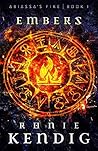
Embers (Abiassa's Fire #1)Embers by Ronie Kendig
My rating: 3 of 5 stars

I am slightly unsure what I think about this. On one hand, it's a pretty classic coming-of-age quest/adventure, where the young prince has to fulfil a quest in order to regain his throne and restore the nation. On the other, the premise pretty much reeks of misogyny because the 19-year-old crown princess Kaelyria gives up her throne and her powers to force her younger brother Haegan on the journey... to find permanent healing for himself and to... I suppose take her place on the throne? Because it would be better for him? And prevent the bad guy from stealing her gift? IDK, that part is still kind of fuzzy even to the end of the book. If this were explained better and didn't feel like the entire opening set up was because the story needed the Chosen One to be male, I probably would have liked it more.

ANYWAY, disregarding that...

Embers was a fun read overall, despite being (obviously) the setup of bringing The Fellowship together for the rest of the series. This is a faith-based fantasy, so it hinges on prophecy and also the mysterious workings of the god of the world - which in this case involves Abiassa the Goddess who gifts the Fire King and the accelerants their fire powers - to defeat the enemy, who (again obviously) denies God and wants to conquer the nation.

There's manipulation and deception galore, secret politicking, and warring factions, as well as long-hidden secrets that finally come to light - so whilst the entire plot does hinge on quite a few well-worn tropes, it's still interesting and twisty enough to keep my attention. The companions are pretty cool themselves too, especially Thiel, the one female character who makes sure they kinda use their brains and don't all rely on all testosterone-fuelled impulses and adolescent male rage.

That said, one other thing that annoyed me was weird fact that King Zireli decided to hunt down his own son like a traitor despite all evidence and the word of Kaelyria herself that Haegan is the one being manipulated and is just trying to survive. Then he regrets it later, lmao. I suppose Kendig was trying to show that the king is hot-headed and judgemental, but he just came across as annoying and stupid.

You will enjoy Embers if you're looking for a faith-based fantasy YA with a main male protagonist and a moderately large supporting cast.

Note: I received a digital ARC of this book from Enclave Publishing. Opinions expressed in this review are completely my own.

View all my reviews

Wednesday, 7 October 2026

Book Review: The Haunted Librarian | Auralee Wallace

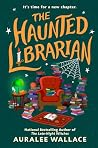
The Haunted LibrarianThe Haunted Librarian by Auralee Wallace
My rating: 4 of 5 stars

Amelia Bates has three rules when dealing with ghosts, which basically amounts to ignoring anything and everything about them. But the old library on Prince Edward Island, where she's finally fulfilling her life-long dream of being a librarian, is filled with ghosts. And not just any ghosts she can ignore, but ones who are actively trying to get her attention. And of course, the head librarian just has to be the most dreamy - yet unattainable - guy, doesn't he?

I don't normally go for ghost stories, but this one sounded like not so much horror but more rom-com, ala Caspian the Friendly Ghost. It does have its darker moments - Amelia has to figure out the three resident ghosts' pasts in order to help them move on, and not all of that is pretty. The story as a whole, however, is light-hearted and cosy. Amelia has to confront her fears and her awkwardness, the ghosts have to face their pasts, and somewhere along the lines, they actually become friends.

Whilst love is a major theme - and weaves itself through the book- the actual romance side of it is super slow burn and no spice. I think this is partly because Amelia spends most of the book going "BUT HE DOESN'T LIKE ME" in the face of all the evidence. The main theme is self-acceptance with a huge dose of found family - not just for Amelia, but for all of them.

I brought this along with me during a weekend trip to Bangkok, and I have to say that The Haunted Librarian is a perfect light read over vacation. It's funny and light hearted, and though there are ghosts and malevolent happenings, there's nothing too dark to scare you while you're in unfamiliar places.

Note: I received a digital ARC of this book from Berkley Publishing Group via NetGalley. Opinions expressed in this review are completely my own.

View all my reviews

--- 

The Haunted Librarian releases on Oct 6! Get it here (affiliate link).

Wednesday, 23 September 2026

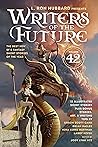
Book Review: Writers of the Future Volume 42

L. Ron Hubbard Presents Writers of the Future Volume 42: Illustrated Edition Featuring the Next Generation of Science Fiction & FantasyL. Ron Hubbard Presents Writers of the Future Volume 42: Illustrated Edition Featuring the Next Generation of Science Fiction & Fantasy by L. Ron Hubbard
My rating: 4 of 5 stars

Every once in a while I pick up a review copy of Writers of the Future to see what's been going on on that front. Excellent stories, as usual, though this one veered a lot more into time manipulation and body swapping than I prefer, whilst the fantasy stories were... I don't know, not very memorable or not quite to my taste.

Sometimes, I review an anthology by going through the story titles and seeing if I remember them after finishing the book. These are the four that really left an impression:

"Form 14B: Application for Certification of Consciousness Transfer (Post-Mortem)" by Thomas K. Slee - This was an interesting one, based on the concept of the ability to transfer your consciousness into a new body. But how do you prove you are who you say you are when you are a disembodied voice in a tin can?

"Thickly" by Dorothy de Kok - Thickly is supposed to enhance you, give you a little more flesh, make you more seen. But at what cost? This is a dark exploration into how women still feel that they need to perform, whether by maintaining a certain desired "look" or by taking up only as much space as they're allowed.

"As Long as You Both Shall Live" by Mike Strickland - AH THIS ONE! Similar to the first, the characters in this story upload themselves into cyberspace as part of a clinical trial. When tragedy strikes, they enter unchartered territory: Can one be considered alive if their consciousness still exists but their physical body is dead?

"A Girl and Her Dragon: A Life in Four Parts" by Joseph Sidari - Funnily enough, this is the only fantasy story that I like, even though I normally prefer fantasy over sci-fi. My only quibble is that it uses multiple formats (journal entries, newspaper clippings, handwritten notes, tweets, etc) and I think the formatting didn't translate well in this e-ARC. Probably looks better and is less confusing in print.

As much as L. Ron Hubbard has that whole weird scientology thing going on, his essays on writing have usually been pretty spot on. "Artistic Presentation" felt especially relevant, ruminating on how the philosophy of producing art (the effort and effect is the point) is directly opposed to manufacturing & the business world (cheapest and easiest to make the most money).

I'll end this review by leaving you with this quote:
Keep ahead of automation. Keep ahead of do-it-for you. Don't disenfranchise yourself by giving all your work away - to a machine, to a fellow worker.


Note: I received a digital ARC of this book from the publisher via NetGalley. Opinions expressed in this review are completely my own.

View all my reviews

Wednesday, 16 September 2026

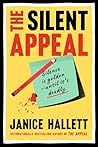
Book Review: The Silent Appeal | Janice Hallett

The Silent Appeal (The Appeal, #2)The Silent Appeal by Janice Hallett
My rating: 4 of 5 stars

Well, that's another exciting mystery set in Lower Lockwood!

I first discovered Hallett's work through an ARC of The Christmas Appeal - I still haven't read the first book, The Appeal. The format was, and still is, innovative - maintaining the same conceit of a Roderick Tanner, a retired KC, sending files to Femi Hassan and Charlotte Holroyd for their review and opinion - and letting you unravel the mystery with them through WhatsApp messages, emails, journals, case notes, as well as Hassan and Holroyd's own summaries. Not so many police transcripts in this one! I suppose a major difference between this novel and the Christmas novella is that in the Christmas one, if I remember correctly, they found a long-dead body and were in fact solving a cold case. Here, the murder just happened a year ago, and they're looking for clues to assist in an upcoming appeal - in the hopes of changing the outcome of a current sentencing. This gives it a little more urgency.

All the different formats makes for difficult - yet light - reading. It's breezy in the sense that you don't have to go through dense text, or filter the mystery through a singular narrator. You can really skim through the emails and messages. And yet, the multiple formats makes it hard to keep track of who's who and what's going on when - especially when the time skips a bit here and there. It's easy to get caught out by missing a crucial date, or a strange name change, because there's a tendency to disregard "unimportant" information like names and time stamps as mere "formatting". There is a list of characters near the start of the book, but it's a bit hard to refer to when you're reading the e-book; I have to say that this book is also best read in print.

One thing I still find very weird (interesting-weird, not bad-weird) about this format is that since you're reading in real time with the "detectives", you don't actually find out who got murdered until about 80% in. I mean, you kinda know there is a murder because it's mentioned at the start, but for the rest of the time until the body is found, it's mostly gossip, jealousy, and affairs (and lots of admin) surrounding The Fairway Player's staging of Agatha Christie's play, The Hollows. The difference this makes is that because you don't know who got murdered, you can't really start forming opinions on who might be the killer until that point!

And there's so much going on between the characters. The Silent Appeal leans heavily on the themes of jealousy. There are various affairs (and accusations of affairs), casting envy, professional (well, as professional as amateur theatre can get) rivalry, as well as the mysterious reappearance of Sarah-Jane's sister, Nicky-Rose. Nicky-Rose is the one who really throws things off kilter, as well as Issy, who's apparently a character from the first book. I thoroughly hated Issy (ugh, so annoying!) and hoped many times that she'd get killed.

Ultimately, I did enjoy reading The Silent Appeal, but it's not a format that I'll especially look forward to for murder mysteries, especially since you don't quite get the murder aspect of the mystery until you're almost at the end.

Note: I received a digital ARC of this book from Atria Books via Edelweiss. Opinions expressed in this review are completely my own.

View all my reviews

Wednesday, 9 September 2026

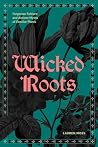
Book Review: Wicked Roots: Forgotten Folklore and Ancient Myths of Familiar Plants | Lauren Moss

Wicked Roots: Forgotten Folklore and Ancient Myths of Familiar PlantsWicked Roots: Forgotten Folklore and Ancient Myths of Familiar Plants by Lauren Moss
My rating: 4 of 5 stars

Wicked Roots: Forgotten Folklore and Ancient Myths of Familiar Plants is a lovely book about plants mentioned folklore and mythology, whether the lore is about the origins of the plant or its subsequent use and/or symbolism. It skews very Western/European/Anglocentric in general, though there are several mentions of plants and myths from elsewhere, especially where there is overlap.

Included are also several retellings of the myths. I was rather ambivalent about these as I felt that they gave a little too modern a spin on the original tales.

Overall, it was a casual, light read, rather than anything that you might use for deeper research.

Note: I received a digital ARC of this book from Castle Books via Edelweiss. Opinions expressed in this review are completely my own.

View all my reviews

Wednesday, 19 August 2026

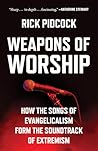
#Book Review: Weapons of Worship | Rick Pidcock

Weapons of Worship: How the Songs of Evangelicalism Form the Soundtrack of ExtremismWeapons of Worship: How the Songs of Evangelicalism Form the Soundtrack of Extremism by Rick Pidcock
My rating: 5 of 5 stars

Rick Pidcock's posts have been appearing on several of my social media feeds for a while now. A friend shared a post, I resonated quite a bit with it and read a few more, my clicks fed the algorithm (or however that works) and he just kept appearing after that. So when I found Weapons of Worship while browsing Edelweiss, I snapped it up immediately.

Which is to say that I was probably predisposed to like it and resonate with it anyway.

The recent history of the worship movements that Pidcock tracks were the soundtracks I grew up with, albeit at a distance and a slight delay. Passion's One Day Live was *THE* big album in my teens. (Weird note: I actually don't quite remember that last track, "America", probably because it didn't feel relevant to me.)

Being on the other side of the world (Malaysia), Hillsong Australia and Planetshakers still held a little more sway in the early noughts, but by the time I started leading worship in the main service somewhere around 2007 to 2018, our "top 25" charts were also filled with all the usual suspects: Chris Tomlin, Bethel, Kari Jobe/Gateway, Hillsong. We did like Israel Houghton, but generally decided his songs were too hard to sing in church; we did not have a choir or Black voices.

It's not surprising that there is little variation between worship songs in English-speaking churches in Asia and those in America. Due to colonialism, our faith is a very white-washed one, and Pidcock does address it in context of USA. This quote (of a quote) felt particularly relevant):
Cultural genocide, [George e. Tinker] argues, is "the effective destruction of a people by systematically or systemically (intentionally or unintentionally in order to achieve other goals) destroying, eroding, or undermining the integrity of the culture and system of values that defines a people and gives them life."
At any rate, we have very few local churches that write and produce their own worship songs - in English, at least. (Funnily enough, the book traces how what gets sung in church may actually be influenced by Spotify more than anything else...)

It was not with a little horror that I realised how all these songs - songs that in and of themselves aren't exactly wrong - have culminated in and fed a twisted, unrecognisable brand of Christian Nationalism that is standing proud and ugly in America today. But how, then do churches elsewhere not have the same impact, seeing that we mostly sing the same songs globally? I think part of it is the mindset of the people themselves, as well as the direction coming from their pastors and leaders. It's the context we bring to lyrics that we sing. I wrote about singing victorious songs once, and whilst some of it echoes what Pidcock says American evangelicals are pushing back against, the context and tone is very different. I tend to believe that Malaysia is generally not a war-like country (tendency of running amok aside) so when I think of victory, and of winning, I do not go straight to wars and guns, or somehow subjugating everyone else to prove that God is on my side. I think of going into situations with the peace that whatever the outcome is, God has already dealt with it in the somehow, somewhere, nebulously (probably some back-office talk/nego, strange compulsions, lol) and I don't have to fight for anything.

...also there's the fact that we shouldn't be hypocrites by welcoming the attempt to Christianise America, when we protest and claim oppression when Malaysian politicians try to claim we're a Muslim nation.

All that aside, Weapons of Worship is an extremely eye-opening read for anyone in the church, especially those who are involved in the music ministry in any capacity. If I had any criticism, it's that there is no "what's next" or "how do we fix this?" - but that was never in the scope or premise of the book.

Note: I received a digital ARC of this book from Broadleaf Books via Edelweiss. Opinions expressed in this review are completely my own.

View all my reviews

---

I feel like I should write a proper blogpost about this, but I already procrastinated on this review for very long because I couldn't organise my thoughts properly, so that may never come. 

Anyway, BUY THE BOOK.  

Wednesday, 15 July 2026

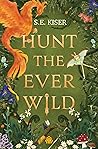
Book review: Hunt the Ever Wild | S.E. Kiser

Hunt the Ever WildHunt the Ever Wild by S.E. Kiser
My rating: 5 of 5 stars

King Edgard is offering a great prize to anyone who can catch the elusive phoenix and turn him into a bird, that is, someone who can find the spell to give him eternal life in order to extend his glorious reign over Gescany. Sylas (Sy) Cassirer, spellscribe to the King, jumps at this one chance to pay off his indenture and escape the King's whims. Anya Degen, a skilled huntress, needs to bind the phoenix to the witch in order to escape a curse. Both need the other to navigate Lichtenwald forest, evade other magicians, and capture the phoenix, but neither can actually split the prize, even though they agreed to. At least they're strangers, working together with the knowledge that they will eventually betray each other. Right?

Hunt the Ever Wild is a richly layered dark fairy tale (they use the term gaslamp fantasy, but idk, I'm giving up on genre terms and it does very much read like a fairy tale). Magic is powered by blood and words. The Forest has a will of its own. It feels very much like a story against Empire; not so much post-colonialism, but more of an angry Eat-the-Rich vibe.

Sy is the scholarship student who makes it, but finds himself in an untenable position - with an indenture (student debt) that hardly ever reduces no matter how hard he saves. He makes money from serving the nobility, but also performs "charity" (an act highly looked down on by his peers) by healing the ailments of the poor in the district (slum?) he grew up in. He's made it, but he will never fit in. His relationship with David is confusing at first - self-serving and selfish, amidst genuine care. It isn't until you learn that David, whilst secure in his own social class, is battling bankruptcy that you realise why the two of them, with Bernard (the failed spellscribe) and Sabina (the woman), end up pulling together, even if half the time they need to fight each other to stay afloat in society. Half-friends are better than no friends in a cut-throat society.

Kiser showcases in stark relief the attitudes of the rich nobility towards the poor and unfortunate, especially those who have managed to make something of themselves ("Oh, the poor indenture!"). Much of Sy's posturing is to hide his vulnerability from those who are supposed to be his peers, yet Anya sees them as an affectation put on to mock her. Funnily enough, Anya's secret origins may actually provide the acceptance in high society that Sy can never hope to gain.

The Forest itself is an active character in the book. It doesn't speak, of course, but it acts in subtle ways, changing every person who enters its domain - revealing the darkest secrets of those who came to hunt the phoenix, manipulating the actions of others to achieve its own goals. Even Anya, who has grown up in its shadow and knows how to navigate its whims, gets drawn into its plans without quite realising it. To be fair, she has other concerns on her mind - not just the curse that's transforming her, but her growing affection for and attraction to Sy, whom she knows she must eventually betray.

The slow burn romance between Sy and Anya works for me - a push and pull, a romantic tension that ebbs and flows. How much of it is the influence of the forest? And how much of it is the understanding that grows between two outcasts fighting for their lives? We'll never know, but it doesn't quite matter. What really nailed it for me, in the end, was Sy's intrinsic dignity and honour, the fact that his love was underscored with sacrifice - he accomplished what he meant to do, then he gave it away for her.

Note: I received a digital ARC of this book from Angry Robot via NetGalley. Opinions expressed in this review are completely my own.

View all my reviews

---

Wednesday, 24 June 2026

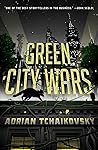
Book review: Green City Wars | Adrian Tchaikovsky

Green City WarsGreen City Wars by Adrian Tchaikovsky
My rating: 4 of 5 stars

Skotch, a freelance raccoon investigator is tasked by his former employers, big corp Uzco, to bring in the fugitive mouse scientist, Dr Meece. The problem is, every single animal faction in the city (and from the country) is also trying to get their hands on Meece. Not necessarily alive. Oh, AND they all think that Skotch knows where he is. What's a raccoon to do to stay alive?

The fun part of this story is obviously the world building. This isn't one of those completely anthropomorphic animal stories like Redwall or the Farthing Wood series where the animals are given human attributes and speech just because.

These animals are artificially engineered by humans to be smart and tasked to run human green cities from the shadows. All the undesirable jobs that are looked down upon? Animals do them, from turtles to rats to mice and racoons. But it's also nature vs artificial intelligence, where sometimes sheer animal instinct overrides the intelligence gifted to them by science (also known as plangent). There are scientific repercussions and rules that govern these societies - the most important of which, Rule Number One, is to not involve the humans.

It's first and foremost, though, a PI story - in a rather old-school, hard-boiled detective noir style. Dark, gritty, with a main protagonist that keeps talking at you. Which, unfortunately, is a style I rather dislike. Still, the plot itself, while simple, unfolds in a complex maze with revelation upon revelation, hooking you again at just the right time to go "hhmmm just a bit more". It also starts off slow, but picks up as more and more factions try to get in on the action. There's a "last stand" scene that reminds me of Colin Dann's Battle for the Park - beautiful and tragic and perfect.

I'd actually recommend this more for noir readers than sci-fi, because whilst the science is important and underpins the whole thing (you cannot actually take out the science worldbuilding and be left with ANY story), it kind of comes second to the tone of the story.

Note: I received a digital ARC of this book from PanMacmillan/Tor via NetGalley. Opinions expressed in this review are completely my own.

View all my reviews

---

Preorder on Amazon now (affiliate link)

Wednesday, 27 May 2026

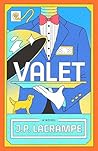
Book Review: Valet: A Novel | J. P. Lacrampe

Valet: A NovelValet: A Novel by J.P. Lacrampe
My rating: 5 of 5 stars

Valet is the sort of book that I would not have picked up on my own. It wouldn't even be on my radar. So imagine my surprise when I got a message on Edelweiss saying I've been granted access to read this... I don't always pick these up if I'm busy, but I had some time and it sounded interesting enough to try. (I did enjoy the rare Wodehouse I read in the past.)

Cy is a VALET, an android tasked to help Grayson St. Claire, his owner's 35-year-old son, start adulting. He's really very much the staff, beholden to his true owner and to his utility score, but Grayson treats him like a friend - or, more accurately, like a human. And, having "grown" up together with Grayson, Cy can read him and his moods the best - even better than his own mother.

Grayson is a mess of a human being, the stereotypical useless rich son who constantly fails at everything he puts his hand to, and yet is charming and kind enough to everyone that you really do want to see him succeed. He's both bumbling and earnest, and it's easy to see why Cy is loyal to him, more than Cy's guilt at stealing the late Mr St. Claire's praise and attention should account for.

Charlotte is exceptional as the competitive younger sister who's trying to prove herself by being the best at everything and looking down on her messed-up older brother. Mrs St. Claire is cold and grieving, and has mostly given up on her son. The other characters are in turns funny and weird, and though at times they seem a little too much, they also fit into the fabric of this future society well enough that you don't find it much more jarring than going "oh, those [rich/hippy/scheming] people..."

It's funny that throughout the novel, the two VALET characters, Cy and Larry, felt the most human in many ways. They worry about their ratings, they dread being made obsolete (which carries the repercussions of being destroyed, not just fired), they try to please the people around them (not just the humans, but the other androids they have to interact with - there's social status to be maintained!) and are most enterprising in how they try to get around the rules that govern them. Most of it is really being in Cy's POV and having insight into how androids fit into the fabric of society and what makes them tick.

But it really does make you think. What does it mean to be human? To be family? Charlotte is human, but she is so cold and calculating, with no sympathy or empathy for her own brother, that she might as well be an android herself. And Cy is very much a member of their family despite not being human - he feels like a butler from those old English movies that knows and keeps all the family secrets, yet remains ever so slightly worried about his position. I was surprised at how angry I was on his behalf when Mrs St. Claire and Charlotte threatened to have him decommissioned!

Overall, Valet was a fun and emotional read. It deals with humanity, family, grief, and love, and grapples with betrayal and jealousy, all while being part of a mad caper.

Note: I received a digital ARC of this book from Simon & Schuster via Edelweiss. Opinions expressed in this review are completely my own.

View all my reviews

Wednesday, 20 May 2026

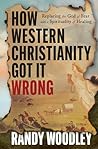
Book Review: How Western Christianity Got It Wrong: Replacing the God of Fear with a Spirituality of Healing | Randy Woodley

How Western Christianity Got It Wrong: Replacing the God of Fear with a Spirituality of HealingHow Western Christianity Got It Wrong: Replacing the God of Fear with a Spirituality of Healing by Randy Woodley
My rating: 5 of 5 stars

How Western Christianity Got It Wrong: Replacing the God of Fear with a Spirituality of Healing is a very thought-provoking book, as you can tell from the very title itself. No one wants to hear that the way their religion is practiced is (almost) completely wrong, but sometimes it's what you need to hear.

I picked up this ARC from Edelweiss because I've been facing a dissonance for a while now between how Christianity is commonly practiced globally vs my understanding of Scripture (and the whole but What Would Jesus Do! thing) and I wanted to see what Woodley had to say. There are some bold statements in the book (especially re: Jesus' purpose with regards to religion) that would probably require further thought, but on the whole, Woodley's explanations on church history and how Western Christianity got to where it is today is eye-opening and resonates with a lot of things I've been working through (and that's been coming out of the woodwork with the whole MAGA thing). It's also very accessible reading, even whilst being heavy on historical details - so it feels both solid and in depth without turning into some academic slog.

One thing I am ambivalent about - and Woodley does address it briefly - is that reinterpreting Scripture through his Indigenous lens does at times feel a little like syncretism. Which, on one hand, is what Western Christianity has totally done through out history (while wiping out other cultures), so it probably balances back out somewhat. Part of it could just be verbiage, and how Woodley expresses himself, which feels jarring to me tonally. This is one of the things I think would work for his community - and indigenous groups specifically - but not for a large majority of urban and mostly displaced and/or already culturally-disconnected Christians.

Yet, looking at the examples given, what it really highlights is the fact that all cultures and all tribes have the knowledge of God hidden in their histories and understanding of the world - it's a matter of looking at them and seeing where they align with the Bible, even if the symbols used are something completely different.

Chapter 11: How We Recover from Western Christianity is where things get a little muddy for me. This chapter is very heavy on repatriations from White churches to Native American communities, and is very rooted in the American context. I understand that Woodley can only write from his context, but it's very weird to have, in the midst of how community is strength, and how we need unity and diversity, caveats about cultural appropriation. It also sometimes feels like there's a need to punish the current generation for the sins of the past. How that looks like in Malaysia is vastly different, so a lot of the examples in chapter are not directly applicable except in the broadest terms when reading this from a Malaysian context

But, as he points out, any movement forward must be "place-based, rooted in the specific lands, histories, and cultural contexts that shape community needs, rather than imposing one-size-fits-all solutions that ignore local Indigenous wisdom." This is something I'll need to contemplate on further.

Overall, I think this book is important reading to understand what has shaped the current church, no matter where you are based, especially since a lot of Asian/Southeast Asian churches are heavily influenced by American churches through their former missionary work and mass media.

Note: I received a digital ARC of this book from Broadleaf Books via Edelweiss. Opinions expressed in this review are completely my own.

View all my reviews


Interested in reading? PREORDER NOW (Affiliate link)

Wednesday, 13 May 2026

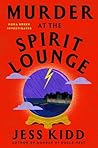
Book Review: Murder at the Spirit Lounge | Jess Kidd

Murder at the Spirit LoungeMurder at the Spirit Lounge by Jess Kidd
My rating: 4 of 5 stars

Nora Breen is settling in at Gore-on-Sea. Detective Inspector Hilary Rideout is getting into a habit of asking her to accompany him to cases, she stops by to listen to music and drink coffee with Hosmer of Hosmer's Photographic Studio, and she's been recommended for a writing gig with the Gore-on-Sea Herald. Then Dolores Chimes' reading goes disastrously wrong, leading to the death of the medium herself, followed by the people in attendance. Breen and Rideout must solve the mysterious killings before the last victim - Rideout - dies.

I enjoyed this one quite a bit more than the first book (Murder at Gulls Nest). I'm not sure whether it's because Breen is less unlikeable in this one, or because I'm somewhat familiar with her now. The third person present tense is still a little jarring at times, but it is what it is. (I cannot figure out why this irks me so much when I've read other stories in this style - maybe because those were usually short stories and not a full novel? idk)

I'm ambivalent about the love triangle subplot, even if it does add to some of the tension in the book. Rideout and Breen's relationship has progressed to a place where it feels more natural - and rather like a good partnership - even if Breen is a little oblivious to Rideout's feelings. Adding another suitor, which Breen is again rather oblivious about, felt rather awkward.

At any rate, the mystery itself is a tantalising morsel. There are so many threads to pull on, so many secrets and hidden relationships to reveal, and it's easy to get absorbed into the tragedies playing out in Gore-on-Nest. It snaps along at a good pace, full of tension.

Overall, another exciting whodunit!

Note: I received a digital ARC of this book from Atria Books via Edelweiss. Opinions expressed in this review are completely my own.

View all my reviews

Wednesday, 22 April 2026

Book Blitz: Sins of the Fire: Purgatorio by Phoenix Ward


Sins of the Fire: Purgatorio
Phoenix Ward
(Sins of the Fire, #2)
Publication date: December 18th 2025
Genres: Fantasy, New Adult, Young Adult

The Church of New Haven extends its reach to those in need, however there are some lost souls that require more direct guidance, as their sins must be met with strong redirection. Thus, Jonah was created. Originally a man named M█████ ████, he contains over two-hundred thousand sinners. Until they reconcile with their offense to God, they are to fast and pray for their salvation for as long as it takes them to realize their folly, and call upon us.

The boy will be saved from the Dragon, even if he must waste away to understand their danger.

Kickstarter / Amazon

Sequel to:

Check out the Kickstarter here!!

—

EXCERPT:

This morning was a reminder that not only was sleep important, but so was waking up before 10am.

Between the heads of bed hair, scruffy clothes and flip-flops, there were black suits, floral dresses and sweet smelling perfume clouding the entrance of the store. Conversations were held in front of the doorway, carts were being pushed around like they were going out of style, and somehow that wasn’t the thing that made us second guess our trip to getting our travel items here. No, that all paled in comparison to the white van-bus with the words “Destiny Baptist Church”, written in Times New Roman on the side.

It wasn’t the church we had a problem with— it was the fact that it was Destiny, a local mega church that made their way through the doors. The same Destiny that would play on my grandmother’s radio, from preaching almost twelve hours of gospel to choirs capable of going seven octaves without any pause for breath. For whatever reason, they were here. Maybe it was some food-based event, or some donation cause, or maybe someone felt the ‘Holy Spirit’ invade them to help out a few families with groceries— either way, it was crowded. Worse yet, the congregants brought their kids too. One wrong turn with a cart and we’d be anointed with oil and made to play the burning bush. Imani and I both shared wary gazed with one another as the chatting church folk mingled with folks that just wanted to get their groceries.

I was the first one to take the initiative, but Imani was quick to hold me back from going too far.

“Hang on, no plan?” She asked, “We’re just going to go in?”

I shrugged, scooting aside as a family of three slipped past us. “Yeah. We just gotta make it through the doors. We’ll probably just grab baskets and split. When we’re done, we’ll meet right by the self-checkout, next to the gift cards.”

Her eyebrows looked like they’d fly away. She released her gentle hold of my arm. “I guess I shoulda known you’d know how to handle yourself, considering the stuff you dealt with.”

“Is it weird to admit that the cult shenanigans actually wilder compared to this?”

Imani sped ahead of me, playfully pushing me out of the way. “Just pray you don’t get lost in here!”

“Ah, pray! Good one.”

The doors opened, our opportunity for a clear entry inside revealed itself. With clergy folk standing by the door, we said our ‘Good mornings’ and kept it moving. Basket procured, we both split up and went our separate ways. I immediately made a beeline to the deli. Three pre-packaged sandwiches were perfect carry-on for the long trip. From there, I shot for the snacks aisle. Chips, protein bars, and those salty peanut butter cracker packages were all loaded up in the basket with haste. I said my ‘hello’s, and my ‘excuse me’s to any passerby, some people greet me, others regard me with a nod.

I wanted to be away from the churchgoers. They didn’t take up the store, but they were too permeated— too mixed in.

Too indistinguishable.

I wanted to pretend that everything was back to normal. That after all of the conflict, the fears, the crying, the fighting, things were safe again. Two months of nothing should have been enough to convince me, but I knew better. Every aisle I walked down, there was a body dressed in black or white—formal clothing or just plain clothes. Without touching Mysherra, I couldn’t tell which was a Havenite and which wasn’t. Even outside of the store, regular people, clerks, judges, beggars, anyone could be a Remnant out to get me, or one to watch me.

I put my hand in my pocket and stood in front of the line of power-drinks. My fingers grazed over the surface of the pen.

The hairs on my neck stood up. Goosebumps bristled along my arms. Piercing spheres of heat sandwiched both sides of my sides.

I didn’t dare turn my head—Peripherals attuned to the presence of two white-robed Remnants on opposite sides of the aisle.

“Kane.”

“I know.”

Slowly, I inched my arm out of my pocket, pen wedged between my fingers. They wouldn’t be able to fight me, not with eyes watching them from the ceiling. They didn’t want their secret to be discovered just as I didn’t.

“Do not acknowledge their presence,” Mysherra spoke to me, “Walk with me down the aisle.”

My legs walked me sideways. I didn’t want my back turned to either one of these things. The power drinks transitioned to the flavored powders. Flavored powders to sparkling sodas. Neither one of the beings made a move.

“Once you get close, fire me.”

Senses were screaming at me to run or fight the closer I got to the remnant. My heart was thudding against my ribs.

“Just a little closer.”

Light conjured at the tip of the pen. The burning spread along my entire right side.

“Okay, the fires should be quiet enough to—”

“Excuse me.”

Someone bumped against my back, cutting off my focus. “Ah, sorry about th—”

All I did was turn my head. I had seconds, milliseconds, microseconds to process the burgeoning man unlatching his jaw in front of me. Ropes of saliva separated a hollow light at the back of his throat. Flesh, wet, and acrid already surrounded me, sounds of the outside muffled by the remnant’s mouth closing behind me. I must have fired four times— twice to the ribcage roof of the mouth and twice towards the light. Footing vanished, the dark closed in, and the door to the outside slammed shut behind stone teeth.

And I fell.

---

Phoenix Ward is an indie black writer, and educator from Philadelphia. He has worked in the field of education for over five years, teaching all grades Mathematics and English. When he’s not writing, he is composing music using Logic Pro X, or tutoring children on subjects they struggle in. Currently, he lives in Philadelphia with his dog and cat.

 An avid world-builder, Phoenix has created many stories from youth to adulthood, but none have captivated him as much as his latest work Sins of the Fire, which combines his passion for storytelling with his deep understanding of human nature. He draws inspiration from the vibrant city life of Philadelphia and his own experiences as an educator, infusing his narratives with authenticity and depth.

In addition to his work as a writer and educator, Phoenix is committed to supporting young creatives in their journeys. He actively encourages students and adults alike to seek a way to create their own stories. Everyone has a message to share, and doing so in story is the best way to do so.

Website / Instagram


GIVEAWAY!

Sins of the Fire: Purgatorio Blitz

—

Wednesday, 15 April 2026

Review: Dua Darah


When a Malay-Chinese Muslim returns to attend his aunt’s Chinese funeral during the COVID lockdown, buried memories and inner conflicts begin to surface — questioning where he truly belongs.

*

It's been about two years since I reviewed a theatre show. Have I watched anything in between? Uh... the Internet tells me that the two shows I remember watching but not reviewing were staged before Yam Seng Lah so no, I have apparently not watched a theatre show in two years! 

Anyway, Dua Darah. I caught the 8.30pm show in Penang on Saturday, 11 April 2026 with members of the Ka-Ki Baca group. It has taken me this long to write this review because I have been procrastinating and being generally lazy. 

I don't think I have much to say about the acting side of things - all three performers fit their roles really well. At least, there was nothing I felt really nitpicky about, especially since their accents fit the characters so well (this is the thing that usually bugs me a lot). There's something to be said for the fact that, whilst primarily in Malay, this is a multilingual show. I ended up not reading the surtitles as much as I expected to because Hilyati's (playing the protagonist) enunciation is superbly clear and understandable (I have problems processing Malay slang/patois). The funeral medium (played by Teoh Chee Lin) spoke in a hilariously apt bahasa pasar and Chinese (Hokkien? Maybe? idk—I read the surtitles for those), whilst the Mother (played by Ho Sheau Fung) spoke a very Chinese-accented vernacular English/Manglish/rojak. The only thing that jarred me was when Ho started singing and I thought it was a Chinese song until I stared at the surtitles and realised she was... singing in Malay. Oops.

(Note: Even though the character was played by a woman, I'm going to stick with 'he' pronouns in the review per the synopsis since technically the funeral rites are supposed to be carried out by a male relative.)

The staging was minimalist, and it worked to focus the audience on the actors themselves, with the judicious use of lighting. Scene changes (to indicate the start of a new day) were marked by chanting (both Chinese ritual prayers and Arabic verses/prayers) and reflections in a sort of Greek-chorus type thing, punctuated by choreography. There's probably a better or more technical term to describe it, but I don't have the vocabulary for that. At any rate, I liked it because it solved Auditorium A's problem of not really having a proper backstage for actors to go in and out. So all three of them were onstage for the duration of the show. 

Overall, the show was fascinating—and thought-provoking—but the more I think about it, the more I feel that the ending was a little emotionally flat. There was a build up of sorts, with the thing about the nails. It rises and then it falls, it's really dramatic, and then I am left a little confused about what I'm supposed to take from that. I chalked this down to not actually understanding the significance of the events at the cremation. As I said after the show, I'm not actually Chinese enough for this.  

I connected much more with the Chinese-Malay protagonist, even though I am, as far as I can trace, 100% Chinese. For me, Dua Darah is no so much about racial tension, but about religious conflict or the dilemma of the recently converted—especially when one converts to a monotheistic religion that says performing another religion's rites are a sin in and of itself, no matter how pure your motives are. It can only be framed as a conflict between two bloodlines in Malaysia because of our problem of conflating race and religion here. If you're Malay, you are Muslim. If you're Chinese, you are Buddhist or Taoist. And yet everything the protagonist wrestles with around the funeral rites are things that have come up over and over again in the Chinese Christian community in Malaysia. They even directly mentioned the shared problem of Cheng Beng. I mean, obviously the Christians don't have it as bad—no halal or dressing laws to address—but there's still that tension of what you can and can't do, what you should and shouldn't. Because what's truly cultural and what's religious at this point?

In the end, Dua Darah was, for me, a reflection on the realities of colonialistic religions and how it tears you from your cultural roots in many ways, whether due to mixed blood (there's some unspoken racism to be unpacked there) or just due to conversion. It's recognition of yes, this happens, this happens all the time in various communities. It's an acknowledgement of the dissonance that racial alignment to religion causes in global/multicultural communities. For Christian converts, there's that need to distance yourself from Chinese culture, to become overly Western/White-presenting. For Muslim reverts, there's a need to prove yourself more Malay than the Malays. 

But how do you resolve it? It feels like there should be a middle ground somewhere, to be able to follow the tenets of the religion you now adhere to (or have chosen for yourself) while still honouring and respecting where you come from. The show does not offer any solutions. The aunt is cremated, the protagonist returns home, having completed the rituals for his beloved aunt whilst bearing the guilt of having sinned in doing so—and even if God can forgive him, I'm pretty sure society won't. 

---

DUA DARAH

A Drama in Bahasa Melayu by Johan Othman (with English and Chinese surtitles)

Director: Chee Sek Thim

Playwright: Johan Othman

Music Director and Composer: Kang Su Kheng

Choreographer: Teoh Chee Lin

Performers: Hilyati Ramli, Ho Sheau Fung, Teoh Chee Lin.

Producer: Tan Hock Kheng

👉A ZXC Theatre Troupe production.

👉KL venue supported by Five Arts Centre

If you're in KL this weekend, you can catch Dua Darah at Five Arts Centre, GMBB.

 Kuala Lumpur
Date/Time:​
17 & 18 April 2026 @ 8:30pm
18 & 19 April 2026 @ 3:00pm
Venue: Five Arts Centre, 9th floor, GMBB, KL

 Ticketing
Individual Ticket: RM55
Group of Four: RM180

GET TICKETS HERE

Wednesday, 8 April 2026

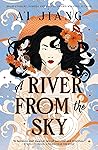
Book Review: A River From the Sky | Ai Jiang

A River from the Sky (Natural Engines, #2)A River from the Sky by Ai Jiang
My rating: 4 of 5 stars

A River from the Sky picks up right after A Palace Near the Wind. Liu Lufeng is escaping the Palace near Feng with her younger siblings Chuiliu and Changqing, along with Geyser, also known as Exile Song. They are to meet Sangshu in Gear, but an encounter with the rebels disrupts all their plans.

This second novella of the Natural Engines duology is told in two POVs: Lufeng and Sangshu. On one hand, this gives us a deeper perspective of all the things that Lufeng has been completely unaware of. On the other, it makes for another confusing ride - we're not just grappling with the present, we're also having to come to terms with everything Sangshu has gone through in the years since she left Feng.

Where Lufeng had been almost passive, only stirring at last to try to save her younger siblings, Sangshu's story is one of both great ambition and betrayal. Sangshu caught up in all that progress and science seems to offer, only to find that gaining what she wants means giving up other things just as precious to her. These are presented as hard choices in the struggle for survival, and it's just not progress versus tradition, old vs new.

It's progress, but at what cost? Who (not just what) are you willing to sacrifice to get richer and more powerful? And is it truly worth it? But, as with the world we live in, everyone is complicit in the system and breaking away completely may have a higher cost than maintaining the status quo, no matter how terrible the system is.

There's layer upon layer of deception slowly being laid bare, and it should be exhilarating to finally discover what drives this world. And yet... after the build up in A Palace Near the Wind, the reveal here wasn't half as devastating as I was led to believe it would be. I found myself going, "Oh, that's it?"

Still, it's a gripping tale of surrender and sacrifice, and the desire to make the world a better place, not only for yourselves but for everyone - including your perceived enemies. Ai Jiang points out the interconnectedness of Feng, Glace, Clay, Engine; Wind Walkers and Water Shifters, Cogs and Land Wanderers, Natural Titans. Just like our world, no one place or people truly stands on their own.

Note: I received a digital ARC of this book from Titan Books via NetGalley. Opinions expressed in this review are completely my own.

View all my reviews

Wednesday, 1 April 2026

Book Review: Strange Familiars | Keshe Chow

Strange Familiars (Seamere College, #1)Strange Familiars by Keshe Chow
My rating: 5 of 5 stars

Gwendolynne Chan really needs to make Dux to get that cushy ministry job and help save her family's struggling restaurant. Harrisford Briggs also really needs to make Dux, both because his father expects it, and to provide him an out from working at Magecorp after graduation. The two academic rivals hate the sight of each other... or do they? Either way, they need to work together to figure out the strange magical surges that's causing chaos and threatening their final year exams (and the rest of London).

Strange Familiars was a romp of a read. There's witty banter and snark, academic rivalry with close score-keeping, a grumpy talking cat (and other more exotic familiars), exploding magic, and lots of chemistry.

Chow does especially well in showcasing Gwen's troubles as a second-generation immigrant in the UK - being Manchester-born and raised, and yet expected to know everything about her Chinese ancestry, even rare mythological creatures like the qilin. Gwen deals with both subtle and not-so-subtle racism, plus the problems of being poor and trying to scrape by. She has tremendous drive (and pride), which plays off perfectly against Harrisford's ego.

But whilst Harrisford is rich and proud, he's also rather socially aware, or woke if you want to put it that way. Since Chow also writes in his POV, you get to know the real Harrisford behind the mask that he puts up for the public, getting both the insecurities and blindspots that plague him. And you can't help but like him because he's actually rather earnest and nice. And also rather vulnerable.

At any rate, the TENSION. (Also, reader note: this is firmly very New Adult, so there is on-page sex.)

Before you think this is just a romance, there ARE a lot of things going on in the background - magical surges, political intrigue, government coverups, and exploitation, all in the name of keeping the magic (and the money) flowing. Both mystery and romance have their parts to play and they feel perfectly balanced in drawing me further and further into the story.

I kinda missed this was a duology when I picked it up, so when I got to the end I was like no, nooo why? Oh, there's book 2. So. Now I gotta wait for book 2 *sobs*

Note: I received a digital ARC of this book from Ace via NetGalley. Opinions expressed in this review are completely my own.

View all my reviews

Wednesday, 11 March 2026

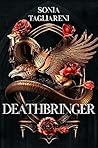
Book review: Death Bringer | Sonia Tagliareni

Deathbringer (Deathbringer, #1)Deathbringer by Sonia Tagliareni
My rating: 5 of 5 stars

Viola Corvi hates her magic. The death magic has only ever taken from her - her father, her grandmother, and now her sister. Sylas Ronin, a poison mage, also hates death magic - for taking his mother from them. And then the two are thrown together in Gorhail Institute of Magic and must learn to work together if they are to achieve their goal - to find and stop the serial killer who's coming after Viola.

Despite the academia setting, Deathbringer is more enemies-to-lovers than academic rivalry. Besides Lyria's desperate attempt to master lifedrain theory, there is little actual studying going on in the book; everyone's too busy panicking when students start turning up dead. Besides, Viola is adamantly refusing to actually learn anything about magic, even if it will eventually help her, whilst Sylas is pretty much an insufferable, reckless, know-it-all with anger issues. Okay, both of them have anger issues, but Viola is just a smidge better at using her anger to further her goals.

Tagliareni is deft with her knife, whether it's the twisty murders that keep happening or the devastating secrets that stab like a knife to the gut. To be honest, there are (a lot of) times where Sylas' bullheaded recklessness makes me want to slap him, but Tagliareni layers on the emotions and the painful backstory so well that it often feels forgivable or, at the least, understandable. The dual POVs work exceptionally well for this - giving readers both sides of the story, so to speak, and presenting a sympathetic point of contact/information for both rival houses instead of making one better than the other. There's no clear "evil" house or strand of magic in this one, even if death magic is often seen as dark and scary.

Loyalty is a theme that's explored with great depth - whether personal loyalty to one's friends and loved ones or loyalty to one's house/magic. Blind loyalty is both encouraged and called out at differing times, but where it's most wrenching is when it's pitted against love. Sylas has to decide whether to act with blind loyalty to the House of Poison, or if his growing love for Viola will force him change his beliefs. Viola has no loyalty to any mage or house, but it's the various loyalties of family, friends, and lovers in the past that has placed her in this current situation - as the one person sought after for her unwanted magic and relic.

Altogether, it's a very tantalisingly twisty dark fantasy. Deathbringer has been one of the most enthralling reads of 2026 so far.

Note: I received a digital ARC of this book from Atria Books via Edelweiss. Opinions expressed in this review are completely my own.

View all my reviews